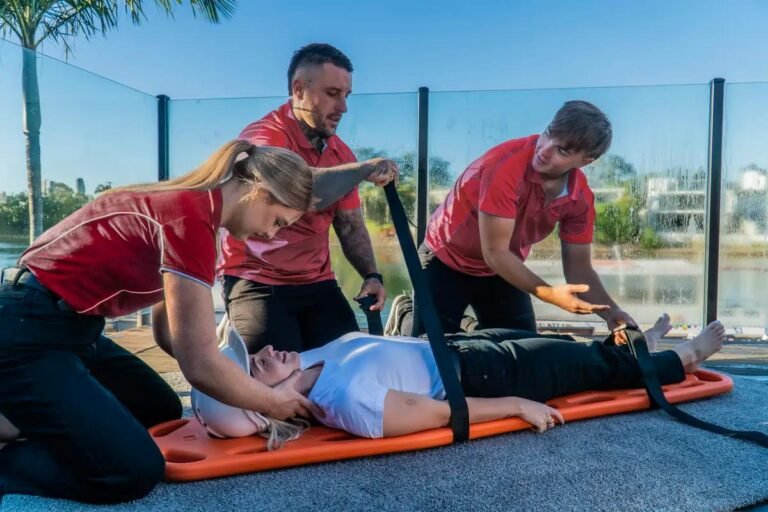
Choosing the wrong stretcher creates risks and hidden costs.1 A spec sheet doesn't tell the whole story, leading to equipment that fails your team in critical moments.
Start by defining your operational scenario first. Consider the patient's condition, the environment (stairs, tight spaces), and who will use it. Match these needs to specific stretcher types, like scoop, ambulance, or basket stretchers, instead of searching for one perfect, all-purpose solution.
I spend my days working with the specifications and documentation for all kinds of medical stretchers. As a content specialist at a manufacturing company, I analyze product data and see the questions that come in from buyers all over the world. A common theme I see is procurement managers looking for a simple "best stretcher." The truth is, the best stretcher doesn’t exist. But the right stretcher for your specific situation absolutely does. The goal is to shift your thinking from comparing product features to analyzing your operational needs first. This article is designed to give you the framework to do just that, helping you make a choice that is safe, efficient, and cost-effective in the long run. Let's start by looking at a common mistake.
Is Focusing on Price and Material the Biggest Mistake You're Making?
You found a stretcher with a low price tag. But hidden costs in training, cleaning, and compatibility2 can make it the most expensive choice your organization makes.
Look beyond the initial purchase price. The total cost of ownership includes maintenance, cleaning time, storage issues, and compatibility with existing equipment like ambulance fasteners. These factors often have a greater long-term financial impact.
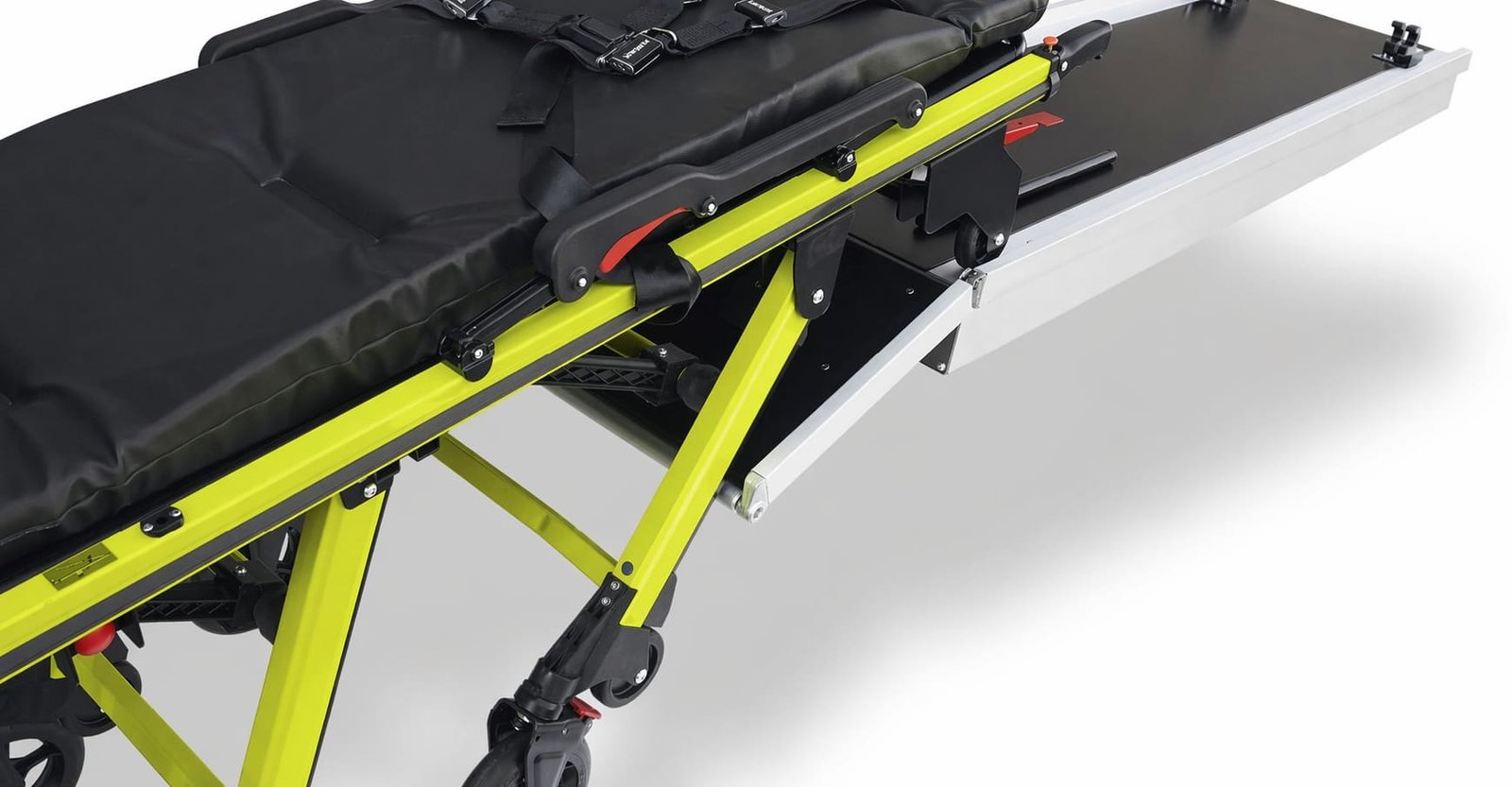
From my desk, I see patterns in how different organizations make purchasing decisions. A frequent mistake is focusing too heavily on the upfront cost and the primary material, like aluminum or carbon fiber.3 These are important, but they don't paint the full picture. A cheaper, heavier stretcher might seem like a good deal until your team experiences higher rates of back injuries, increasing your insurance and staffing costs. A stretcher with a complex design might have a great feature list, but if it takes 15 minutes to properly disinfect between patients, that's a significant operational delay and labor cost that adds up quickly. Smart procurement involves thinking about these "hidden" costs. I call this looking at the Total Cost of Ownership (TCO) instead of just the sticker price.
Here's a simple breakdown of what to consider:
| Factor | Sticker Price Focus | Total Cost of Ownership Focus |
|---|---|---|
| Weight | "This one is cheaper." | "This lighter one reduces team fatigue and injury risk." |
| Design | "It has more features." | "This simpler design is faster to clean and easier to train on." |
| Compatibility | "We'll deal with it later." | "Does this work with our current ambulance fastener? A mismatch means buying new systems." |
| Durability | "The material is strong." | "What is the expected service life and what are the costs for replacement parts?" |
Thinking this way transforms your purchasing process. Instead of just buying a product, you are investing in a solution that integrates into your existing operations. It helps you avoid expensive surprises down the road.
How Do You Compare Different Stretcher Types?
You see a scoop stretcher and a spine board. They both seem to immobilize patients, so you wonder which one is better. The question itself is the problem.
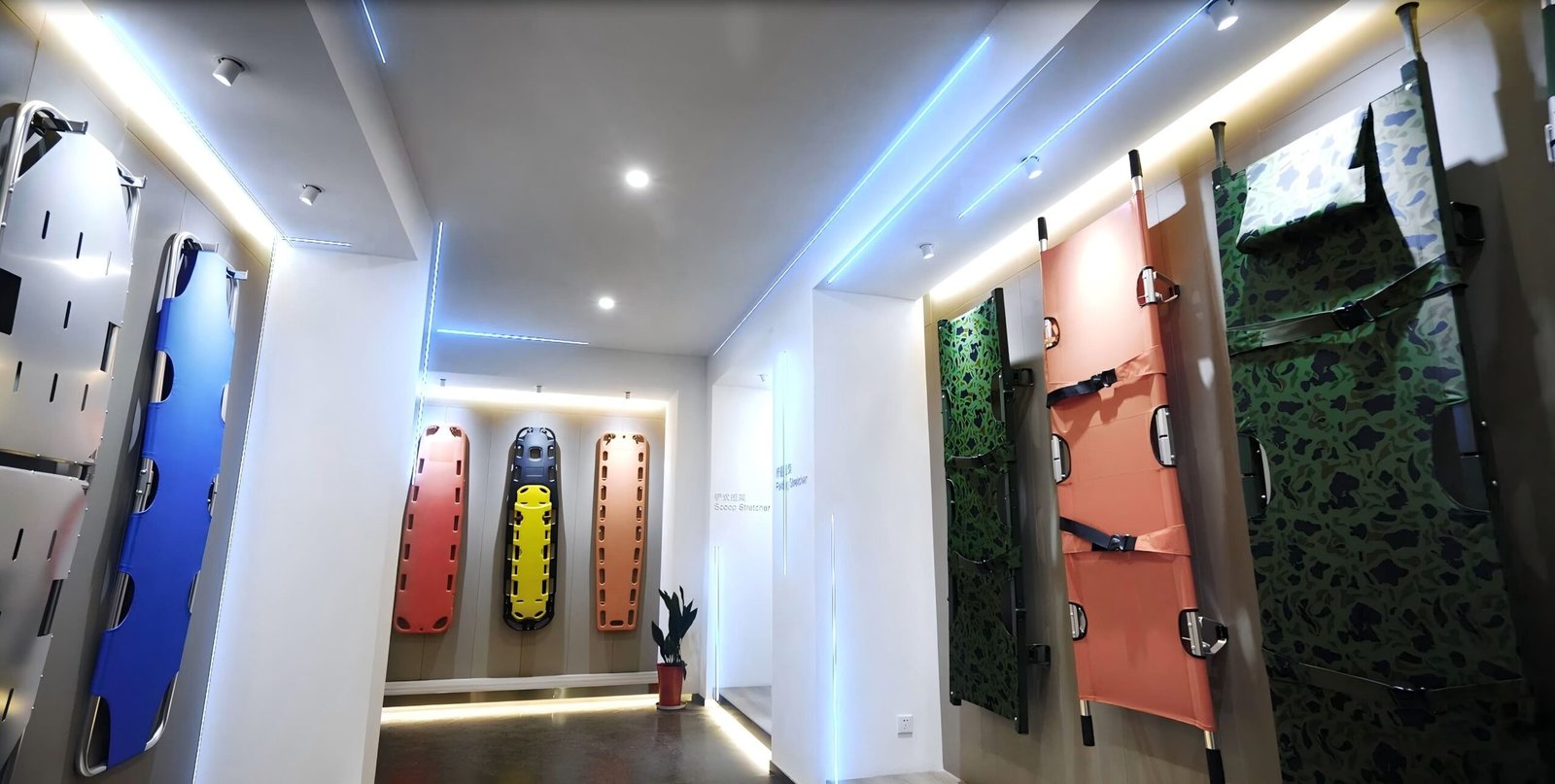
Comparing stretchers is about understanding trade-offs, not finding a "winner." A scoop stretcher excels at 'scooping' a patient with minimal movement, while a basket stretcher offers security during difficult evacuations.4 Each is designed for a different scenario.

A frequent question from first-time international buyers is about the difference between seemingly similar products. For example, they'll ask whether a scoop stretcher is "better" than a spine board or a basket stretcher. The answer is always: it depends entirely on the job you need it to do. Each design represents a series of trade-offs made to excel in a specific type of situation. A product that is perfect for a mountain rescue team is likely a poor choice for a hospital's internal transport team.5 Trying to find one stretcher that does everything perfectly will only lead to having a tool that does everything poorly. Instead, it's more helpful to think about what you gain and what you give up with each design choice.
Let's look at a few common types and their core trade-offs.
Main Stretcher Type Trade-Offs
| Stretcher Type | Primary Strength | Key Limitation | Best Use Case |
|---|---|---|---|
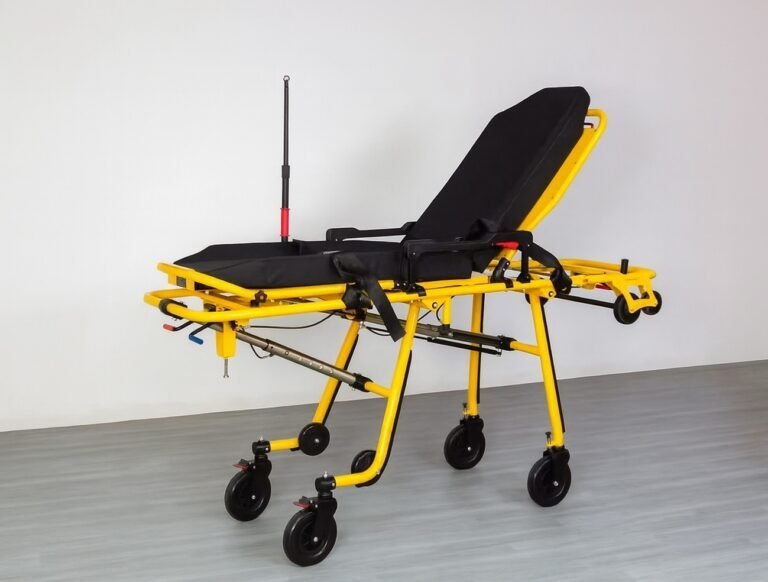
| Ambulance Stretcher | Wheeled mobility and patient comfort for transport. | Heavy and bulky; not for extrication or stairs. | Loading patients into and transporting them in an ambulance. |
| Scoop Stretcher | Allows patient to be lifted with minimal rolling or movement. | Not for carrying long distances or over rough terrain. | Lifting patients from confined spaces with suspected spinal injuries. |
| Basket Stretcher | High security and durability for hoisting and rough terrain. | Bulky and heavy; difficult to use in narrow indoor spaces. | Mountain rescue, industrial sites, or situations requiring a hoist. |
| Spine Board | Excellent immobilization and completely radiolucent (X-ray transparent). | Uncomfortable for long transports; can cause pressure sores. | Extrication and immobilization, especially in vehicle accidents. |
Understanding this framework of trade-offs is critical. It shifts the conversation from "Which is best?" to "Which is the most appropriate tool for the environment and patient condition we face most often?"
What Questions Should Be on Your Procurement Checklist?
You're ready to buy, but starting with a product catalog is a mistake. You'll get distracted by features and marketing, not your actual operational needs.
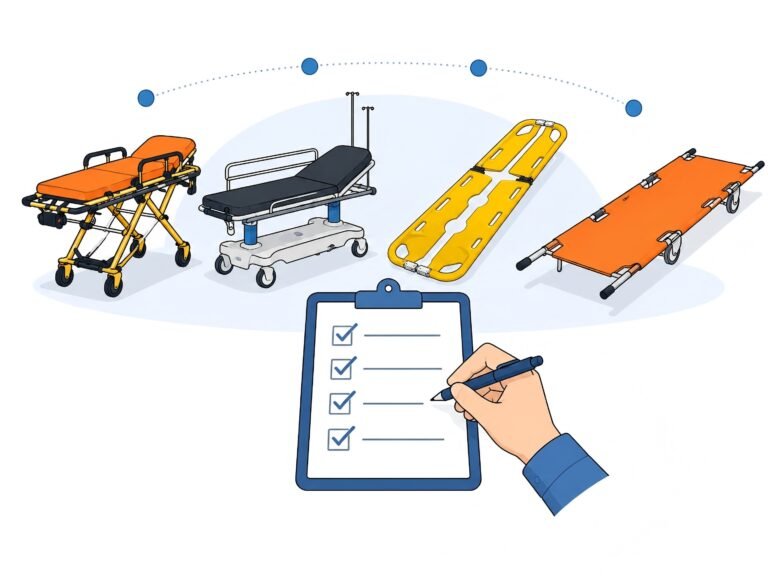
Create a scenario checklist before you even look at products. This list should force you to define your users, your environment, and your patient profile. This document becomes your guide for evaluating any potential stretcher.

Based on all the technical specifications I review, I can tell you that every single feature on a stretcher is an answer to a problem. The key is to make sure those are the problems your team actually has. A heavy-duty stretcher with a 500 kg weight capacity is impressive, but it's overkill if your service primarily transports non-bariatric patients.6 To avoid this mismatch, I recommend building a "scenario checklist." This is an internal document you create before you talk to any salesperson or browse any website. It is a simple set of questions that defines your reality. Once you have these answers, you can hold up any product specification sheet and see if it aligns with your needs, not the other way around. This simple exercise saves you from buying equipment that looks good on paper but fails in practice.
Here are the key questions your checklist should answer.
Who are the operators?
- What is the average physical strength and experience level of our team? (Will they struggle with a heavier stretcher?)
- How much time can we dedicate to training on a new device? (Is a simple, intuitive design better than a complex one with more features?)
- Are they full-time professionals or part-time volunteers?
What is the environment?
- Will the stretcher be used mostly indoors or outdoors?
- Do our operations involve stairs, narrow hallways, or elevators?
- Do we face rough terrain, water, or industrial hazards?
- How much storage space is available in our vehicles and facilities?
What is the typical patient profile?
- What is the average weight of the patients we transport? Do we need bariatric capabilities?
- Are we often dealing with trauma and suspected spinal injuries requiring maximum immobilization?
- Are patients typically conscious or unconscious?
What are the logistical constraints?
- What is our budget for the initial purchase? What is our budget for maintenance and parts over five years?
- What are our cleaning and disinfection protocols? (A complex design may be impossible to clean to our standard.)
- Does this stretcher need to be compatible with equipment we already own, like specific ambulance fasteners or head immobilizers?
Answering these questions honestly will give you a clear, detailed picture of the right stretcher for you.7
Conclusion
Choosing the right stretcher is not about finding the best product. It is about following the right process: analyze your scenario first, then match the equipment to that specific need.
This source explains the potential risks and financial implications of selecting inappropriate medical equipment, emphasizing the importance of aligning equipment with operational needs. ↩
This source discusses how hidden costs, such as training and maintenance, can outweigh the initial purchase price of medical equipment. ↩
This source discusses the pitfalls of prioritizing upfront costs and material types over long-term operational needs in medical equipment procurement. ↩
This source explains the specific use cases and advantages of scoop stretchers in medical scenarios. ↩
This source discusses how different medical stretchers are optimized for specific environments, such as mountain rescues versus hospital settings. ↩
This source explains how selecting medical equipment with excessive capacity can lead to inefficiencies and unnecessary costs. ↩
This source emphasizes the importance of honest self-assessment in determining the most suitable medical equipment. ↩