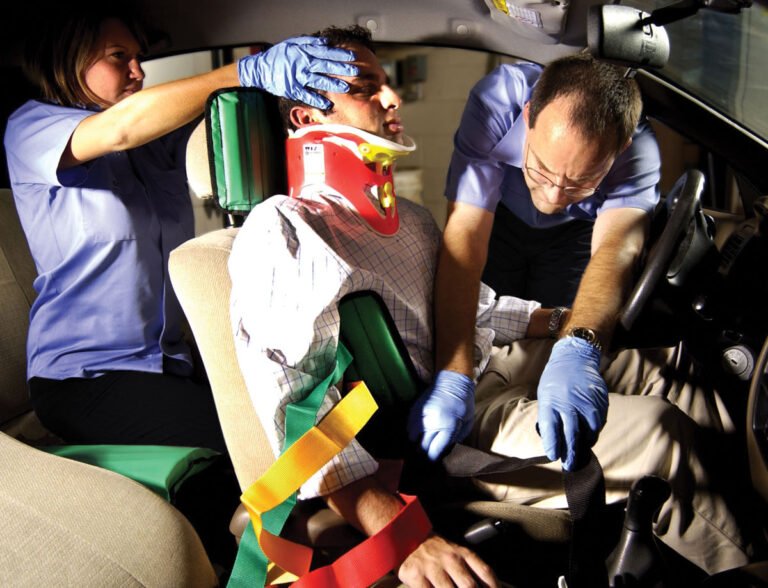
Choosing a KED seems simple, but a wrong choice carries huge risks. A cheap device can fail, hurting patients and your reputation.1 This guide shows you the real factors.
A quality Kendrick Extrication Device (KED) decision relies on assessing supplier reliability, material specifications, and manufacturing consistency. Ask suppliers about their quality control, material sourcing, and production stability. This shifts your focus from price to long-term value and patient safety.

I've talked to many procurement managers over the years. A lot of conversations start with the same question: "What's your best price?" I understand why. Everyone has a budget. But for a critical piece of equipment like a Kendrick Extrication Device, price is the wrong place to start. The real cost isn't on the invoice. The real cost is the risk of failure when a patient's life is on the line. In this guide, I want to move past the price tag and talk about the questions that truly matter. I'll share what we've learned from our own manufacturing and quality control processes to help you make a safer, more reliable choice.
What Materials Truly Define a KED's Quality?
You see "durable fabric" on every spec sheet, but what does that mean? It is frustrating when you cannot tell the difference between good and bad materials from a document.
High-quality KEDs use specific materials like high-denier nylon for the vest and strong polypropylene webbing for straps.2 These choices directly impact durability, cleanability, and patient safety. You should always check the material specification sheet, not just the marketing claims.
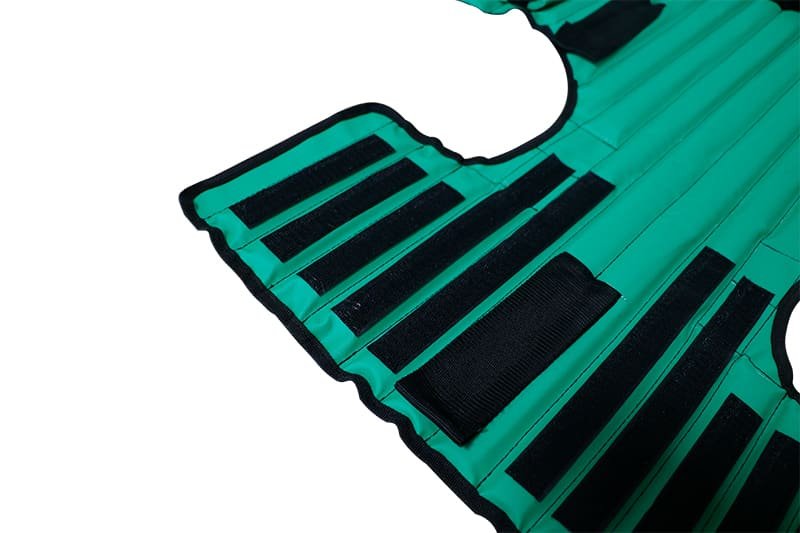
When my team evaluates materials, we look beyond the surface. A product description might say "nylon," but there's a huge difference between different types of nylon. We specifically look at the denier count, which is a measure of fiber thickness. A KED made from 420D nylon feels very different from one made with 1000D nylon. The higher denier is more resistant to tearing and abrasion, which is critical during a real-world rescue.3 The fabric coating is also important. A PVC coating makes the device water-resistant and easy to wipe clean, which is essential for infection control.4 We've seen cheaper materials absorb fluids, creating a hygiene risk. From our quality control process, I can tell you that cheaper fabrics often fray or weaken after just a few cleaning cycles with standard disinfectants. This is a failure waiting to happen. The internal splints that give the KED its rigidity are another key component. They need to be strong but have some flex. We prefer materials that are proven to hold up over time.
| Component | Good Material | Why It Matters | Poor Material | The Risk |
|---|---|---|---|---|
| Outer Vest | High-Denier Nylon (e.g., 1000D) with PVC coating | Durability, tear resistance, easy to clean | Low-Denier Polyester | Tears easily, absorbs fluids |
| Straps | Polypropylene Webbing | High tensile strength, low water absorption | Thin Nylon or Cotton Blend | Can stretch or break under load |
| Buckles | High-Impact Plastic | Secure locking, reliable under stress | Brittle, cheap plastic | Can shatter or fail to lock |
| Internal Stays | Laminated Birch or Bamboo | Provides necessary rigidity and flexibility | Softwood or cheap plastic | May break or not immobilize properly |
How Does Manufacturing Consistency Impact Patient Safety?
A sample KED looks perfect, but what about the 100th unit in your order? Inconsistent quality is a hidden risk. This uncertainty can undermine your trust in the entire supply chain.
Inconsistent manufacturing leads to weak points in a device.5 You should look for suppliers with documented quality control, like an ISO 13485 certification.6 Ask how they ensure every stitch, buckle, and strap meets the same high standard, because a single failure is unacceptable.
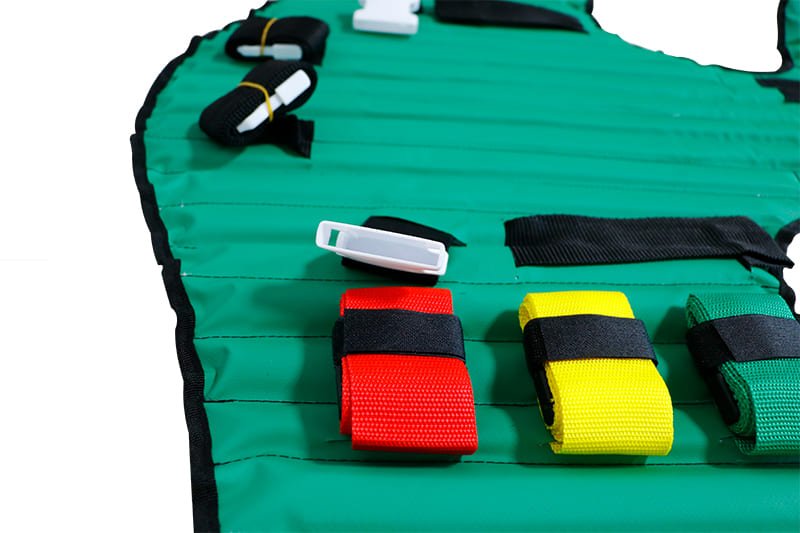
A sample device is a promise.7 The real test is whether the 500th device is as good as the first. As a manufacturer, I know that maintaining this consistency is one of the hardest parts of our job. It's not about one perfect product; it's about thousands of them. This is where small details make a big difference. For example, we use bartack stitching on all high-stress points where straps connect to the vest. A simple straight stitch might look fine, but it won't hold up under the repeated pulling and stress of a real extrication. I've seen competitor products where the straps are just sewn on with a single line of thread. That's a major weak point. The same goes for buckles. A buckle needs to provide a secure, audible click so the rescuer knows it's locked.8 It must also handle the patient's weight without breaking. We test batches of our buckles for tensile strength to ensure they meet our standards. A good question to ask a potential supplier is: "Can you describe your quality checkpoints on the assembly line?"
Here are some critical questions to ask a supplier about their manufacturing process:
- What is your process for testing raw materials when they arrive?
- Can you show me your QC report for a recent production batch?
- What type of stitching do you use on load-bearing points?
- How do you test the strength and reliability of your buckles?
- Is every single device inspected before it is packed?
A supplier who can answer these questions with confidence is one who takes quality seriously.
Why Are Supplier Reliability and Documentation More Important Than Price?
Everyone wants a good price. But focusing only on the price tag can lead to major problems later. These problems can cost you much more than you initially saved.
A reliable supplier provides consistent quality, on-time delivery, and crucial documentation like CE or FDA certificates.9 This support is critical for tenders and customs clearance. A low price from an unreliable supplier is a high-risk gamble you can't afford to take.10

I remember a conversation with a distributor in Europe. He was in trouble. He had won a large government tender, but his previous supplier couldn't provide the correct Declaration of Conformity for the KEDs. The shipment was stuck in customs, he was facing penalties for delays, and he was about to lose the contract. He came to us because he knew we had our documentation in order. This story is not unusual. Certifications like ISO 13485 are not just pieces of paper.11 They represent a supplier's commitment to a whole system of quality management, from design and production to delivery and post-market feedback. Without this system, quality is just a guess. Price becomes irrelevant when your goods can't enter the country or when you can't prove their safety to your end customer. A reliable partner understands this. They will have their documentation ready and will work with you to ensure a smooth process. They will also stand behind their product if there is ever an issue. That is the true value.
Here is a checklist for vetting a new supplier:
| Category | Key Questions to Ask | Why It's Important |
|---|---|---|
| Certifications | "Are you ISO 13485 certified? Can you provide your CE or FDA certificates?" | Proves a commitment to a recognized quality management system. Essential for market access. |
| Documentation | "Can you provide a full technical data sheet and instructions for use in English?" | Ensures you and your customers understand how to use and maintain the product correctly. |
| Supply Chain | "What is your standard production lead time? How do you manage shipping and logistics?" | Predictability is key for your business. Delays can cost you contracts and customers. |
| Communication | "Who is my main point of contact? How quickly can I expect a response?" | A responsive partner saves you time and reduces stress, especially when issues arise. |
| After-Sales Support | "What is your warranty policy? How do you handle product issues or returns?" | Shows that the supplier stands behind their product and is invested in a long-term relationship. |
Conclusion
Choosing the right KED is about partnering with a reliable manufacturer. Focus on material quality, manufacturing consistency, and supplier documentation to ensure patient safety and long-term value.
This source discusses the risks associated with using low-quality medical devices, including potential harm to patients and reputational damage for healthcare providers. ↩
This source provides an overview of materials commonly used in high-quality medical devices, including their properties and benefits. ↩
This source provides data on the durability and abrasion resistance of high-denier fabrics in demanding applications. ↩
This source discusses the role of PVC coatings in enhancing the water resistance and cleanability of medical fabrics. ↩
This source explains how manufacturing inconsistencies can compromise the structural integrity and reliability of medical devices. ↩
This source outlines the requirements and significance of ISO 13485 certification in ensuring quality management for medical devices. ↩
This source discusses the importance of sample testing in ensuring the quality and reliability of medical devices before mass production. ↩
This source discusses the design and safety features of buckles used in medical and safety equipment, including the importance of audible feedback. ↩
This source highlights the role of reliable suppliers in ensuring consistent quality and compliance with regulatory requirements for medical devices. ↩
This source explains the risks associated with choosing low-cost, unreliable suppliers in the medical device industry, including potential quality and compliance issues. ↩
This source explains the practical implications of ISO 13485 certification in ensuring compliance and quality in medical device production. ↩