Foam and inflatable life jackets can both save lives. But they do not work in the same way, and they are not suitable for every user or every job.
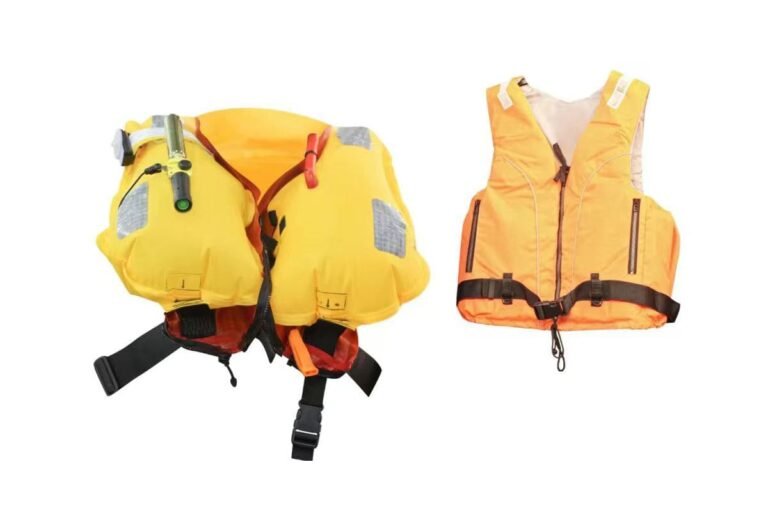
A foam life jacket floats as soon as it enters the water. An inflatable life jacket stays slim until its air chamber is filled by a CO₂ cylinder or by mouth. Foam models are usually simpler to issue and maintain. Inflatable models are lighter to wear, but they need more checking, training, and replacement parts.
So which one should you buy? Start with the user, the water conditions, the expected rescue time, and the rules in the destination market. Do not choose by comfort, price, or appearance alone.
What is the main difference between foam and inflatable life jackets?
The difference is simple: one already contains its flotation material, while the other must inflate.
Foam life jackets use built-in buoyant material. Inflatable life jackets use an air chamber that is filled manually, automatically, or by mouth.
A manual inflatable model normally requires the wearer to pull a handle. An automatic model is designed to inflate after entering the water. Most inflatable models also have an oral inflation tube as a backup. The exact system depends on the product.
| Point to Compare | Foam Life Jacket | Inflatable Life Jacket |
|---|---|---|
| How it floats | Built-in foam provides immediate buoyancy | A bladder must be inflated |
| User action | Usually no action needed | Manual models require the pull handle; automatic models should activate in water |
| Comfort before inflation | Bulkier | Slimmer and easier to wear for long periods |
| Main inspection points | Fabric, foam, seams, straps, buckles, and labels | Cover, bladder, inflator, indicator, CO₂ cylinder, pull handle, straps, and labels |
| After use | Clean, dry, inspect, and store | Clean, dry, inspect, and rearm after inflation |
| Common advantage | Simple and ready to float | Low-profile design and good freedom of movement |
| Main limitation | Takes up more space and may feel warm or bulky | Depends on a working inflation system and correct maintenance |
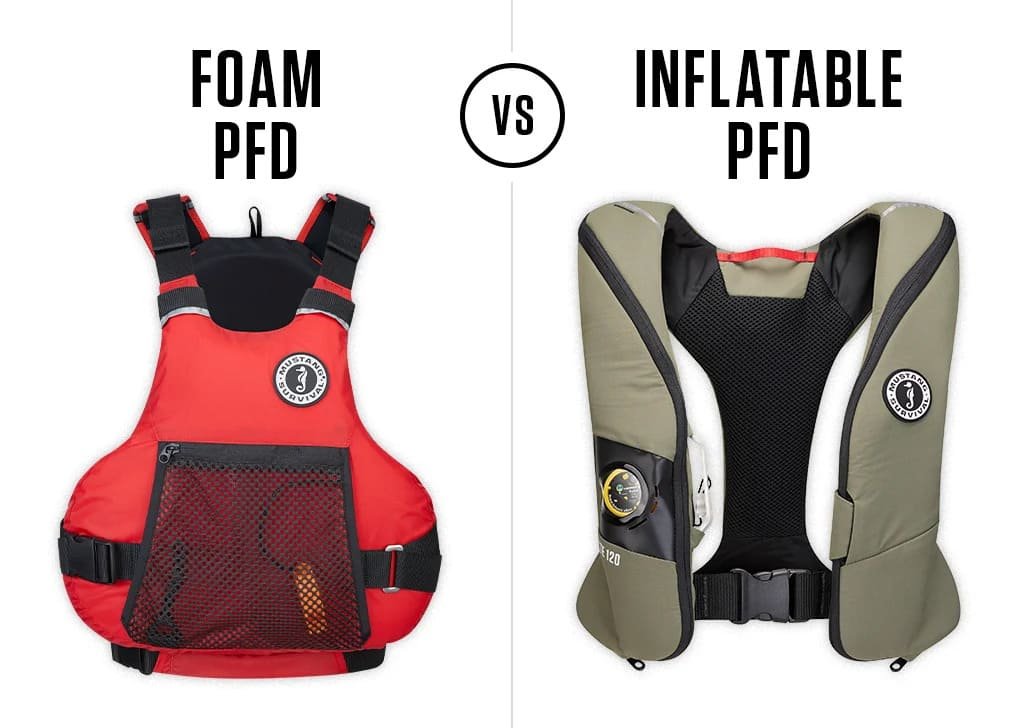
There are also hybrid products that combine a small amount of built-in foam with extra inflatable buoyancy. They can work well in special applications, but they are usually more complex and more expensive.
Which type is safer?
There is no honest one-word answer.
Foam is often the safer and simpler choice for untrained users, children, public-use equipment, and situations where contact with water is likely. Inflatable models can be a good choice for trained adults who need to wear a life jacket for long periods and can follow the inspection and service routine.
The safest product is the one that:
- Is approved for the intended activity and destination market
- Fits the wearer correctly
- Provides the required performance level
- Is in good working condition
- Is worn and used as instructed
When does foam make more sense?
Foam provides buoyancy without a gas cylinder, trigger, or pull handle. That makes it easier to understand and easier to issue to many people.
It is often a practical starting point for:
- Passengers or users with little training
- Children, when the model is approved and correctly sized
- Public emergency supplies
- Rental fleets and shared equipment
- Flood or debris-heavy environments
- Activities where repeated water entry is expected
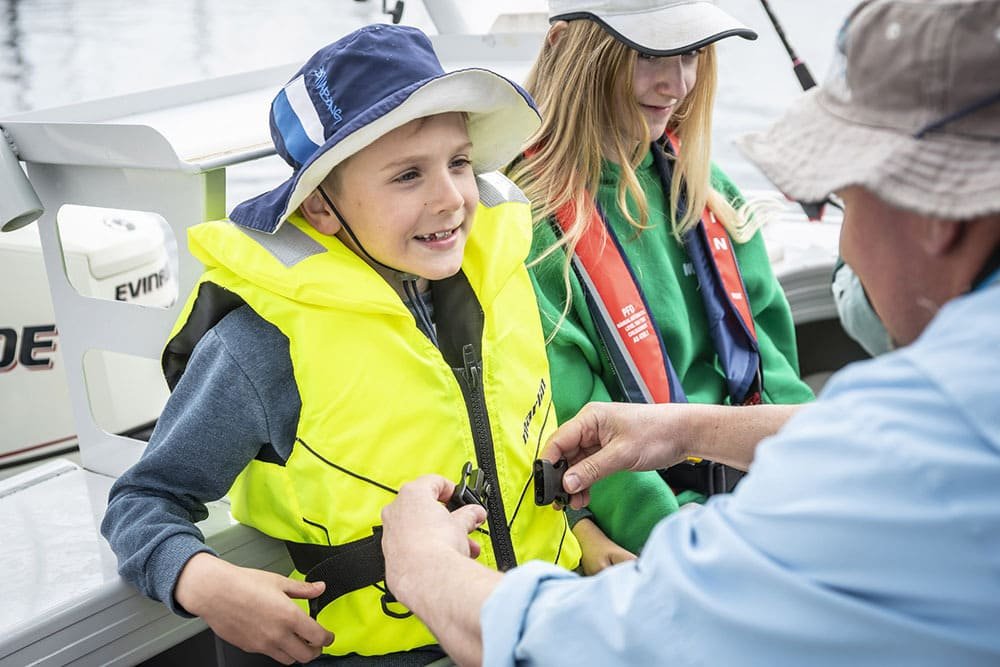
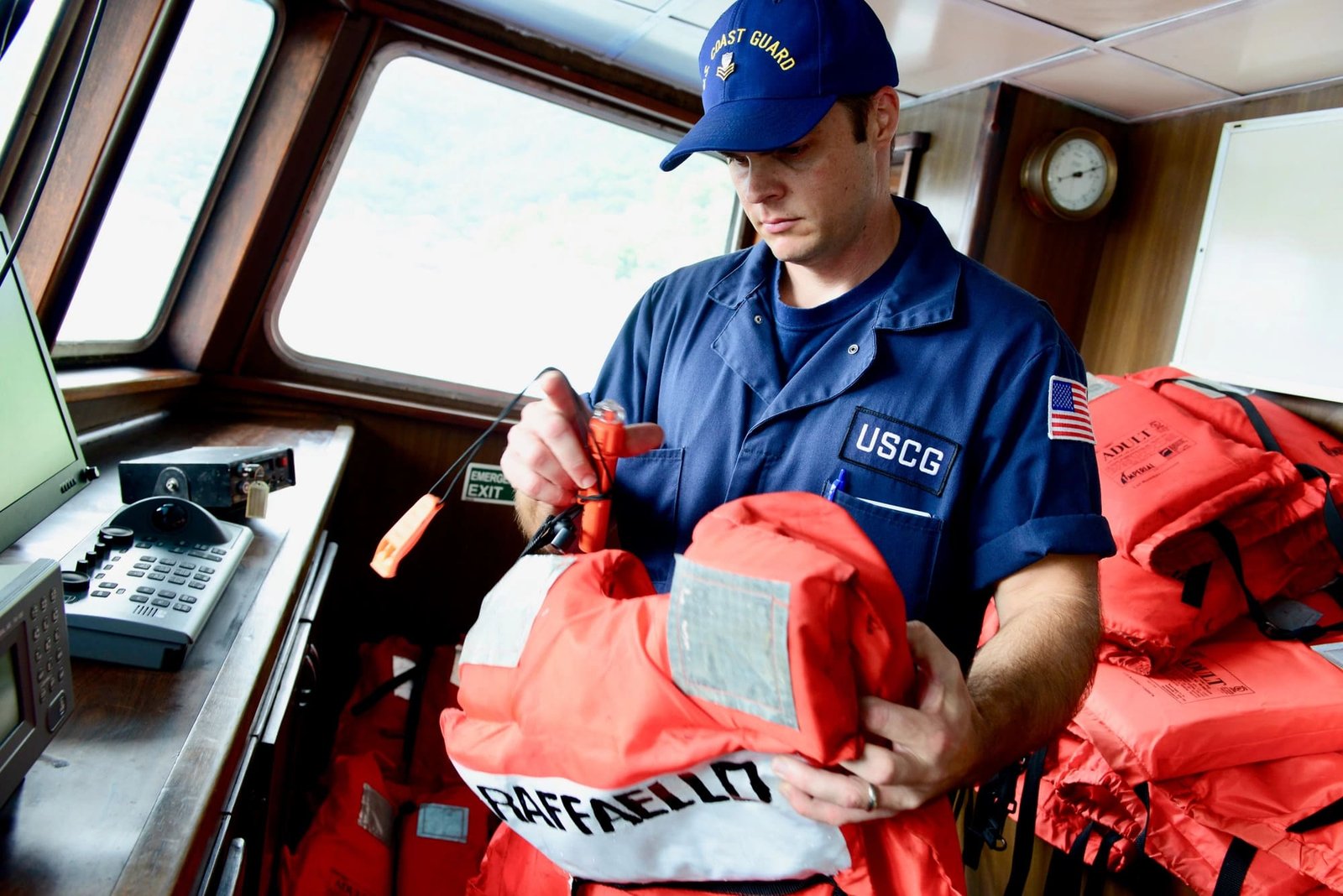
However, foam does not mean “damage-proof.” A torn, waterlogged, badly faded, compressed, or worn jacket may no longer be serviceable. The U.S. Coast Guard recommends checking foam-filled products for wear and buoyancy at least once a year and removing damaged products from use.1
When does an inflatable model make more sense?
Inflatable life jackets are slim before inflation. This can make them more comfortable for fishing, sailing, deck work, and other jobs that involve a lot of movement.
They may be suitable when:
- The users are trained adults
- The jacket must be worn for long shifts
- Low bulk is important
- A pre-use inspection can be completed every time
- Rearming kits and service parts are easy to obtain
- The organization can keep maintenance records
Comfort matters because a life jacket cannot help if it is left in a storage locker. Still, comfort alone does not make an inflatable model safer. It must have a full cylinder, an undamaged bladder, a working inflator, and a usable backup system. Transport Canada warns that poor maintenance can prevent an inflatable life jacket from working as intended.2
Is an inflatable life jacket always better offshore?
No. “Offshore” is not a product type.
For offshore use, buyers must check the performance level, turning ability, weather clothing, harness compatibility, expected rescue time, and applicable marine rules. Under current U.S. guidance, for example, Level 275 products are intended mainly for offshore use in extreme conditions.1 That does not mean every inflatable jacket is a Level 275 product.
For commercial ships and international voyages, buyers may need equipment that meets the applicable SOLAS and International Life-Saving Appliance Code requirements.3 In this situation, approval comes first. Foam versus inflatable comes second.
Which type is easier to maintain?
Foam is easier, but it is not maintenance-free.
Foam models normally have fewer parts to check. Inflatable models need regular inspection of the air chamber, inflator, cylinder, and replaceable activation parts.
Simple foam life jacket checklist
Before use, check:
- Is the outer fabric torn, badly faded, or contaminated?
- Are the seams opening?
- Are the straps frayed?
- Do the buckles and zippers work?
- Is the foam crushed, hard, uneven, or waterlogged?
- Are the size, approval, and instruction labels still readable?
After use, rinse off salt, sand, and dirt as instructed. Let the jacket dry fully before storage. Keep it away from long-term sunlight, strong heat, and damp spaces.
For a fuller replacement guide, see Do Life Jackets Expire? Inspection, Testing, and Replacement Guidelines.
Simple inflatable life jacket checklist
Before each use, check:
- Is the outer cover damaged?
- Is the status indicator showing the correct serviceable color?
- Is the CO₂ cylinder installed correctly?
- Is the cylinder full, unused, and free from corrosion?
- Is the pull handle easy to reach?
- Are the bladder, oral tube, straps, and buckles in good condition?
- Are any dated inflator parts or activation bobbins still within the required service period?
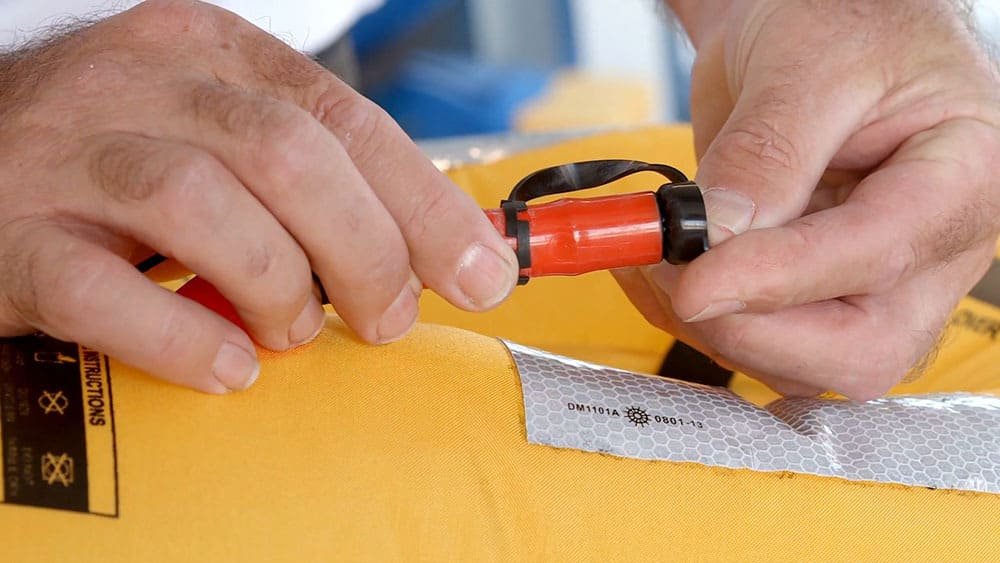
Some inflatable models also require a periodic leak test and a full annual inspection. Follow the instructions for the exact model. Do not apply one maintenance schedule to every brand and inflator system.
If the jacket inflates using its CO₂ cylinder, it must be correctly rearmed and repacked before it can be used again.2 Keep the correct rearming kit available. A kit made for another model may not fit or work properly.
Where should each type be used?
Do not use a simple rule such as “foam for rivers, inflatable for the ocean.” Real use is more complicated.
| Application | Practical Starting Point | Why | What Buyers Must Check |
|---|---|---|---|
| Children and untrained passengers | Correctly sized foam model | Immediate flotation and simple use | Age, weight range, fit, approval, head support, and local rules |
| Public emergency kits | Foam model | Easy to issue and inspect | Size range, storage space, clear instructions, and batch records |
| Flood and debris rescue | Special-purpose inherently buoyant rescue PFD | No inflation system to puncture or trigger by mistake | Abrasion resistance, secure fit, visibility, rescue features, and approval |
| Fishing and sailing | Foam or approved inflatable | Choice depends on comfort, immersion risk, and user training | Activity label, automatic or manual system, buoyancy, fit, and rearming parts |
| Port, dock, and offshore work | Approved occupational foam or inflatable model | Work clothing and movement needs vary | Local rules, fall hazards, harness use, training, inspection program, and service support |
| PWC, towing, and whitewater | Product specifically approved for that activity | High-impact or repeated immersion can make some inflatables unsuitable | Restrictions printed on the label and local regulations |
| Commercial ship or abandon-ship use | Product required by the vessel's authority, flag state, or SOLAS rules | This is a regulated lifesaving application | Exact approval, turning performance, lights, reflective material, whistle, size, and onboard service rules |
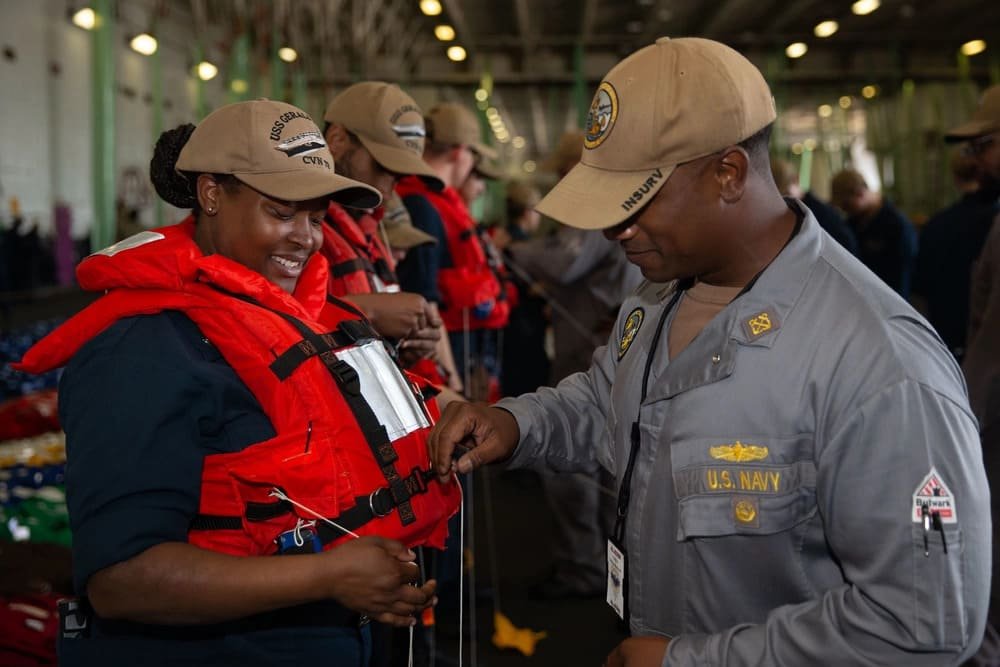
One more point matters: foam and inflatable describe the construction, not the full safety performance. A basic foam buoyancy aid should not be treated as equal to a higher-performance inflatable life jacket. Compare approval, buoyancy, turning ability, user size, and intended use—not just the material inside.
You can learn more about the different product classes in Types of Life Jackets Explained: Choosing the Right PFD for Every Application.
Which type costs less over time?
Foam models usually cost less to manage, but the cheapest unit price is not always the lowest total cost.
| Cost Item | Foam | Inflatable |
|---|---|---|
| Initial unit cost | Usually lower | Usually higher |
| Inspection time | Lower | Higher |
| Replacement parts | Few | CO₂ cylinders, inflators, bobbins, or rearming kits may be needed |
| Training | Basic fitting and inspection | Fitting, inspection, inflation, backup inflation, rearming, and record keeping |
| Storage space | More | Less before inflation |
| Downtime after inflation | Usually low | Cannot return to service until correctly rearmed and checked |
For bulk buyers, a simple cost calculation is:
Total cost = purchase price + inspection labor + training + service parts + spare stock + service downtime
An inflatable model may still be worth the extra cost when comfort makes workers more likely to wear it throughout the shift. A foam model may be better when equipment is shared, maintenance resources are limited, or many users have little training.
What should B2B buyers confirm before ordering?
Before placing a bulk order, ask the supplier for clear answers to the following questions:
- Which country and application is the product approved for?
- Is it a life jacket, buoyancy aid, work vest, or special-purpose PFD?
- What is its buoyancy or performance level?
- Is it designed to turn an unconscious wearer face-up?
- What user weight and chest-size ranges are available?
- Is the inflatable system manual, automatic, or both?
- Which CO₂ cylinder, inflator, or rearming kit does it use?
- How often must it be inspected and serviced?
- Are replacement parts available in the buyer's market?
- Can the supplier provide approval documents, test reports, labels, manuals, and packing details?
- Can representative samples be checked before mass production?
- Can the product be tested with the user's real clothing, harness, or work equipment?
Fit should also be tested carefully. A jacket that rides above the chin or ears may be too loose or too large. See How Should a Life Jacket Fit? for a simple sizing and inspection guide.
Frequently Asked Questions
Are foam life jackets safer than inflatable life jackets?
Not in every situation. Foam is simpler because it provides buoyancy without inflation. Inflatable models can be comfortable and may provide high buoyancy when inflated, but they depend on working components and proper maintenance. The safer choice depends on the user, activity, approval, fit, and water conditions.
Will a foam life jacket still work if it is punctured?
A small surface puncture does not cause instant deflation in the same way as a damaged inflatable bladder. However, serious cuts, exposed or damaged foam, waterlogging, broken straps, and open seams can make a foam jacket unserviceable. Damaged equipment should not stay in use.
Can children wear inflatable life jackets?
Do not assume they can. Rules depend on the market and product approval. U.S. Coast Guard guidance describes approved inflatable products as adult-size devices.1 Other countries may have specific age or weight restrictions. For children, a correctly sized and approved foam life jacket is usually the simpler starting point.
Can an inflatable life jacket be reused after it inflates?
Often yes, if it is not damaged. It must be checked, fitted with the correct replacement components, rearmed, and repacked according to the manufacturer's instructions before it returns to service.2
Which type is best for offshore work?
There is no single answer. Check the required approval, performance level, clothing, harness compatibility, expected rescue time, and service program. Some offshore jobs use inflatable models because they are easier to wear for long periods. Other operations require inherently buoyant or SOLAS-approved equipment.
Conclusion
Foam life jackets are simple, provide immediate buoyancy, and are usually easier to manage across a large group. Inflatable life jackets are lighter and less bulky, but they need trained users, careful inspection, correct rearming parts, and a reliable maintenance program.
Do not choose by construction alone. First confirm the user, water conditions, rescue time, activity, fit, performance level, and destination-market rules. Then compare purchase price, inspection work, training, spare parts, and long-term service costs.
If you are sourcing life jackets for distribution, rescue teams, marine operations, or project purchasing, view our life jacket product range or contact Jiekang Medical for available specifications, documentation, OEM options, and bulk-order support.
[U.S. Coast Guard, “Life Jacket Wear / Wearing Your Life Jacket.”](https://www.uscgboating.org/recreational-boaters/life-jacket-wear-wearing-your-life-jacket.php) Explains inherent, inflatable, hybrid, and special-purpose designs; serviceability; user restrictions; performance levels; sizing; and activity-specific selection. ↩
[Transport Canada, “Inspection and Maintenance of Inflatable Lifejackets and Personal Flotation Devices.”](https://tc.canada.ca/en/marine-transportation/marine-safety/ship-safety-bulletins/inspection-maintenance-inflatable-lifejackets-personal-flotation-devices-ssb-no-12-2019) Covers pre-use checks, leak testing, annual inspection, inflation components, backup inflation, and rearming. ↩
[International Maritime Organization, “Life-saving Appliances.”](https://www.imo.org/en/OurWork/Safety/Pages/LifeSavingAppliances-default.aspx) Explains the role of SOLAS and the International Life-Saving Appliance Code in the manufacture, testing, maintenance, and carriage of lifesaving equipment. ↩