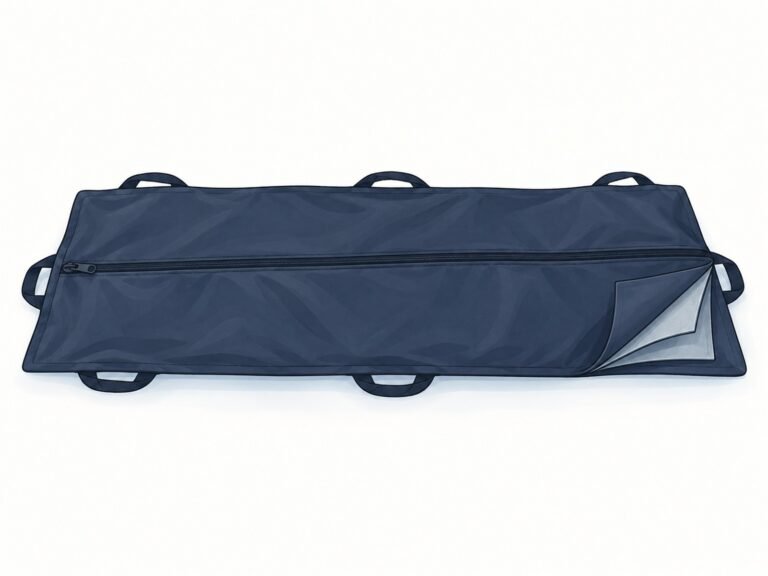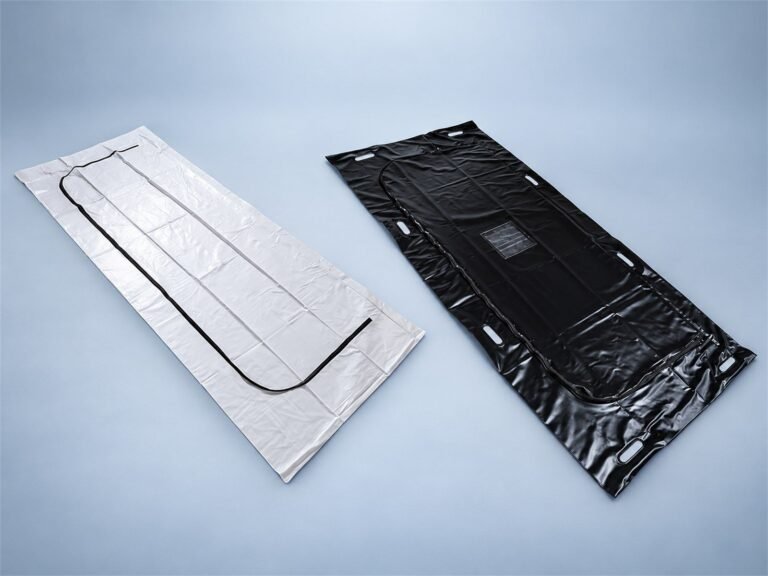
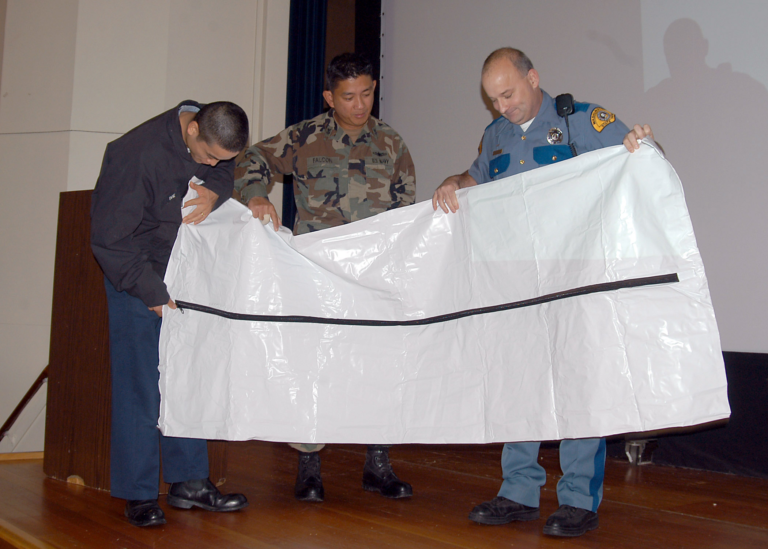
The word “reusable” can make a quotation look attractive. Buy one stronger bag, clean it, and use it again. On paper, that sounds cheaper than opening a new bag every time.
The real calculation starts after the first use. Someone has to receive the contaminated bag, clean it, disinfect it, dry it, inspect the zipper and seams, record the cycle, and return it to storage. If the bag leaves with the remains, there may be nothing to bring back.
Short answer: Disposable body bags are usually the simpler choice when a bag travels with the remains, may be heavily soiled, or will be used outside a controlled facility. Reusable bags can make sense in a closed in-house system, but only when the exact product is designed for reuse and the organization has a written reprocessing process.
First, Is the Bag Really Designed for Reuse?
Do not decide from the material or thickness alone.
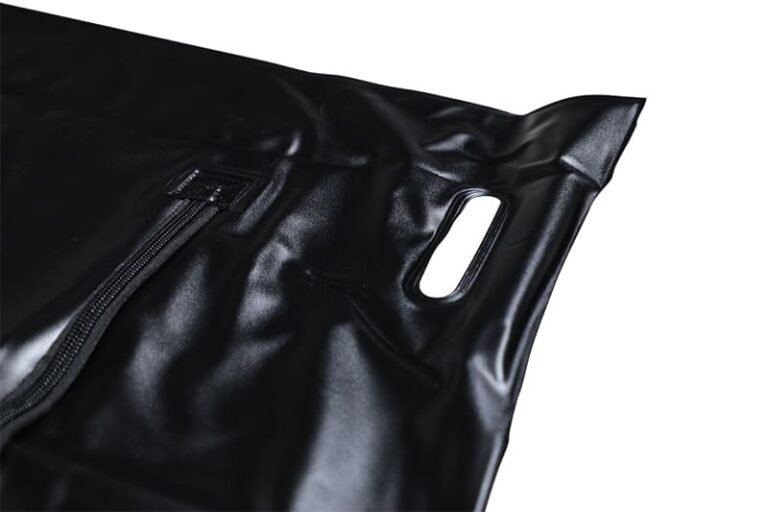
A thick PVC bag may be tough, but that does not mean its zipper, seams, coating, and handles can go through repeated cleaning. A lighter-looking bag may be reusable if the manufacturer designed and tested the whole product for that purpose.
One useful baseline is the WHO MEDEVIS body-bag entry1, which classifies the standard cadaver bag in that entry as non-reusable and describes it as a single-use device. Specialized reusable products also exist. For example, one heavy-duty reusable body bag2 is explicitly sold as washable and reusable.
The important words are “explicitly sold.” A buyer should not have to guess.
Before approving a reusable model, ask the supplier for:
- written confirmation that the finished bag is reusable;
- compatible cleaning agents and disinfectants;
- concentration, contact time, rinsing, and drying instructions;
- inspection points and clear reasons to retire the bag;
- any validated cycle limit or performance data after repeated cleaning;
- instructions for tracking each bag through use and reprocessing.
If those answers do not exist, treat the bag as single-use.
Jiekang’s current PVC body bag and PEVA body bag pages describe products for temporary storage and transfer. The pages do not publish a reuse cycle or cleaning protocol. That is a useful reminder for any supplier comparison: a durable product description is not the same as a reusable-product claim.
Which Option Really Costs Less?
Disposable bags are easy to price because the main cost repeats with every case. Reusable bags look cheaper only when the bag returns, survives cleaning, and is used enough times to recover the extra work.
| Cost to include | Disposable bag | Reusable bag |
|---|---|---|
| Purchase | New unit for every use | Higher initial unit cost is common |
| Cleaning after use | No reprocessing for another case | Labour, water, cleaning agent, disinfectant, PPE, and drying space |
| Inspection | Basic incoming and pre-use check | Check after every cycle for damage, stains, odour, coating wear, seams, zipper, and handles |
| Tracking | Lot, stock, and expiry control | Individual bag ID, use history, cleaning record, and retirement record |
| Turnaround | A new bag is ready from stock | Bag may be unavailable while cleaning and drying |
| Loss | Used bag is expected to leave stock | A bag that leaves the facility or is not returned breaks the reuse plan |
| Disposal | Cost after every use | Cost when damaged, contaminated beyond the approved process, or retired |

A simple cost-per-use model is more useful than comparing two unit prices:
Disposable cost per use = bag + inbound freight and storage + handling and disposal
Reusable cost per approved use = purchase cost divided by completed safe cycles + cleaning labour + chemicals + PPE + utilities + inspection + tracking + repair or replacement losses
The phrase “completed safe cycles” matters. A supplier may say a bag is reusable, but your facility may retire it sooner because of zipper wear, staining, damaged handles, or a use that falls outside the cleaning procedure.
Reusable bags are most likely to save money when they stay inside one facility, staff use the same process every time, and enough bags are available to cover cleaning turnaround. Disposable bags are often more predictable when the bag goes to another organization, accompanies the remains to final disposition, or sits in emergency stock for occasional use.
Is a Reusable Bag More Hygienic?
Neither option is automatically more hygienic. The process makes the difference.
The OSHA bloodborne-pathogens standard3 treats human blood and certain body fluids as potentially infectious and defines decontamination as making an item safe for handling, use, or disposal. That is a higher bar than making a bag look clean.
Visible material must come off before disinfection can work properly. OSHA’s enforcement guidance4 notes that organic debris such as blood can interfere with effective disinfection of reusable equipment.
There is another distinction buyers often miss: wiping the outside of a bag during transport is not the same as reprocessing it for a new case. In its special guidance for viral haemorrhagic fevers, the CDC describes removing visible soil, reapplying disinfectant, and allowing the required contact time5. That process reduces contamination on the outside during handling. It does not turn an ordinary single-use bag into a reusable one.
A practical reusable workflow needs separate dirty and clean stages:
- Receive and identify the used bag without spreading contamination.
- Remove visible soil using the approved method.
- Clean every surface, including folds, zipper areas, handles, and the underside.
- Apply a compatible disinfectant at the correct concentration and contact time.
- Rinse if required, dry the bag completely, and keep it away from the dirty area.
- Inspect, record, and release the bag back into service—or retire it.
The bag should be removed from service if it has a puncture, cracked coating, open seam, damaged zipper, weakened handle, persistent contamination, or any condition the manufacturer lists as a reason for disposal.
The risk should also be kept in perspective. The WHO overview of dead bodies after disasters6 explains that bodies from natural disasters do not normally cause epidemics. Workers can still face blood, body-fluid, sharp-object, and gastrointestinal exposure. Good handling and cleaning procedures protect staff without turning every case into the same high-risk scenario.
Which Bag Fits Each Application?
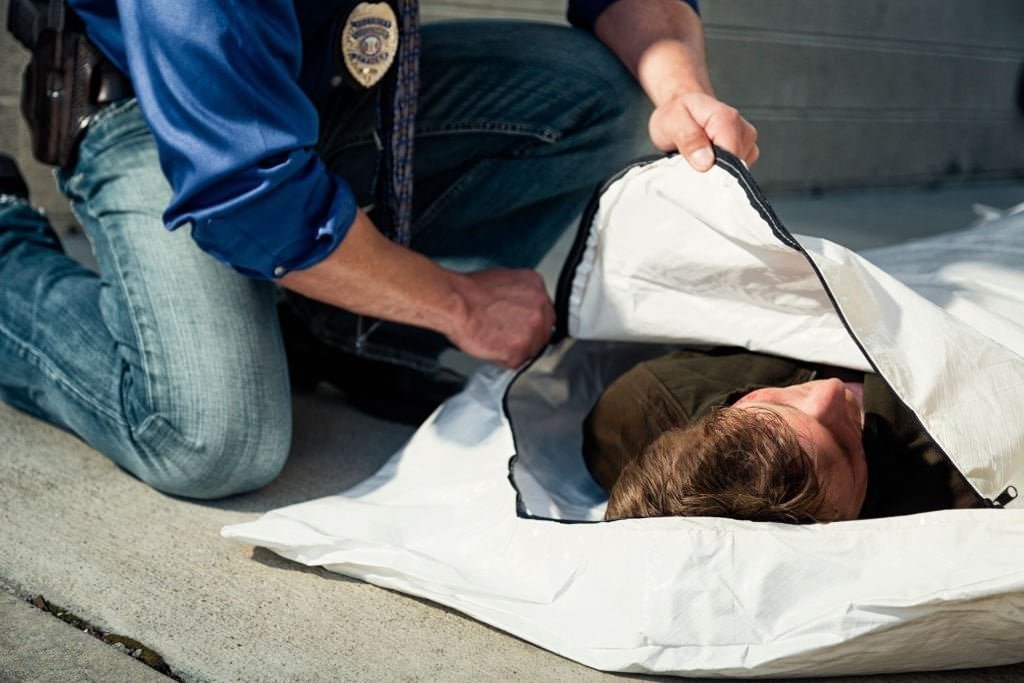
| Application | Practical starting point | Why |
|---|---|---|
| Routine hospital-to-mortuary transfer | Disposable is usually simpler | Fast availability, clear stock control, and no return-and-cleaning loop |
| Bag accompanies the remains to a funeral home, crematory, burial, or another organization | Disposable | The original facility may never receive the bag back |
| Emergency stock in vehicles or warehouses | Disposable, individually packed | Easy to distribute, replace, and trace by lot |
| Field recovery or disaster deployment | Usually disposable; consider a reusable model only with a planned return and cleaning system | Soil, debris, uncertain exposure, transport distance, and damaged bags complicate reprocessing |
| Repeated movement inside one mortuary or controlled institution | Reusable may be practical | The bag can remain in a closed loop with trained staff and a dedicated cleaning area |
| Anatomical teaching or another planned institutional program | Reusable may be considered if the product and protocol allow it | Use is predictable, but cleaning compatibility and inspection still need written control |
| Special infectious-disease case | Follow the specific protocol | The required number of layers, sealing method, disinfectant, and disposal route may override the normal purchasing choice |
This table is a starting point, not a substitute for the facility’s infection-control procedure. The same organization may need both types: disposable bags for transfers and emergency stock, plus a small controlled pool of reusable bags for a specific in-house task.
What Should Buyers Put in the Specification?
The word “reusable” is too vague for a tender or purchase order. Write down what the supplier must prove.
For a disposable bag, confirm:
- single-use labelling;
- material, thickness, size, load rating, handles, zipper, and seams;
- packaging, carton quantity, shelf life, and storage conditions;
- the disposal route required by local policy.
For a reusable bag, add:
- a manufacturer-approved reprocessing method;
- compatible disinfectants and temperature limits;
- cycle limit or retirement criteria;
- performance of seams, handles, and zipper after repeated cleaning;
- an identification method for use and cleaning records;
- replacement availability and warranty terms.
Then test a sample in the real workflow. Check whether staff can clean the folds around the zipper, whether water remains trapped in handles, how long drying takes, and whether the bag still closes smoothly after several approved cycles. Those details decide whether the reuse plan will work on a normal shift.
For material and construction questions, use the body bag procurement guide together with the PVC vs PEVA comparison. If the job involves difficult handling, the heavy-duty body bag guide covers load ratings, handles, and seams in more detail.
Frequently Asked Questions
Can every heavy-duty body bag be reused?
No. Heavy duty describes strength or construction, not the approved number of uses. A bag is reusable only when the manufacturer says it is and provides a suitable reprocessing method.
Which option is cheaper for a hospital?
Disposable bags usually give a more predictable cost per case. A reusable bag may cost less in a closed in-house system, but only after cleaning labour, chemicals, PPE, drying, inspection, tracking, losses, and early retirement are included.
Does disinfecting the outside make a disposable bag reusable?
No. Surface disinfection during handling reduces contamination. Reuse requires a product designed for reprocessing and a complete cleaning, disinfection, drying, inspection, and tracking process.
Are disposable body bags always safer?
They remove the risk of an incomplete reuse cycle, but they still need correct handling, suitable construction, and proper disposal. A purpose-built reusable bag can also be managed safely when the approved process is followed.
Can reusable body bags be used for infectious remains?
Only when the applicable disease protocol, local rules, manufacturer’s instructions, and facility infection-control team allow it. Some situations require special bagging, sealing, decontamination, or disposal that makes the normal reusable workflow unsuitable.
Is a reusable bag automatically the greener option?
No. The result depends on how many safe cycles the bag completes, as well as water, chemicals, energy, transport, damaged units, and end-of-life disposal. Ask for evidence before making an environmental claim.
Final Takeaway
Choose disposable bags when the bag will leave the facility, when contamination or return logistics are uncertain, or when no reprocessing system exists. Consider reusable bags only for a purpose-built product in a controlled loop with trained staff, suitable cleaning space, written instructions, and reliable tracking.
The cheaper unit is not always the cheaper system. Price the whole workflow, then choose the option your team can manage correctly every time.
[“Body bag”](https://medevis.who-healthtechnologies.org/devices/TESK_047), WHO MEDEVIS. The listed standard cadaver-bag entry is classified as non-reusable and single-use. ↩
[“Re-Usable Heavy Duty Body Bag”](https://www.meaconsa.co.za/product/re-usable-heavy-duty-body-bag/), Meacon. Current product example explicitly described as washable and reusable. ↩
[“1910.1030 — Bloodborne Pathogens”](https://www.osha.gov/laws-regs/regulations/standardnumber/1910/1910.1030/), Occupational Safety and Health Administration. Defines Universal Precautions and decontamination for blood and other potentially infectious materials. ↩
[“Enforcement Procedures for the Occupational Exposure to Bloodborne Pathogens Standard”](https://www.osha.gov/enforcement/directives/cpl-2-244c), Occupational Safety and Health Administration. Notes that organic debris can interfere with effective disinfection of reusable equipment. ↩
[“Safe Handling of Human Remains of VHF Patients in U.S. Hospitals and Mortuaries”](https://www.cdc.gov/viral-hemorrhagic-fevers/hcp/infection-control/guidance-for-safe-handling-of-human-remains-of-vhf-patients-in-u-s-hospitals-and-mortuaries.html), Centers for Disease Control and Prevention. Describes visible-soil removal, disinfectant application, and contact time during body-bag handling. ↩
[“Risks Posed by Dead Bodies after Disasters”](https://www.who.int/publications/m/item/risks-posed-by-dead-bodies-after-disasters), World Health Organization. Explains the limited epidemic risk and the occupational exposure risks faced by people handling remains. ↩