When you compare spine boards, the straps can seem like a small detail. Then you notice there are loose straps, connected “spider” systems, buckles, hook-and-loop, and speed clips. What is the difference, and which one should you buy?
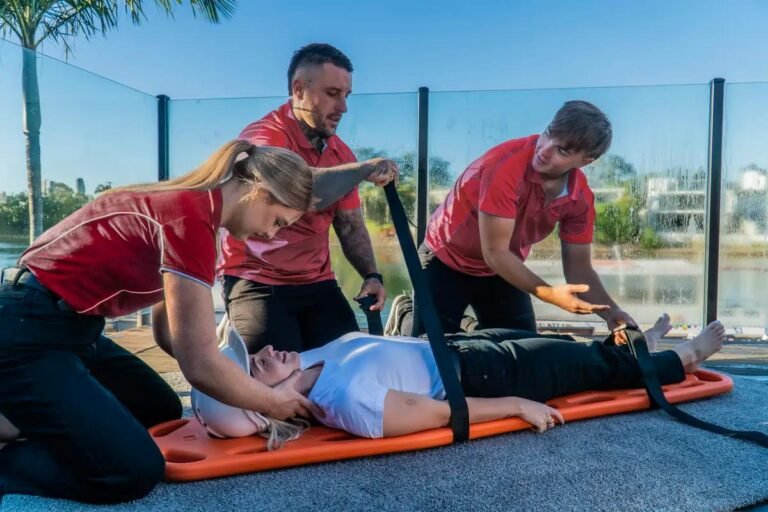
Here is the simple answer: most buyers are choosing between separate straps and one connected harness. After that, check how the straps attach to the board, how they fasten, and whether the set is intended for your use.
Separate Straps or a Spider Strap?
| Type | In plain English | A good fit when… |
|---|---|---|
| Separate straps | Several individual straps that fasten around the board and patient | You want a simple set and the option to replace one strap at a time |
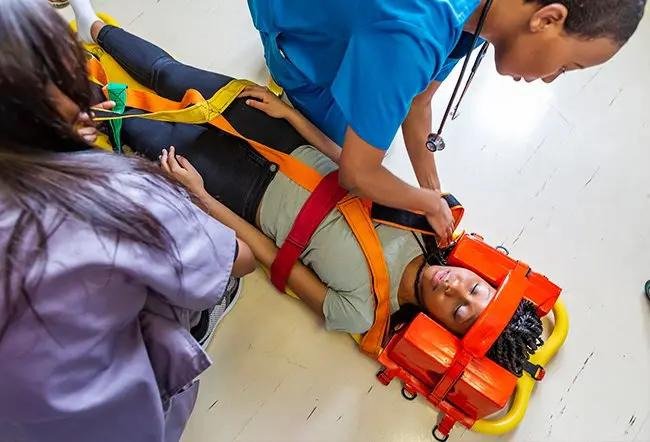
| Spider strap | Several straps joined into one harness, usually with a color-coded layout | Your team prefers one connected set that is easy to recognize and keep together |
Separate straps are straightforward, but they can get mixed up or go missing if they are stored loose. A connected harness keeps the pieces together, though replacing one worn section may mean replacing more of the set. Check the supplier’s replacement options.
“Spider strap” is a common name, not one fixed design. The number of straps, colors, and adjustment points varies by model. For example, Spencer’s Rock Straps1 use a color-coded, multi-point layout. Other systems may look different, so compare the actual product rather than the name.
How Do They Attach to the Board?
Most straps either pass through openings in the board or use clips that connect to pins. If the board and straps are sold together as one set, the supplier should specify the intended connection. This is mainly something to double-check when buying replacement straps or mixing equipment from different models.
Speed clips are quick to attach, but the board needs the matching pins. Ferno says its Model 436 speed-clip restraints2 require speed-clip pins on the equipment. So if you are replacing straps, check the board first.
Buckles or Hook-and-Loop?
Think about who will use the system and how it will be cleaned.
- Buckles give a clear fastening point. Ask whether they are easy to handle with gloves and how they should be cleaned.
- Hook-and-loop is quick to adjust and keeps the design simple. Check that it still grips after repeated use and cleaning.
Neither is automatically the better option. If possible, try a sample with gloves and follow the cleaning instructions for that exact model.

Which Type Should You Choose?
For a small team that wants a straightforward setup, separate straps may be enough. If you prefer a connected set that is easy to identify and store, look at a spider-style harness. If your board has speed-clip pins, matching clips can make attachment simpler.
The best choice is the one your team already knows how to check and use. Before placing a larger order, ask for a sample and confirm what comes in the package, whether spare straps are available, and how the set should be cleaned.
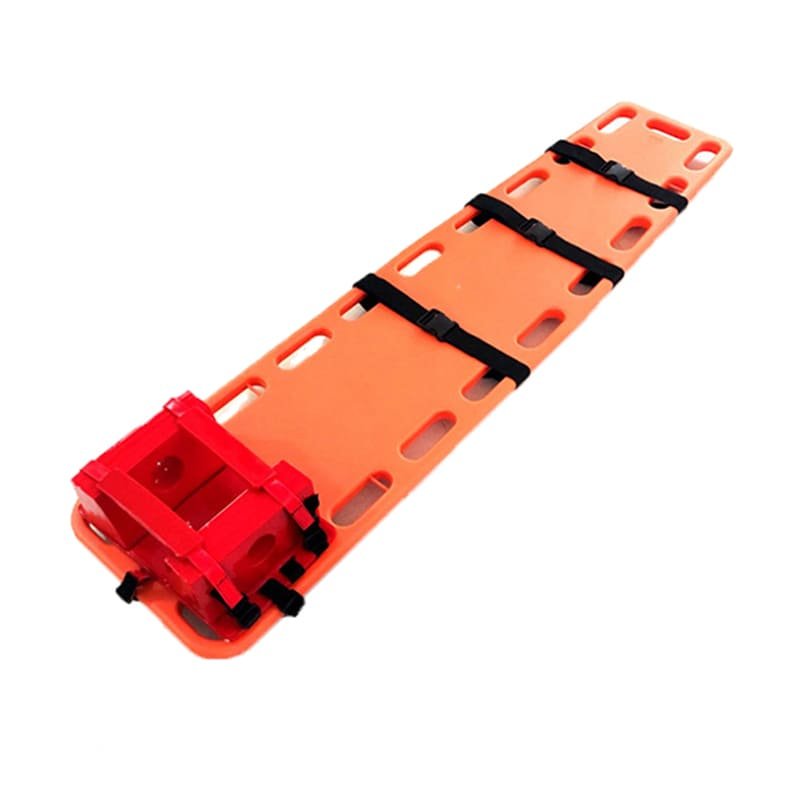
If you are choosing the board and restraints together, Jiekang’s spine board range includes several board styles. The YJK-F1 PE spine board lists straps as an accessory. Tell us which board and strap setup you need, and we can confirm the available configuration for your order.
One Important Point About Ambulance Transport
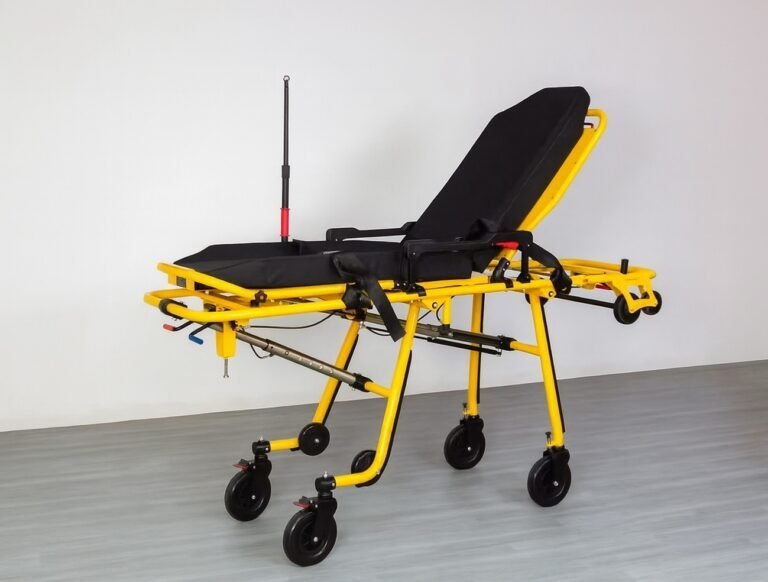
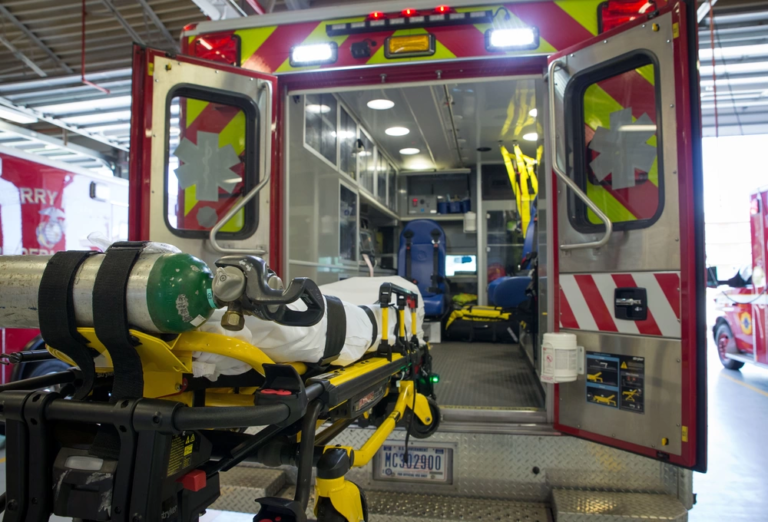
Straps used to secure someone to a spine board are not automatically the same as the restraints used to secure a patient on an ambulance cot during road transport. Some manufacturers classify board straps as temporary or secondary-use restraints. Ferno’s Model 417-1 restraint manual3 explains this distinction for its products.
If the board will be carried on a cot, check the cot manufacturer’s instructions for how the patient and board should be secured. Don’t assume the board straps do both jobs.
The board straps also work alongside the head support; they do not replace it. Our guide to how a head immobilizer works with a spine board explains how those pieces fit together.
What Should You Confirm Before Ordering?
Keep it simple. Ask the supplier:
- Are these separate straps or a connected harness?
- How do they attach to this board: through the openings or with clips and pins?
- What buckles or closures are used?
- What exactly is included with each board?
- Can I order replacement straps, and how should the system be cleaned?
- Are these restraints intended for board use, ambulance transport, or both?
That short list usually clears up the important details without turning the purchase into a guessing game.
Frequently Asked Questions
Are spider straps better than separate straps?
Not for every team. A connected harness is easier to keep as one set. Separate straps can be easier to replace individually. Choose the layout your team prefers and can maintain.
Will speed clips fit any spine board?
No. The board needs compatible pins. Confirm this when ordering replacement straps.
Are spine board straps included with the board?
It depends on the model and package. Ask for an itemized list of what is included.
Can board straps be used for ambulance transport?
Not necessarily. Check the intended use in the restraint and cot manuals. Board restraints and ambulance cot restraints may serve different purposes.
The Takeaway
Start by choosing between separate straps and a connected spider-style harness. Then check how they attach, how they fasten, what comes in the set, and whether they suit the way your team works.
The product name matters less than a clear answer from the supplier about the exact model, included parts, cleaning, and intended use.
[“Rock Straps”](https://www.spencer.it/en/emergency-rescue-equipment/immobilization/spider-straps/rock-straps), Spencer. Manufacturer example of a color-coded, multi-point spine board restraint system. ↩
[“Model 436 Speed Clip Restraints”](https://www.ferno.com/product/model-436-speed-clip-restraints?hl=en-us), Ferno. Product compatibility information for speed-clip restraints. ↩
[“Model 417-1 Harness Restraint”](https://www.ferno.com/getmedia/ec68a8ed-8776-405b-9fed-4de4c5c18a2e/417-1-restraint-0231-03.pdf?ext=.pdf), Ferno. Manufacturer definitions of secondary-use restraints and motor-vehicle transport restraints. ↩