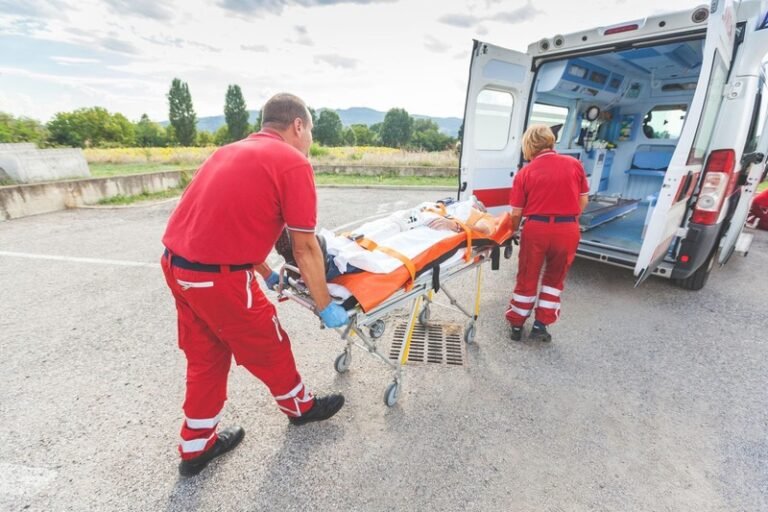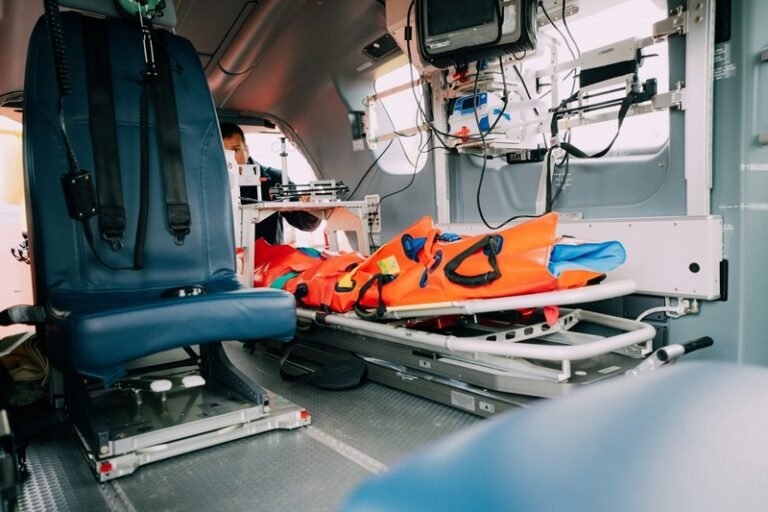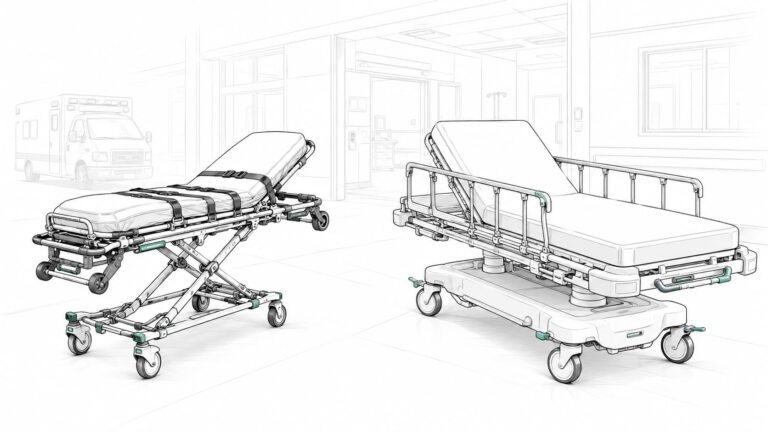
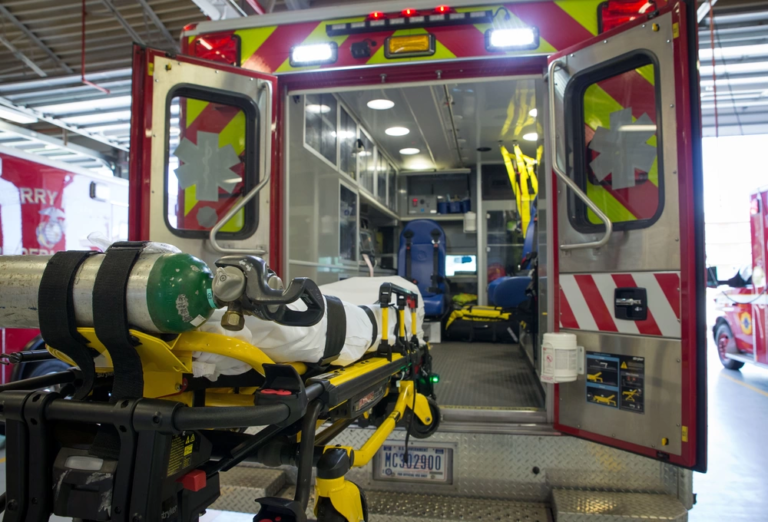
When a buyer asks me whether a manual or electric ambulance stretcher is better, I usually answer with another question: which part of the job do you want the equipment to make easier?
That is not an attempt to avoid the question. It is the question. Some powered stretchers raise and lower the patient, some loading systems move the stretcher into the ambulance, and some configurations do both. If we compare them all under the single label “electric,” we can easily pay for assistance that does not solve the crew’s main problem.
My short answer is this: a manual stretcher is often the practical choice when low purchase cost, lower equipment weight, simple servicing, and independence from batteries matter most. A powered system becomes easier to justify when frequent lifting, heavier patients, high call volume, or crew-injury prevention outweigh the higher acquisition and support costs.
Before signing a purchase order, however, I would confirm one point above all others: the exact stretcher, loading system, floor mount, restraints, and ambulance must work together as a complete system.
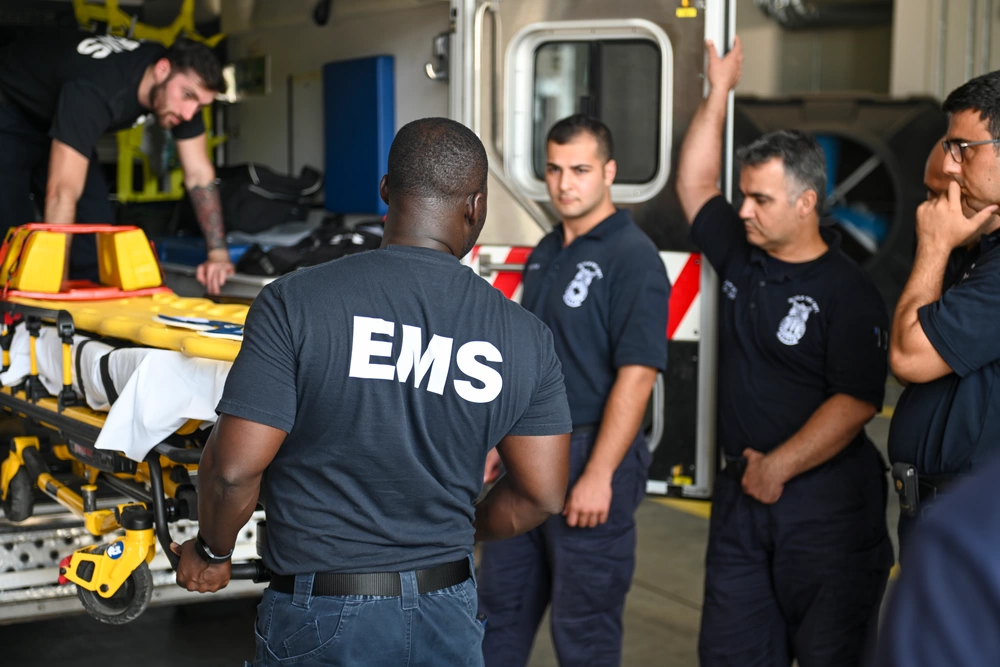
First, What Does “Electric Stretcher” Actually Mean?
This terminology causes more confusion than it should. In a quotation, I recommend asking the supplier to state exactly which of the following is included:
- Manual ambulance cot: the crew supplies the force for height adjustment and loading.
- Power-lift cot: a battery-powered mechanism raises and lowers the cot, but the crew may still need to guide or lift it into the ambulance.
- Powered loading system: a vehicle-mounted system assists with loading and unloading; the cot itself may or may not have powered height adjustment.
- Integrated powered cot and loading system: both lifting and vehicle loading are assisted as a matched system.
These are not small differences. A team whose main difficulty is raising a patient from a low position may benefit from a power-lift cot. A team whose injuries occur at the rear of the ambulance may need loading assistance. Buying the first without understanding the second can leave the hardest lift almost unchanged.
Manual vs Electric Ambulance Stretchers: Procurement Comparison Table
I use the table below as a starting point, not as a substitute for model-specific specifications. “Powered” refers to a power-lift cot and may also include a compatible powered loading system where stated by the supplier.
| Procurement factor | Manual ambulance stretcher | Powered stretcher or powered system | What the buyer should verify |
|---|---|---|---|
| Initial cost | Usually lower | Usually higher; vehicle hardware may be separate | Itemized price for cot, mount, loader, batteries, charger, installation, and training |
| Crew effort | Crew provides more lifting and lowering force | Can reduce force during powered movements | Which movements are powered: raise, lower, load, unload, or all four? |
| Stretcher weight | Often lighter | Motors, batteries, and actuators can add weight | Empty weight and how the cot is moved if power assistance is unavailable |
| Loading into the ambulance | Normally requires manual guidance and lifting according to the design | May still be manual unless a loading system is included | Loading height, rear access, floor mount, safety hook, and loader compatibility |
| Patient capacity | Depends on the exact model | Depends on the exact model; “powered” does not automatically mean bariatric | Rated load, test method, and restrictions at each height or position |
| Power dependence | No battery required | Requires charging and battery management | Runtime, charge time, spare-battery policy, battery indicators, and replacement interval |
| Backup operation | Normal operation is mechanical | Manual override or emergency procedure may be needed | Demonstration of safe operation with a depleted battery or electrical fault |
| Maintenance | Usually fewer electrical components | Adds batteries, controls, actuators, connectors, and software or electronics | Preventive-maintenance schedule, diagnostic support, parts availability, and service response time |
| Training | Still requires safe lifting, locking, and restraint training | Requires those skills plus powered controls and failure procedures | Initial training, refresher training, competency records, and trainer materials |
| Vehicle changes | May still require an approved mount or installation work | Powered loaders often require installation, electrical supply, and structural confirmation | Written compatibility for the exact ambulance make, model, floor, and interior layout |
| Downtime risk | Mechanical wear can still remove a cot from service | More failure points and specialist service may increase downtime if support is weak | Local parts stock, loan equipment, warranty turnaround, and field-replaceable components |
| Typical operational fit | Lower call volume, limited service infrastructure, reserve fleets, or weight-sensitive operations | Frequent patient handling, heavier average loads, high call volume, or formal injury-reduction programs | Use local call data and a crew trial instead of choosing by setting alone |
The last row deserves emphasis. I would not automatically assign manual stretchers to rural services and powered stretchers to urban services. A rural crew may travel long distances with limited backup and value power assistance greatly; an urban service may have tight stairwells or vehicle weight limits that change the calculation. The work pattern matters more than the postcode.
Where Manual Stretchers Still Make Good Sense
Manual stretchers are sometimes described as the “basic” option. I think that undersells them. A well-matched manual cot can be a sensible operational tool when the crew understands its limits and the service has suitable lifting practices.
The strongest reasons to choose manual are straightforward:
- Lower entry cost: more of the budget can remain available for vehicles, restraints, infection-control supplies, maintenance stock, or additional units.
- No charging routine: the cot is not dependent on battery availability or charger access.
- Lower complexity: there are usually fewer electrical components to inspect and troubleshoot.
- Potentially lower empty weight: this can matter on uneven ground, around steps, or whenever the crew must move the cot without vehicle assistance.
- Easier support in some markets: local technicians may be more comfortable with mechanical parts than proprietary powered assemblies.
But I would avoid turning those benefits into promises. “Manual” does not mean maintenance-free, indestructible, or safe in every lifting situation. Wheels, frame joints, fasteners, height controls, mounts, mattresses, and restraints still require inspection. The crew is also absorbing more of the physical work.

That workload is not a minor procurement detail. NIOSH identifies lifting patients and equipment as an occupational hazard for EMS workers and recommends safe patient-handling equipment and training1. A lower purchase price is less attractive if the chosen workflow repeatedly exposes crews to avoidable high-force lifts.
When Powered Assistance Earns Its Cost
Powered equipment makes its strongest case through ergonomics, not novelty. If crews raise, lower, load, and unload patients many times per shift, even a modest reduction in effort is repeated across hundreds or thousands of movements.
There is useful evidence here, but I would present it carefully. In one EMS service, introducing powered stretchers and loading systems was associated with a reduction in stretcher-related musculoskeletal-disorder incidence from an average of 20.0 to 4.3 cases per 100 full-time-equivalent workers one year later—a 78% reduction. The authors estimated that the equipment costs could be recovered within the systems’ expected seven-year service life.The result supports evaluating powered equipment as an injury-prevention investment2 It does not guarantee the same result for every service.
A more recent interrupted time-series study also found that, after power-lift stretchers were introduced, patient-handling injuries among ambulance personnel fell by 50.4% per 1,000 calls and 46.6% per 100 full-time-equivalent employees.That study strengthens the case for considering workforce-injury data in procurement3
What I would not say is that powered equipment is always faster. A laboratory study involving experienced EMS workers found that one powered cot design substantially reduced measured back and shoulder muscle activity and ground reaction force compared with another cot, but the powered task took longer.Ergonomic assistance and speed should therefore be tested separately4
In practical terms, powered assistance is easier to justify when:
- patient handling is frequent;
- heavier patients are common;
- the rear loading movement is a known high-risk task;
- injury reports, modified-duty days, or staff feedback show a handling problem;
- the fleet can support charging and preventive maintenance;
- local service and spare parts are available; and
- the ambulance is compatible with the proposed system.
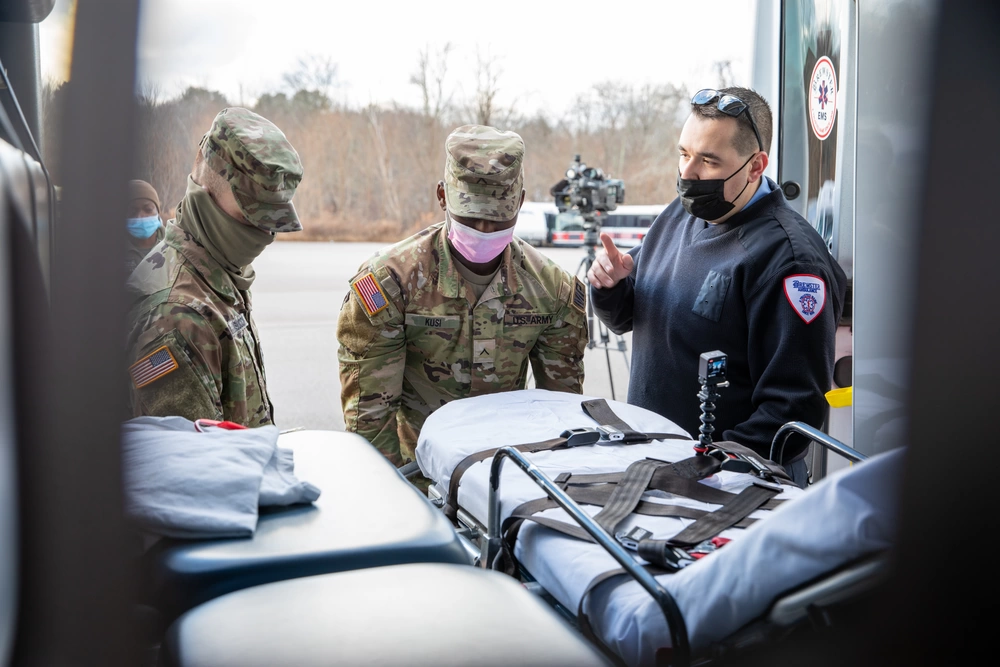
Compatibility Is a Pass-or-Fail Requirement
This is the part of the purchase I would never approve from a brochure alone. A stretcher can have excellent specifications and still be the wrong purchase if it does not interface correctly with the vehicle.
The buyer should obtain written confirmation covering:
- stretcher model and configuration;
- compatible floor mount or fastening system;
- powered loader model, if used;
- ambulance make, model, model year, floor construction, rear-door opening, and loading height;
- available interior clearance throughout loading and unloading;
- electrical requirements and approved installation method;
- patient-restraint configuration;
- rated load for the complete configuration; and
- any required installation inspection, validation, or recertification.
This caution is supported by crash-safety work, not just procurement preference. NIOSH ambulance test methods evaluate the patient cot, cot mount, and restraint system as connected elements of occupant safety5. In other words, “the cot fits through the door” is not the same as “the complete system is correctly matched and secured.”
Operational records tell a similar story. In one study of 129,110 EMS transports, 14 of 23 reported stretcher-related adverse events involved operation of the stretcher-to-ambulance safety latch.The latch and loading interface deserve their own acceptance test6

Compare Total Cost, Not Just the Cot Price
The lowest quotation is not always the lowest-cost purchase, and the most expensive system is not automatically the best value. I prefer a simple total-cost-of-ownership worksheet covering the planned service period.
| Cost item | Manual stretcher | Powered system | Information to request in the quotation |
|---|---|---|---|
| Stretcher purchase | Base cot and accessories | Powered cot and accessories | Exact model, configuration, included restraints, mattress, IV pole, and accessories |
| Vehicle interface | Mount, safety hook, and installation | Mount, powered loader, electrical work, and possible vehicle modification | Hardware, labour, validation, and vehicle downtime |
| Energy system | Not applicable | Batteries, chargers, cables, and replacements | Quantity included, warranty, expected replacement interval, and unit prices |
| Preventive maintenance | Mechanical inspection and wear parts | Mechanical inspection plus powered components and diagnostics | Schedule, annual cost, required tools, and authorized service arrangements |
| Corrective repair | Wheels, locks, frames, controls, restraints, and other wear or damage | All manual-type items plus actuators, controls, wiring, connectors, and batteries | Parts price list, lead times, labour rates, and common repair kits |
| Training | Handling, adjustment, restraints, loading, and daily checks | The same topics plus power controls, battery care, and backup operation | Number of learners, trainer qualification, materials, and refresher support |
| Downtime cover | Spare cot or repair turnaround | Spare cot, spare battery, loan unit, or service contract | Response time and temporary replacement policy |
| Workforce impact | Greater manual-handling exposure may carry injury costs | Potential injury reduction may offset part of the investment | Local injury rate, lost time, overtime, modified duty, and workers’ compensation data |
| End of service life | Disposal, resale, or refurbishment | Battery disposal plus equipment disposal, resale, or refurbishment | Take-back options, parts-support period, and decommissioning requirements |
A fair financial comparison uses the same time horizon for both options. If your fleet expects seven years of service, calculate seven years of batteries, inspections, parts, training, downtime, and injury-related costs—not one purchase price against another.
A Practical Pre-Purchase Trial
I learn more from a controlled crew trial than from a page of adjectives. Ideally, the shortlisted stretcher should be tested with the exact ambulance and the people who will use it.
Here is the trial I would run:
- Start with an empty stretcher. Check turning space, handles, brake access, height positions, visibility, and movement through the station and vehicle.
- Use representative test loads. Stay within the manufacturer’s instructions and test more than one realistic patient-weight scenario.
- Repeat the full route. Include the station floor, outdoor surface, ramp or curb, rear doors, loading height, mount, and final lock.
- Test both crew positions. Different heights and reaches can change how a movement feels.
- Use normal PPE. Gloves, footwear, wet-weather clothing, and reduced dexterity can expose awkward controls.
- Check the restraint workflow. Confirm access, adjustment, cleaning, replacement, and compatibility with common patient positions.
- For powered systems, simulate low power. Verify alarms, battery change, charger placement, and the documented backup procedure.
- Time the task, but do not stop there. Record perceived effort, awkward postures, communication steps, near-pinches, and loading confidence.
- Clean the equipment. Look for fluid traps, inaccessible surfaces, removable mattress features, and drying requirements.
- Repeat the test. One smooth demonstration by a sales representative is not the same as consistent operation by several crews.
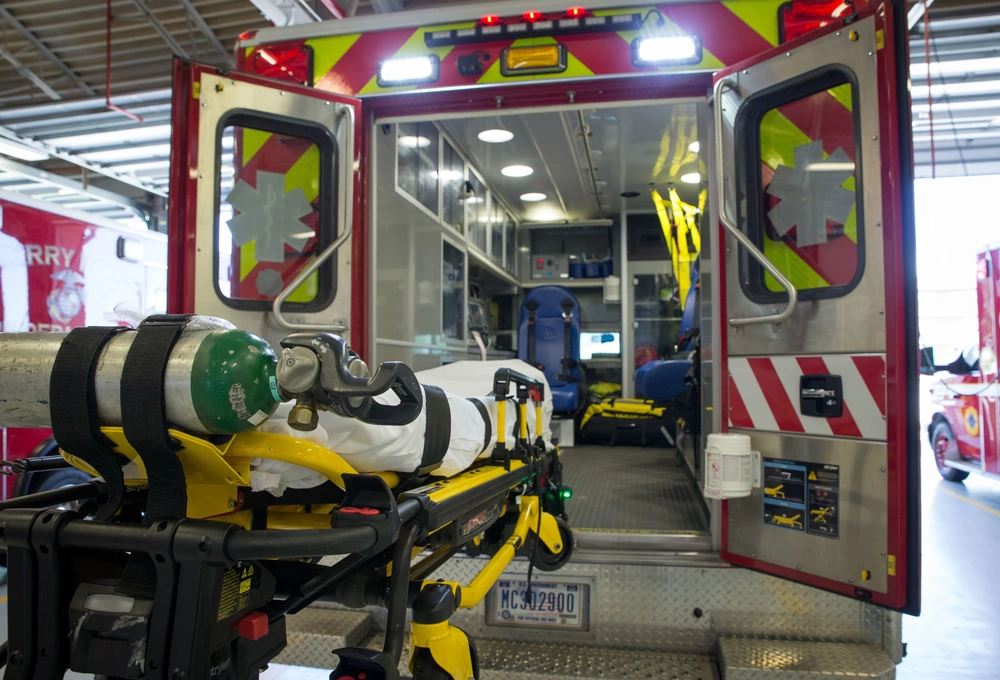
I would record the results in a scored sheet and attach it to the procurement file. That makes the final choice easier to explain and prevents a memorable demonstration from outweighing routine operational facts.
What Documents Should a Buyer Request?
The document list should match the exact model, configuration, and destination market. At minimum, I would request:
- technical datasheet with dimensions, weight, rated load, loading height, and operating limits;
- instructions for use and cleaning guidance;
- preventive-maintenance schedule;
- spare-parts list and support period;
- battery and charger documentation for powered models;
- installation and vehicle-compatibility statement;
- test reports or compliance evidence required by the target market;
- warranty terms and exclusions; and
- training and service arrangements.
For road-ambulance equipment, the EN 1865 series separates general stretcher systems, power-assisted stretchers, heavy-duty systems, and stretcher supports into different parts7. That is another reason to request evidence for the exact product and system rather than accepting a broad statement that a supplier is simply “EN 1865 compliant.” Applicable requirements vary by product configuration and market.
My Decision Rule
If the service has limited capital, low handling frequency, dependable lifting procedures, and weak access to electrical or specialist support, I would normally shortlist manual models first.
If crews perform frequent loads, patient weights are increasing, injury data show a problem, and the fleet can support installation, charging, training, and servicing, I would give powered options serious consideration—especially an integrated cot-and-loading system where rear loading is the difficult movement.
If the evidence is mixed, I would not guess. I would pilot both options in the same vehicle, score them against the same criteria, and calculate the same service-period cost.
Frequently Asked Questions
Are electric ambulance stretchers better than manual stretchers?
Not universally. Powered systems can reduce physical demands during the movements they assist, while manual stretchers usually offer lower purchase cost and less power-system complexity. The better option is the one that matches your calls, crews, vehicles, maintenance capacity, and budget.
Does an electric stretcher load itself into the ambulance?
Not necessarily. Some products power only height adjustment. Loading assistance may require a separate compatible system. Ask the supplier to demonstrate every movement included in the quotation.
Are powered stretchers always faster?
No. Speed depends on the design, crew familiarity, patient situation, environment, and loading system. Measure task time during your own trial while also assessing physical effort and control.
Can any stretcher be installed in any ambulance?
No. Compatibility must be confirmed for the exact stretcher, mount, loader, restraints, vehicle, floor structure, access dimensions, and loading height. Installation should follow the relevant manufacturer and regulatory requirements.
What should I ask about batteries?
Ask about runtime, charge time, state-of-charge indicators, spare batteries, storage conditions, replacement cost, expected service interval, warranty, transport restrictions, charger placement, and safe backup operation.
Which figure is more important: rated load or stretcher weight?
Both matter. Rated load tells you what the stretcher is designed to carry under stated conditions; stretcher weight affects handling whenever the crew must move or recover the equipment without assistance. Compare the two figures with your patient profile and real route.
Conclusion
I do not see this as a contest between old and new technology. It is a choice between two operating models.
A manual stretcher asks more of the crew but can be lighter, less expensive, and easier to support. A powered system can reduce selected lifting demands and may contribute to fewer handling injuries, but it brings batteries, installation requirements, additional weight, and a more involved service plan.
The safest purchase is therefore not the stretcher with the longest feature list. It is the system your crews can operate consistently, your ambulance can secure correctly, and your organization can maintain for its full service life.
If you are comparing configurations for a tender or fleet project, JIEKANG can help review load capacity, dimensions, loading arrangement, vehicle interface, documentation, and after-sales requirements for the exact model and destination market before quotation.
References
[NIOSH EMS Worker Safety](https://www.cdc.gov/niosh/ems/index.html). EMS lifting hazards and safe patient-handling guidance. ↩
[Powered stretchers and loading systems study](https://pubmed.ncbi.nlm.nih.gov/28411738/). Injury incidence and cost analysis in one EMS service. ↩
[Power-lift stretchers and patient-handling injuries](https://pubmed.ncbi.nlm.nih.gov/38356274/). Interrupted time-series study of ambulance personnel. ↩
[EMS powered-cot biomechanics study](https://pubmed.ncbi.nlm.nih.gov/26245484/). Muscle load, force, and task-time comparison. ↩
[NIOSH ambulance crash-test methods](https://www.cdc.gov/niosh/bulletin/2017/ambulance-crash-test.html). Cot, mount, and restraint-system testing. ↩
[Stretcher-related adverse-event study](https://pubmed.ncbi.nlm.nih.gov/22606379/). Incident patterns across EMS transports. ↩
[BSI EN 1865 series overview](https://landingpage.bsigroup.com/LandingPage/Series?UPI=BS+EN+1865). Road-ambulance patient-handling equipment standards. ↩