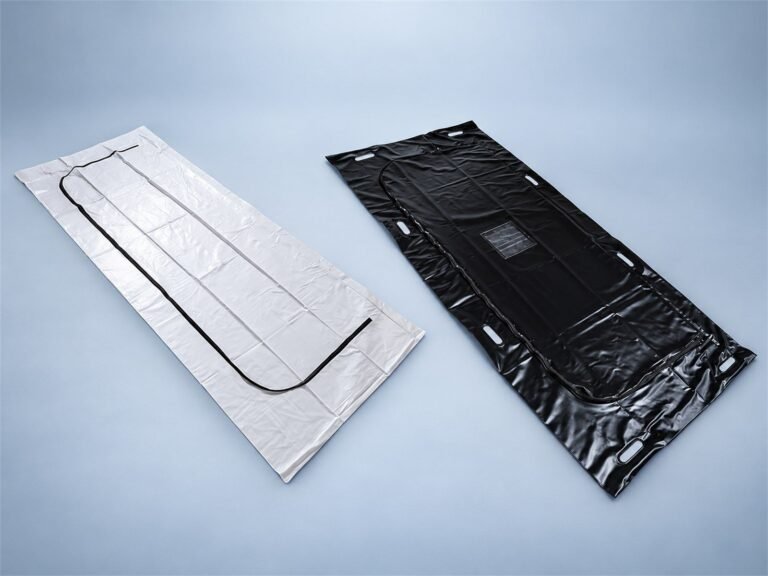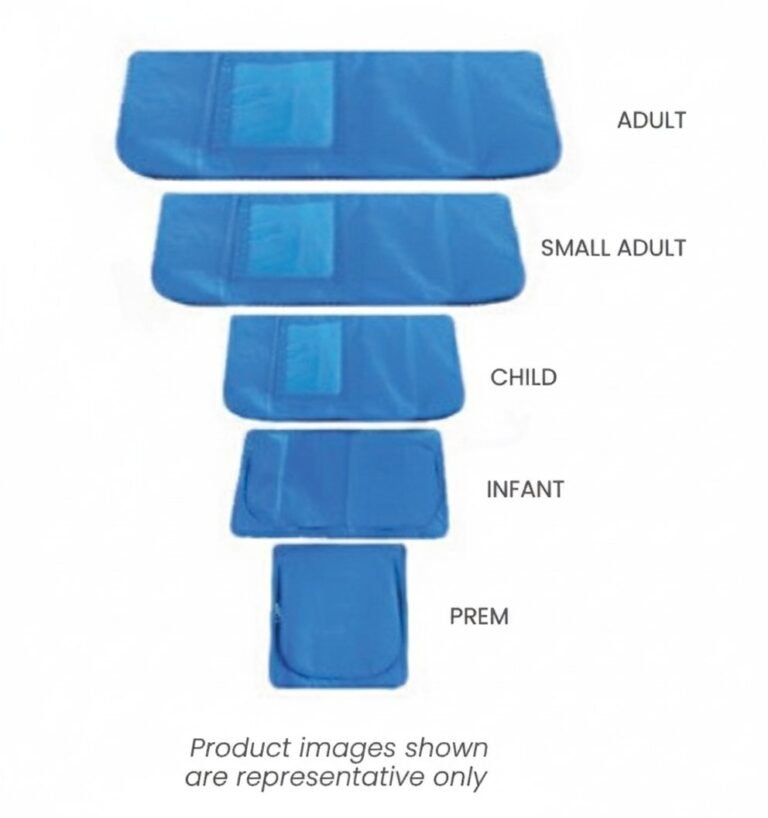
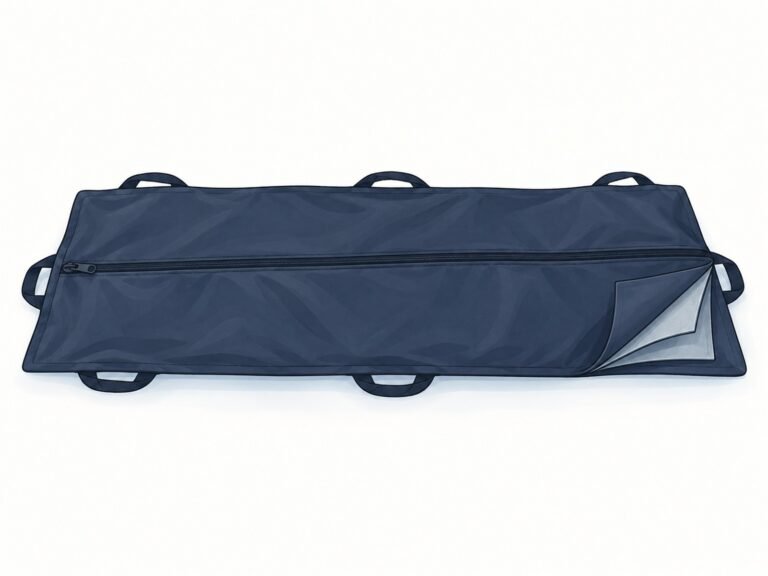
A supplier may quote a body bag as 4 mil, 8 mil, 10 mil, or 20 mil. The higher number sounds stronger, so it is tempting to choose the thickest option and stop there.
That is not always the best way to buy. A thicker bag is usually heavier, bulkier, and more expensive. More importantly, film thickness says nothing about weak handles, a poor zipper, or seams that open under load.
Short answer: 4–6 mil is a light-duty starting range for controlled handling. An 8–10 mil bag is a practical general-purpose choice for many hospitals and mortuary services. Look at 12–16 mil for more handling, higher puncture risk, or reinforced heavy-duty use. Bags around 18–20 mil are commonly found in demanding field, disaster, and rugged-transport designs.
These are useful buying ranges, not universal rules. The finished bag must still have the right size, load rating, seams, zipper, handles, and temperature performance for the job.

What Does “Mil” Mean?
A mil is one-thousandth of an inch. It is not one millimetre.
| Thickness | Millimetres | Microns |
|---|---|---|
| 4 mil | 0.102 mm | 102 microns |
| 6 mil | 0.152 mm | 152 microns |
| 8 mil | 0.203 mm | 203 microns |
| 10 mil | 0.254 mm | 254 microns |
| 12 mil | 0.305 mm | 305 microns |
| 14 mil | 0.356 mm | 356 microns |
| 16 mil | 0.406 mm | 406 microns |
| 20 mil | 0.508 mm | 508 microns |
This conversion matters when quotations use different units. For example, an 8 mil bag and a 0.2 mm bag are almost the same thickness. A bag described as 0.20 mil, however, would be extremely thin. Always check the unit before comparing prices.
Which Thickness Fits Each Application?
| Application | Sensible starting range | What else matters |
|---|---|---|
| Short, controlled handling | 4–6 mil | Finished-bag load rating, sealed seams, suitable trolley or tray |
| Routine hospital or mortuary transfer | 8–10 mil | Zipper quality, leak resistance, storage temperature, handling method |
| Repeated handling or higher puncture risk | 12–16 mil | Reinforcement, handle attachments, tear resistance, usable size |
| Bariatric transport | Often 14–20 mil reinforced material | Width and tested load capacity matter more than thickness alone |
| Disaster response or rough field recovery | 16–20 mil or a reinforced equivalent | Handles, abrasion resistance, identification, packed size, terrain |
| Special infectious-disease or cross-border handling | Follow the applicable protocol | Bag layers, puncture resistance, sealing, decontamination and local rules |
The table gives you a place to begin a quotation. The exact choice should come from the route, load, hazards, storage conditions, and working procedure.
Is 4–6 Mil Enough for Light-Duty Use?
It can be, when the work is controlled and the finished bag has an appropriate rating.
Current product ranges include lightweight 4 mil bags alongside 8, 10, and 16 mil models. The Mopec APM body bag range1 is a useful real-world example of these different constructions. One 4 mil adult model2 even lists a capacity above 200 lb. That does not make every 4 mil bag suitable for the same load. It shows why the finished design matters as much as the film.
A lighter bag may make sense when it stays on a tray or trolley, follows a short indoor route, and is not expected to handle sharp objects or repeated lifting. If staff will carry the bag by its own handles, the handle design and load rating need to be checked separately.
Six mil is also a familiar reference because the CDC’s archived COVID-19 postmortem guidance3 mentioned a minimum of 6 mil when a thicker or stronger bag was needed. That page also said staff should consider body weight, sharp objects, fluids, and damage from storage. It was risk-based guidance for that situation, not a universal specification for every body bag.
Why Is 8–10 Mil a Common General-Purpose Range?
Eight to ten mil offers a useful balance between flexibility, storage space, and everyday durability. It is thick enough to be used in many standard products without making each folded bag unnecessarily bulky.
For example, the LDI EnviroMed-Bag specification4 lists an 8 mil PVC-free material with heat-sealed seams in adult, pediatric, XL, and bariatric sizes. A separate manufacturer catalogue lists an 8 mil standard adult bag and a much heavier 20 mil transport bag, which shows how suppliers often place 8 mil in the general-purpose part of the range. See the Mortech laboratory and preparation-room catalogue5 for that comparison.
An 8 or 10 mil bag can therefore be a sensible default for routine transfers between a hospital ward, mortuary, cold room, vehicle, or funeral facility. Before treating it as the standard option, check whether the team lifts the bag directly, whether handles are included, and whether the bag has a tested load rating.
When Should You Move Up to 12–16 Mil?
Choose this range when the bag will be handled more often, when contact with uneven surfaces is more likely, or when extra resistance to tears and punctures is useful.
A 14 mil bag is sold for situations involving extensive handling in the LDI EnviroMed Deluxe specification6. Other current ranges use 16 mil PVC laminated to polyester for handled adult and bariatric bags, as shown in Mopec’s APM body bag range1.

This range may suit coroner work, longer transfers, repeated movement between surfaces, or a service that wants a tougher reserve bag. It can also appear in bariatric products, but thickness is only one part of bariatric handling. The bag must also be wide enough, have a suitable tested capacity, and work with the facility’s trolley and lifting procedure. The body bag size guide7 explains why width and load capacity must be checked separately.
When Does 18–20 Mil Make Sense?
This thickness is usually associated with rugged construction, difficult terrain, disaster response, military-style transport, or other jobs where the bag may face more abrasion and handling.
The LDI EnviroTough-Bag specification8 lists 20 mil material, six handles, and a 38 × 94 inch size for extreme environments. The Mortech laboratory and preparation-room catalogue5 also pairs a 20 mil heavy-duty bag with a liner, six reinforced handles, and a stated capacity above 600 lb.
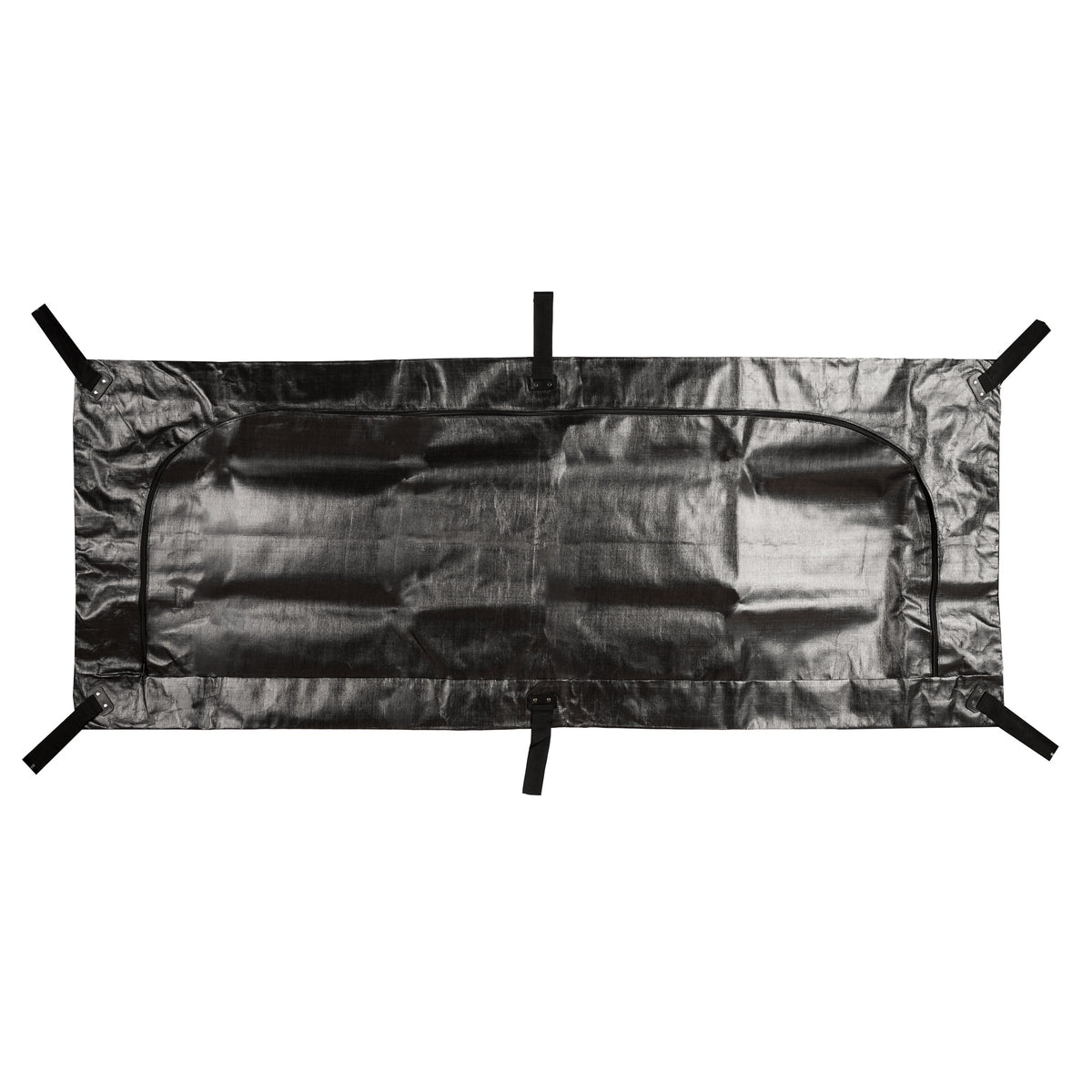
These examples are strong because their whole construction is designed for the job. The thickness works together with the liner, reinforcement, zipper, and handles. A plain 20 mil sheet with weak seams would not provide the same result.
Does a Thicker Bag Always Carry More Weight?
No. Thickness can help resist punctures and general wear, but load capacity comes from the complete bag.
Two bags made from the same thickness can behave very differently if one has unsupported cut-out handles and the other has webbing that runs underneath the bag. A reinforced woven or laminated material may also outperform a thicker unsupported film.
 When lifting performance matters, compare:
- the tested load capacity of the finished bag;
- the number, position, and construction of the handles;
- how the handles spread the load across the bag;
- the seam method around corners and the zipper;
- puncture and tear test information for the finished material.
The guide to heavy-duty body bags9 covers these parts in more detail.
What About Infectious Remains?
Do not choose a bag for a special infectious-disease situation from thickness alone. The applicable procedure may specify more than one bag, a particular sealing method, surface decontamination, or a puncture-resistant outer layer.
For example, current CDC guidance on importing human remains10 defines a leak-proof container as puncture-resistant and sealed against fluid leakage. For certain infectious remains, it gives a double-layered plastic body bag as one possible form of containment.
The useful purchasing lesson is simple: ask for the protocol first, then buy the bag system that meets it. A generic “20 mil” label does not confirm that all the other requirements are present.
Why Not Buy the Thickest Bag for Everything?
A 20 mil bag may be the right choice for a demanding recovery, but it can be unnecessary for a short indoor transfer. Thicker bags take more storage space, add weight to every carton, and usually cost more. They may also be less flexible when staff unfold and position them.
A mixed stock is often more practical:
- an 8–10 mil general-purpose bag for routine work;
- a smaller supply of reinforced 14–16 mil bags for difficult or heavier cases;
- a heavy-duty field or disaster bag when the service has a real need for one.
That approach keeps the everyday product manageable while making a stronger option available when the risk changes.
What Should Be Written on the Purchase Specification?
Do not write only “heavy duty” or “minimum 10 mil.” Give the supplier enough information to propose the complete bag.
Include:
- the material and minimum thickness, in mil and millimetres;
- required length and width;
- minimum finished-bag load capacity;
- handle number, position, and reinforcement method;
- zipper style and opening position;
- seam construction and required leak resistance;
- minimum and maximum storage or use temperature;
- any puncture, tear, or abrasion requirement;
- identification pocket, tags, colour, and labelling;
- the applicable infection-control, transport, burial, or cremation requirements.
For a bulk order, inspect and handle a sample before approving the full quantity. A simple trial with the normal trolley, storage tray, gloves, and lifting points can reveal problems that a thickness number cannot.
Frequently Asked Questions
Is an 8 mil body bag thick enough?
For many routine hospital and mortuary transfers, 8 mil is a practical starting point. Confirm the finished bag’s load rating, handles, seams, zipper, and storage temperature before ordering.
Is a 20 mil body bag always better?
No. It is heavier and bulkier, and it may be unnecessary for controlled indoor handling. It makes more sense when the construction and application require extra durability.
Is 10 mil the same as 10 mm?
No. Ten mil is 0.010 inch, or about 0.254 mm. Ten millimetres would be almost forty times thicker.
What thickness is best for a bariatric body bag?
Many reinforced bariatric products use thicker materials, but there is no useful answer based on thickness alone. Check the bag’s width, tested load capacity, handles, reinforcement, and compatibility with the lifting and transport equipment.
Should infectious remains always use a 20 mil bag?
No single thickness applies to every disease or jurisdiction. Follow the specific procedure, which may require double bagging, puncture resistance, sealing, decontamination, or another containment system.
Final Takeaway
Use 8–10 mil as a practical starting point for general hospital and mortuary work. Move toward 12–16 mil when handling becomes more demanding, and consider 18–20 mil or a reinforced equivalent for rugged field and disaster use. Reserve 4–6 mil options for controlled situations where the complete bag’s rating and construction are suitable.
Then check the rest of the bag. Thickness helps, but the seams, zipper, handles, reinforcement, size, and tested load capacity determine whether it can do the job.
[“American Professional Manufacturing Body Bags”](https://www.mopec.com/product-category/anatomic-pathology/autopsy-and-forensic-pathology/body-bags/apm-body-bags/), Mopec. Current product examples covering 4, 8, 10, and 16 mil constructions. ↩
[“APM Adult Body Bag, Lightweight 4 Mil PVC”](https://www.mopec.com/product/apm-adult-body-bag-94-x-36-lightweight-4-mil-pvc-center-zipper-white-case-of-24/), Mopec. Four mil adult model with a listed capacity above 200 lb. ↩
[“COVID-19 Guidance: Postmortem Specimens”](https://archive.cdc.gov/www_cdc_gov/coronavirus/2019-ncov/hcp/guidance-postmortem-specimens.html), CDC archive. Risk-based discussion of 6 mil or thicker bags, punctures, body weight, fluids, and storage damage. ↩
[“EnviroMed-Bag® Body Bag”](https://ldimedical.com/products/enviromed-bag%C2%AE-body-bag), LDI Medical. Eight mil general-purpose product specifications and available sizes. ↩
[“Laboratory & Prep Room Accessories”](https://www.mortechmfg.com/wp-content/uploads/2023/04/LABORATORY-PREP.-ROOM-min.pdf), Mortech Manufacturing. Catalogue specifications for 8 mil standard and 20 mil heavy-duty body bags. ↩
[“EnviroMed-Bag® Deluxe Body Bag”](https://ldimedical.com/products/enviromed-bag%C2%AE-deluxe-body-bag), LDI Medical. Fourteen mil product described for extensive handling. ↩
[“What Size Body Bag Do Hospitals and Mortuary Services Need?”](https://jiekangmedical.com/what-size-body-bag-do-hospitals-and-mortuary-services-need/), Jiekang Medical. Related guide to bag width, length, and load capacity. ↩
[“EnviroTough-Bag™ Deluxe Body Bag”](https://ldimedical.com/products/envirotough-bag%E2%84%A2-deluxe-body-bag), LDI Medical. Twenty mil, six-handle product for extreme environments. ↩
[“How to Choose Heavy-Duty Body Bags for Hospitals and Disaster Response”](https://jiekangmedical.com/how-to-choose-heavy-duty-body-bags-for-hospitals-and-disaster-response/), Jiekang Medical. Related guide to load rating, handles, seams, and field use. ↩
[“Importation of Human Remains into the U.S. for Burial, Entombment, or Cremation”](https://www.cdc.gov/importation/human-remains/index.html), CDC. Current requirements and examples of leak-proof, puncture-resistant containment. ↩