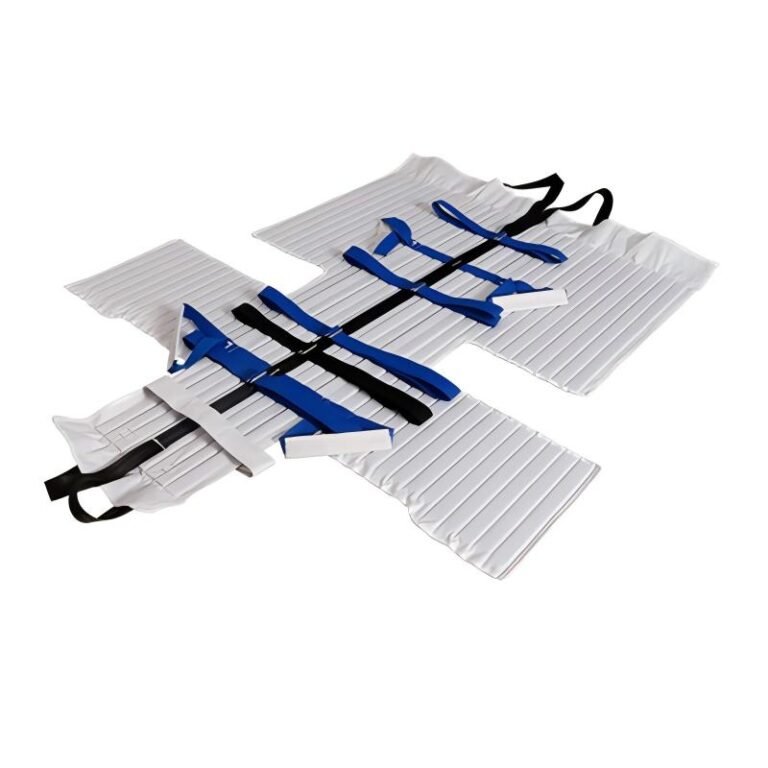
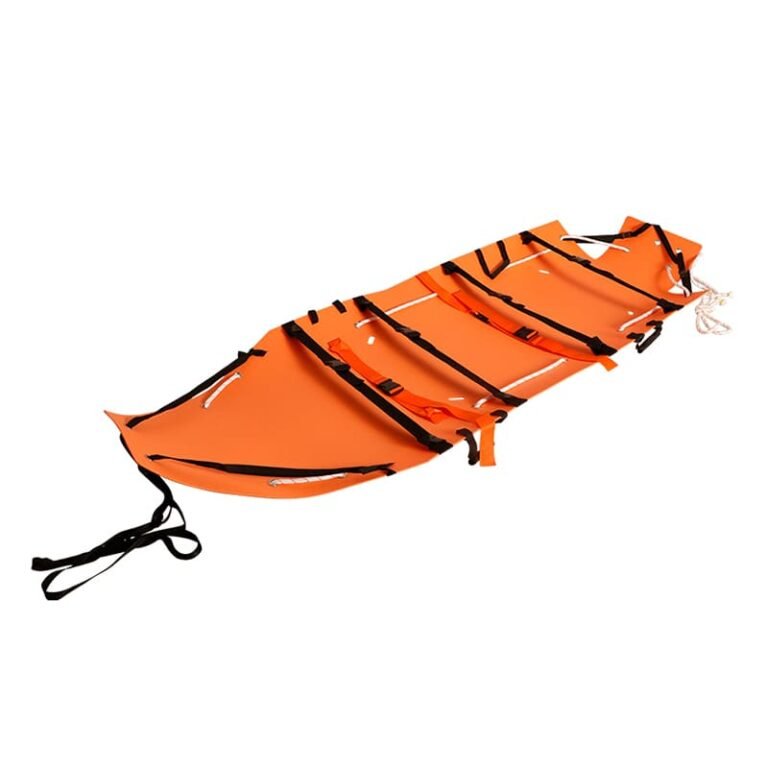
This extrication device is designed for fast, safe cervical and spinal immobilization during vehicle collisions and other confined-space rescues. Its wrap-around design stabilizes the head, neck, and torso while allowing rescuers to move the patient out of seats, cabs, or tight environments where a full-size stretcher cannot be applied directly. The internal structure uses high-tenacity bamboo strips to provide firm support, while the outer nylon shell is tough, lightweight, and resistant to wear and moisture.
Color-coded straps across the chest, hips, and legs enable quick, intuitive securing of the patient, and the integrated head section works with reusable forehead and chin straps to help maintain neutral alignment of the cervical spine. Once the patient is immobilized in the device, it can be transferred easily onto a spine board or basket stretcher for further transport, reducing the risk of secondary injury throughout the extrication process.
The device folds into a compact shape for storage in ambulances or rescue vehicles and comes with sponge pads and fixing straps for added comfort and stability. Its smooth, durable surfaces are easy to wipe clean and disinfect after use, making it suitable for frequent deployment in professional emergency services.
Key Advantages:
-
Wrap-around extrication design: stabilizes head, neck, and torso in vehicle and confined-space rescues
-
High-tenacity internal bamboo strips: provide firm yet slightly flexible spinal support
-
Durable nylon outer shell: lightweight, wear-resistant, and easy to clean
-
Color-coded securing straps: help rescuers apply and adjust the device quickly and correctly
-
Forehead and chin straps included: enhance cervical spine control during movement
-
Compact, foldable structure: convenient to store and carry with the supplied bag
-
Compatible with spine boards and basket stretchers for seamless transfer and onward transport
-
Rated load-bearing capacity up to 159 kg
Applications:
Ambulance services, hospital emergency departments, fire and rescue teams, traffic-accident response units, industrial and mining rescue, and training centers focused on extrication and spinal-immobilization techniques.