When choosing between a stretcher and a gurney, the decision might seem straightforward, but confusing the two could lead to operational inefficiencies or safety risks. Understanding their differences isn’t just about terminology—it’s about picking the right tool for the job. So, how can you decide which one suits your needs best?
A stretcher is usually designed for emergency rescue and outdoor use, offering lightweight mobility, while a gurney is more robust, with wheels and adjustable frames, ideal for hospital or facility transfers. The best choice depends on your specific operational environment and patient care requirements.
Before we break down these distinctions in depth, let’s look at the key factors you should consider, from mobility and structural design to the nuances of situational adaptability. By the end of this article, you’ll have a clear understanding to guide your purchase decision.
What is a stretcher, and when should you use one?
Stretchers are essential for emergency and outdoor patient transport. They are lightweight and designed for mobility in challenging environments.
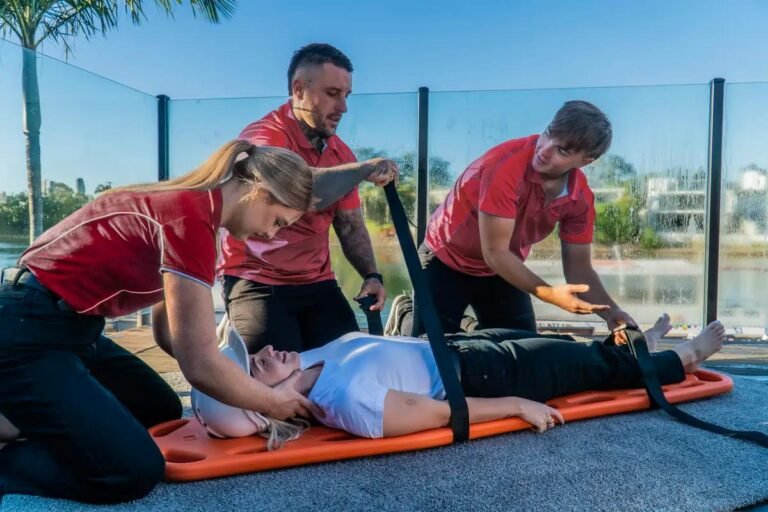
A stretcher is a portable medical device used to safely transport patients, especially in emergencies or rescue situations. They are often made with simple, lightweight frames, making them easy to maneuver and carry over rough terrains.

Stretchers are primarily used for the following purposes:
- Emergency search-and-rescue operations in remote or dangerous areas
- Transferring patients in places without clear paths or proper infrastructure
- Lightweight transportation where vehicles cannot access, such as forests or mountains
While stretchers are versatile, they’re better suited for specific scenarios. Fixed-frame stretchers (non-wheeled ones) often require multiple people to carry, which makes them ideal for short-distance moves or rugged outdoor locations. For instance, basket stretchers are commonly spotted in mountain rescues due to their durability and capability to hold a patient securely.
However, the simplicity of stretchers can also be a limitation in environments like hospitals, where height adjustability, comfort, or user-friendly wheels are required.
Key types of stretchers and their uses:
- Scoop stretchers: Great for confined spaces or fractured patients as they separate and slide under the body.
- Basket stretchers: Designed for extreme conditions like water or mountain rescues.
- Folding stretchers: Compact and perfect for ambulances or tightly packed spaces.
What is a gurney, and when should you use one?
Gurneys are the go-to solution for hospitals, clinics, and professional medical facilities that require both patient mobility and bed functionality.
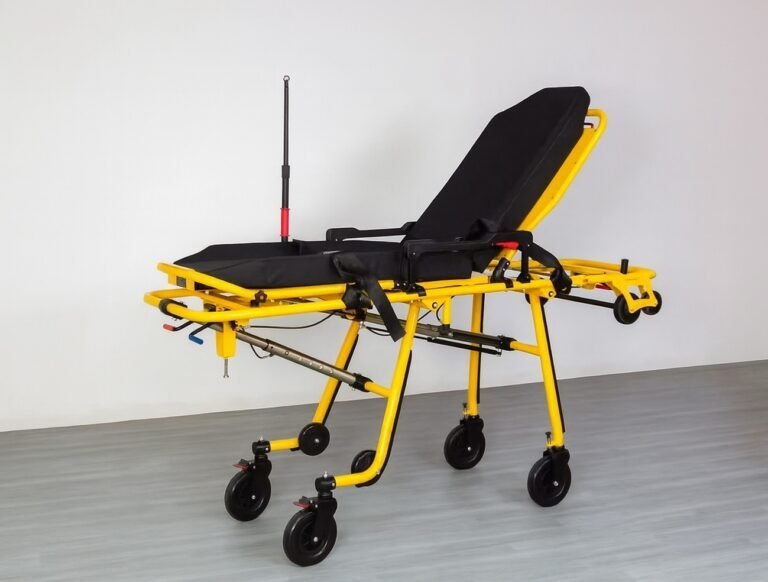
A gurney is a wheeled stretcher with a sturdy frame, designed to provide adjustable height, reclining support, and smooth mobility, making it ideal for hospital and indoor patient transportation.
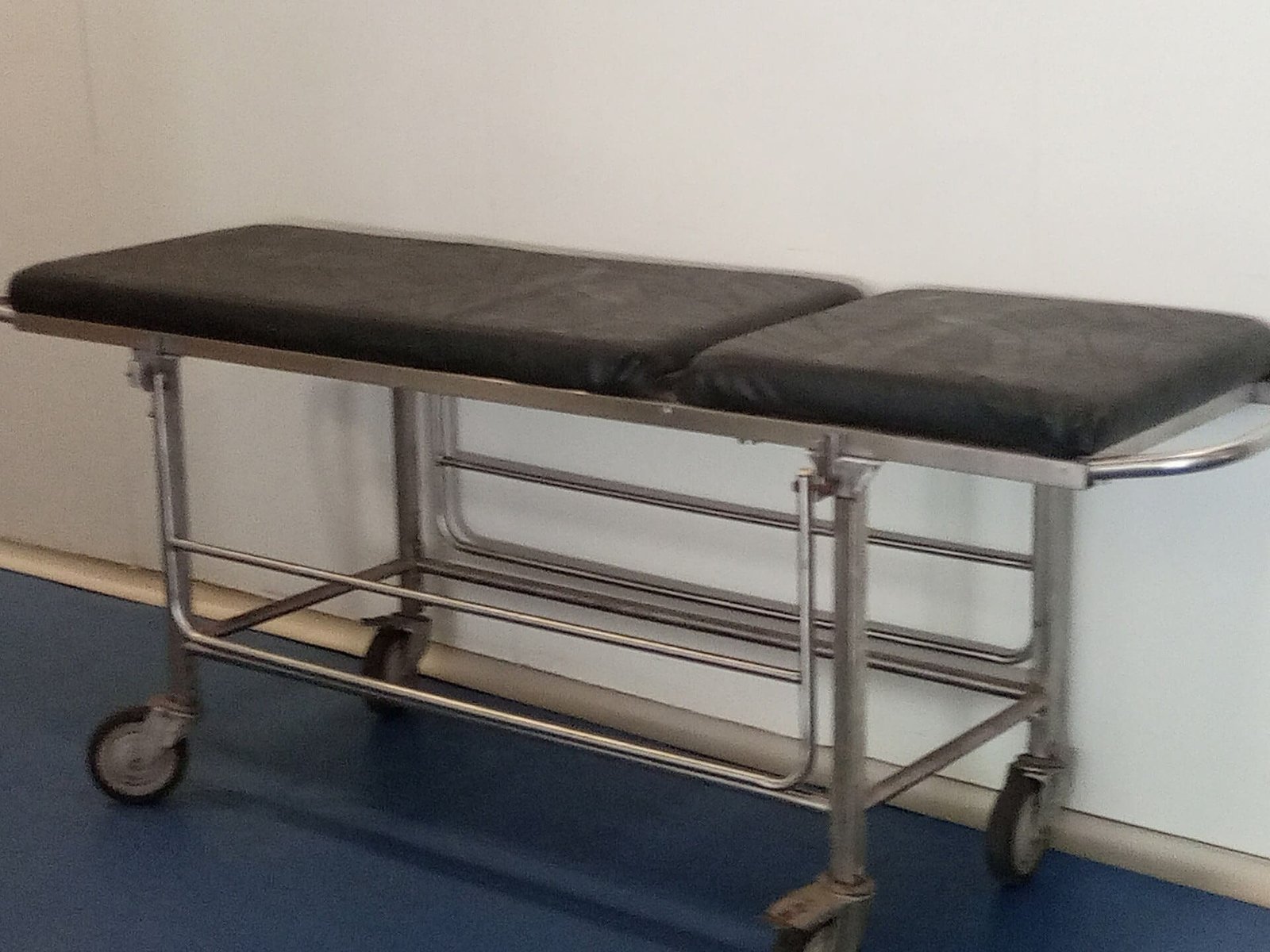
Gurneys are generally found in controlled environments such as:
- Hospitals and emergency rooms for patient transfers between departments
- Clinics and intensive care units for stabilizing patients during examinations
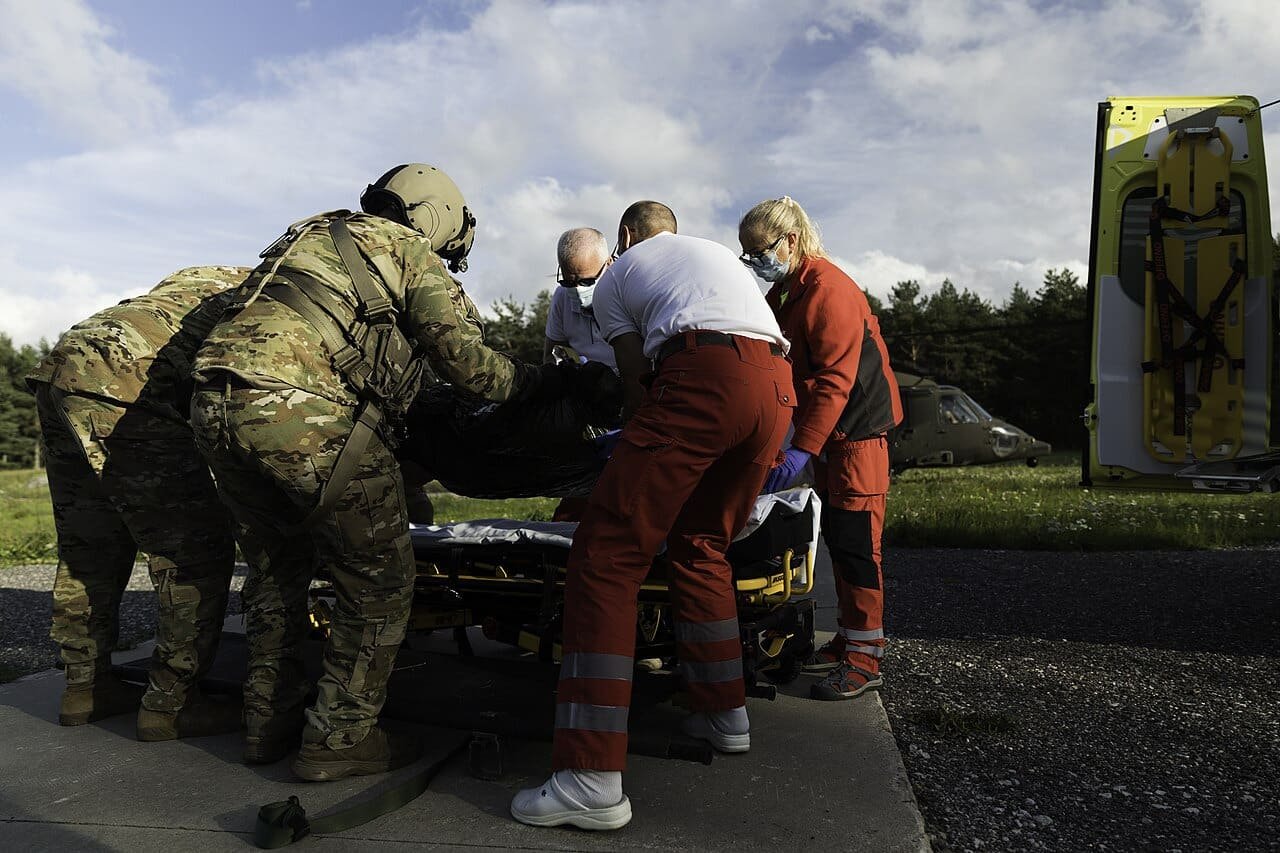
- Emergency vehicles, especially ambulances, for on-road patient care
Their wheels and adjustable frames make gurneys indispensable in settings where patients need to be securely stabilized or monitored while being moved. However, gurneys are less portable compared to stretchers and are nearly impossible to maneuver through uneven or outdoor terrain.
Key features of gurneys:
- Height adjustability: Allows caregivers to secure and treat patients without straining.
- Wheeled mobility: Effortless transport within flat indoor environments.
- Sturdier frames: Engineered for durability in long-term use across hospitals.
Gurneys often come with safety features such as locking wheels, rails to prevent falls, and cushioned surfaces for patient comfort. These aspects make them a standard tool in modern medical settings.
Stretcher vs Gurney: Key Differences Broken Down
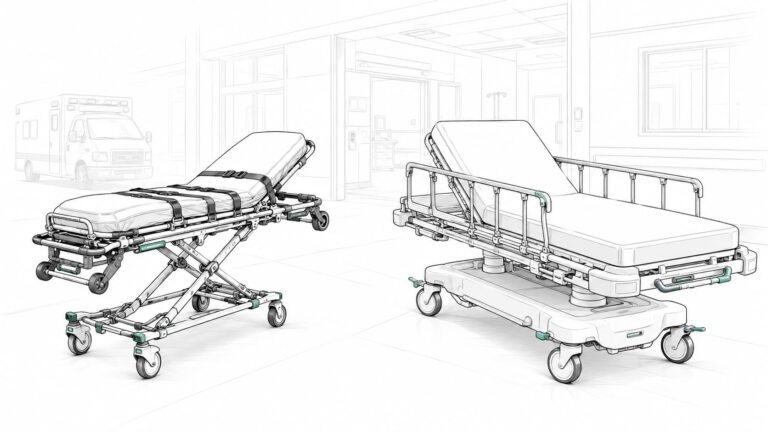
When it comes to choosing between a stretcher and a gurney, knowing the precise differences can help you identify which product better matches your operational needs.
| Feature | Stretcher | Gurney |
|---|---|---|
| Mobility | Manual carrying with/without wheels, often portable | Equipped with wheels for smoother indoor movement |
| Environment | Designed for outdoor/rescue scenarios | Best suited for hospitals and flat indoor surfaces |
| Weight | Lightweight for easy transportation | Heavier, stable, and durable for extended use |
| Adjustability | Typically fixed height | Adjustable height, incline, and reclining positions |
| Use Case Examples | Rescue operations, rugged terrain | Hospitals, clinics, emergency rooms |
When making a decision between the two, start by assessing where your team uses the equipment the most. For medical distributors, this information is critical for recommending the right solution to their clients.
Can stretchers and gurneys be used interchangeably?
While stretchers and gurneys share the common purpose of transporting patients, they aren’t truly interchangeable in most scenarios.
Stretchers are ideal for challenging terrains or outdoor operations where manual carrying is necessary, while gurneys are built to provide multi-functional support inside medical facilities or ambulances.

For instance, rescue teams will almost always prioritize lightweight and portable stretchers as carrying a gurney across a hiking trail would be impractical. Conversely, hospitals rely on the robust and adjustable design of gurneys to move and treat patients efficiently.
That said, some high-end gurneys used in emergency vehicles can perform both roles to an extent. However, buyers must weigh the constraints of portability versus functionality before assuming a one-size-fits-all approach.
How to choose between a stretcher and a gurney?
Selecting the right product depends on your use case, budget, and operational needs. A wrong decision could compromise patient safety or reduce efficiency.
To choose wisely between a stretcher and a gurney, assess the primary usage environment, mobility requirements, and whether adjustability or portability is more crucial for your operations. Balancing these factors ensures the right fit for your needs.
Here’s a simple three-step approach to guide your decision:
-
Identify your primary use case:
- Will the product be used in rescue operations or a controlled environment?
- For hospitals, long-term durability and comfort are vital. For rescue teams, lightweight and sturdy designs may matter more.
-
Assess mobility needs and terrain:
- If the ground is uneven or rugged, opt for a manual stretcher.
- If smooth indoor transport is required, gurneys with wheels are ideal.
-
Consider multi-functionality and certifications:
- Gurneys often come with extra features like IV holders and bed adjustments.
- Ensure your purchase aligns with local compliance standards and quality regulations.
One customer we worked with recently—a hospital—chose to invest in adjustable gurneys for surgical wards but also opted for lightweight, foldable stretchers for emergency transport. This dual approach ensures flexibility for their diverse operations.
Frequently Asked Questions
Can gurneys be used outdoors?
Gurneys are generally not suitable for outdoor use due to their wheeled design, which struggles on uneven terrain.1 For outdoor rescue operations, portable stretchers or basket stretchers are a better choice.
Are stretchers less durable than gurneys?
Stretchers are often lighter and simpler in structure, but that doesn’t make them less durable. Many rescue stretchers are specifically designed to handle heavy loads and remain functional in extreme conditions.
Do hospitals use stretchers at all?
Yes, hospitals may use specialized stretchers, particularly in emergency units or transport scenarios, where flexibility and portability are needed. However, gurneys are more commonly used indoors due to their adjustability and wheeled mobility.
Are all gurneys height-adjustable?
Most hospital-grade gurneys feature height adjustability for ergonomic reasons, allowing caregivers to adjust them to the right level. However, basic gurneys might lack this feature, so always check the specifications when purchasing.
Can a single product act as both a stretcher and a gurney?
While some high-end gurneys used for ambulances offer hybrid features, it’s rare to have a product that fully replaces both a lightweight rescue stretcher and a hospital gurney. Consider your primary applications before investing in a hybrid solution.
Conclusion
Understanding the differences between a stretcher and a gurney is crucial for making the right decision for your needs. While stretchers are portable and essential for emergency rescues, gurneys excel in indoor medical settings with adjustable and wheeled designs. Ultimately, you should focus on compatibility with your operational requirements, whether that's emergency rescue, hospital transfers, or both.
Let us help you find the perfect solution for your needs—explore our wide range of stretchers and gurneys today. Contact us to get expert advice and fast quotations for your specific requirements.
"Nicholas Gurney designs small homes that respond to their owners ..."
This source discusses the limitations of gurneys in outdoor environments, particularly their difficulty in navigating uneven terrain. Evidence role: general_support; source type: encyclopedia. Supports: Gurneys are generally not suitable for outdoor use due to their wheeled design, which struggles on uneven terrain.. ↩