Choosing the right transfer device is a constant challenge for emergency teams. Making the wrong choice can worsen patient injuries, turning a rescue into a more complex medical problem.
A scoop stretcher is the best choice when a patient has a suspected spinal or pelvic injury and needs to be moved with minimal manipulation.1 It is ideal for tight spaces where the log-rolling technique required for a spine board is risky or impossible.

As a medical equipment manufacturer, one of the most common questions I get from procurement managers is, "When should our teams use a scoop stretcher?" They are looking for a simple, clear-cut rule. The truth is, there isn't one. The decision isn't about a simple "when," but about a risk assessment. It's about asking: "In this specific situation, which device minimizes risk to the patient and the rescue team?" Let's break down that decision-making process so you can equip your teams with the right tools and knowledge.
How Does a Scoop Stretcher Minimize Patient Movement Compared to a Spine Board?
Moving a trauma patient always involves some risk.2 The traditional log-roll maneuver can cause secondary injuries to the spine or pelvis if not performed perfectly by a well-coordinated team.3
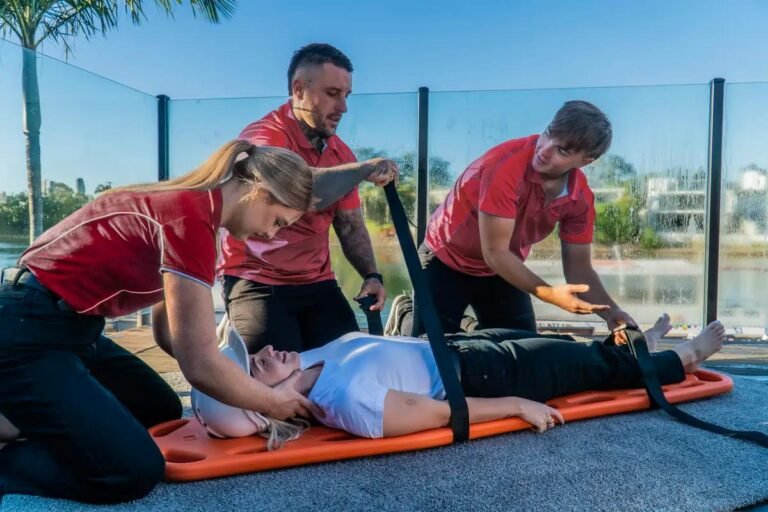
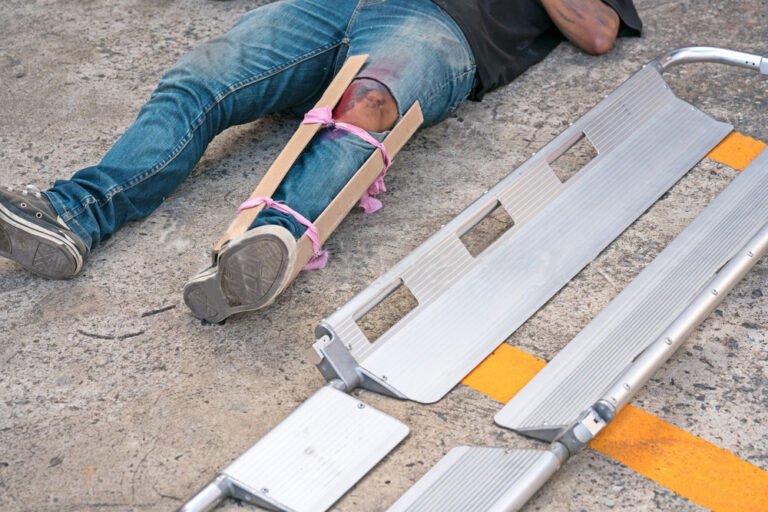
A scoop stretcher splits into two halves, which slide under the patient from either side and lock together. This "scooping" motion lifts the patient in their current position, eliminating the need to log-roll them onto a flat board, which significantly reduces spinal and pelvic movement.
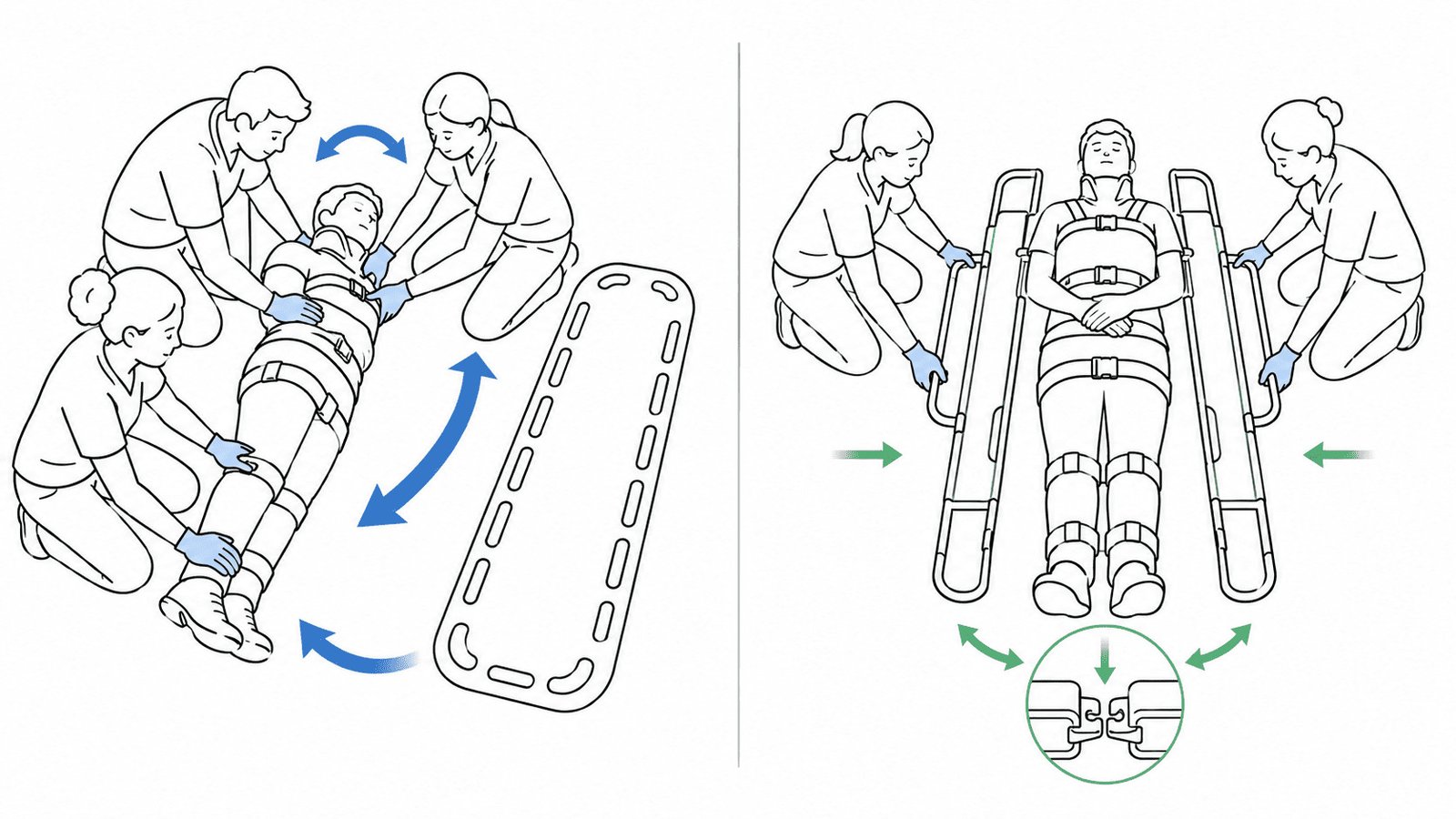
The core design philosophy of a scoop stretcher is to conform to the patient, not force the patient to conform to the device. Think about the log-roll technique. It requires several responders to roll a patient onto their side to slide a spine board underneath. While effective in many cases, this action introduces rotation and flexion of the spine.
A scoop stretcher avoids this entirely. Its two blades are unlatched and gently pushed under the patient from both sides. Once in position, they are relatched at the top and bottom. The patient is now secured and can be lifted with minimal shifting. From my experience in product development, the most critical components are the locking mechanisms. They must be incredibly secure to prevent accidental unlatching during a lift, yet simple enough to operate with gloved hands in a stressful environment. We use materials like high-strength aluminum alloys to ensure the device is both lightweight for responders and rigid enough to prevent flexing under a patient's weight.
Here is a simple breakdown of the two methods:
| Feature | Log-Roll with Spine Board | "Scooping" with Scoop Stretcher |
|---|---|---|
| Primary Motion | Rolling patient onto their side | Sliding blades under the patient |
| Spinal Movement | Rotation and potential flexion | Minimal to none |
| Required Space | Room for 3-4 responders to kneel | Space for one responder on each side |
| Pelvic Stability | Can shift or compress fractures | Cradles the pelvis in place |
For buyers, this means a scoop stretcher is not just another stretcher; it's a specialized tool for high-risk situations where patient movement must be avoided at all costs.
What Specific Patient Injuries and Environments Justify a Scoop Stretcher?
Not all trauma situations are the same. Using a standard spine board for a patient with a severe pelvic fracture, for example, could have devastating consequences by causing further internal damage.
The primary indications are suspected pelvic fractures, where log-rolling can cause severe internal bleeding, and hip dislocations.4 It's also invaluable in confined spaces like narrow hallways, small bathrooms, or between car seats, where there isn't room for a full team to perform a log-roll.
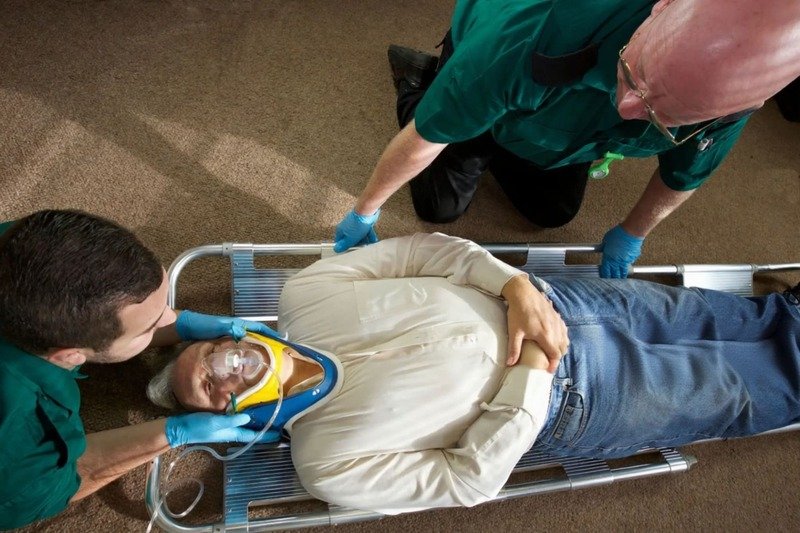
Based on the feedback we receive from emergency service distributors, the decision to deploy a scoop stretcher often comes down to two main factors: the specific injury and the physical environment of the rescue. Understanding these scenarios helps procurement managers justify adding this device to their inventory. It's about having the right tool for the right job, which is a core part of providing effective care.
Pelvic Fractures: The Critical Use Case
A severe pelvic fracture is often described as an "open book" injury, where the pelvic ring is unstable.5 Log-rolling a patient with this injury can cause the fractured bones to shift, potentially severing major blood vessels and leading to massive internal hemorrhage.6 A scoop stretcher is the gold standard here. By sliding the blades underneath, the device cradles the pelvis, lifting the patient as a single unit without compressing or rotating the injured area. This is a point I often emphasize to clients. The scoop stretcher doesn't just transport the patient; it acts as a temporary pelvic binder during the critical initial move.
Confined Space Extraction
I once had a conversation with a client who equipped an industrial response team. He told me a story about a worker who had fallen between two large pieces of machinery. There was absolutely no room for responders to get on both sides to perform a log-roll. They used a scoop stretcher, applying one blade from the front and one from the back, to lift the patient straight up. This is a perfect example of the device's value. In tight spaces like small bathrooms, narrow stairwells, or vehicle extractions, the ability to disassemble and reassemble the stretcher around the patient is a game-changer.7 It can turn an impossible extraction into a safe and efficient one.
How Should a Procurement Manager Build a Versatile Patient Transfer Toolkit?
Your budget is limited, and you cannot buy every piece of equipment on the market. But buying only one type of transfer device, like a spine board, leaves your first responders unprepared for specific calls.
A well-rounded toolkit includes a spine board for standard immobilization, a scoop stretcher for pelvic/spinal trauma in tight spaces, and a vacuum mattress for definitive, long-distance transport.8 Each tool has a specific job, and relying on just one creates unnecessary risk.
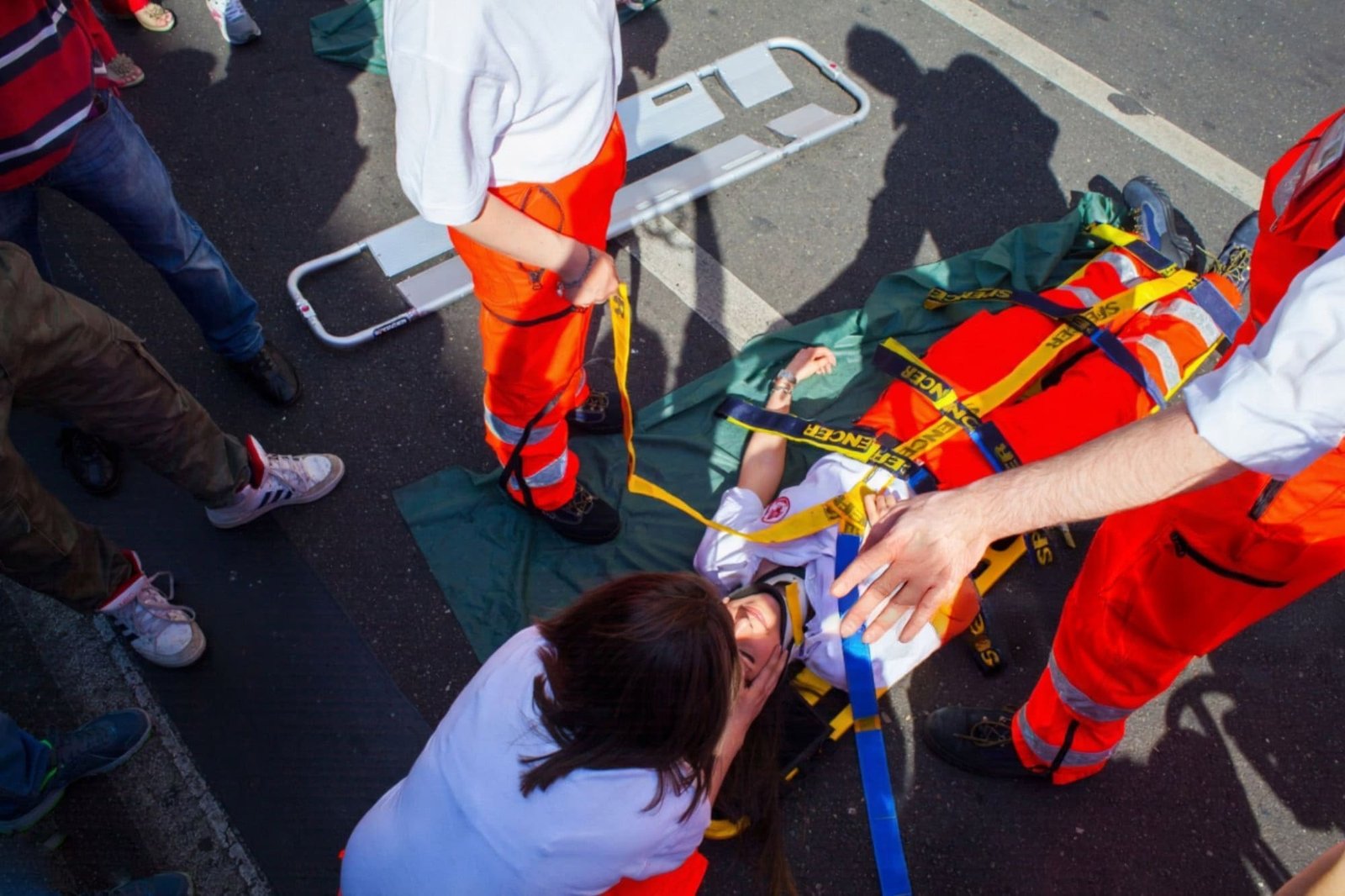
As someone who helps organizations equip their teams, I see my role as more than just a seller. I'm a partner in helping you build a capable and safe system. The goal isn't to own dozens of scoop stretchers if your primary need is for standard transfers. The goal is to create a versatile toolkit where each device has a clear purpose. A common misconception is that these devices are interchangeable. They are not. They are part of a workflow.
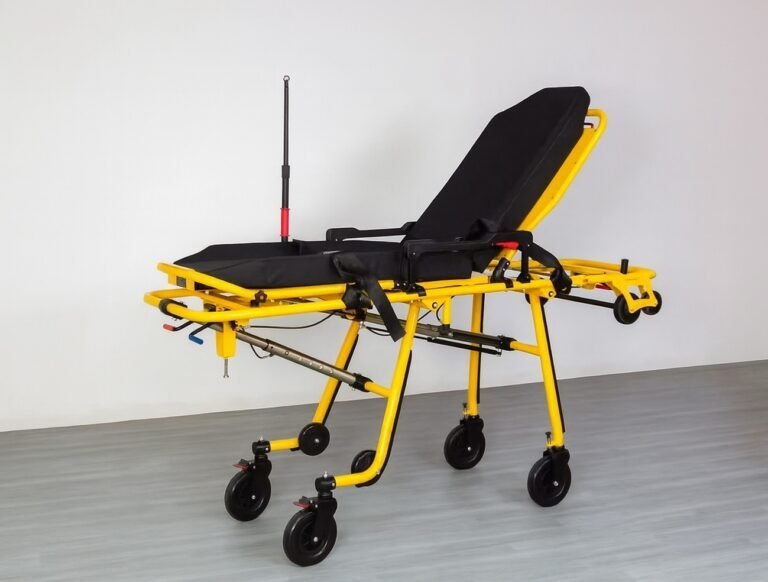
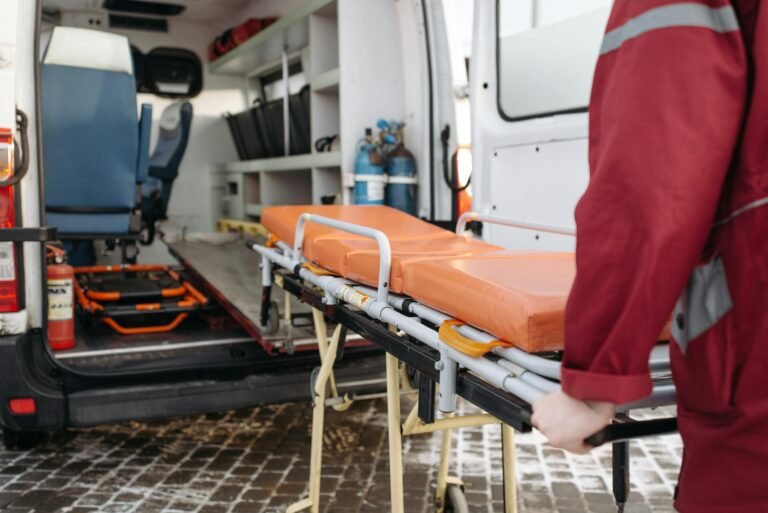
Often, a scoop stretcher is used for the initial lift and transfer—from the floor to an ambulance cot, for example.9 For longer transports, the patient is then moved onto a vacuum mattress, which conforms perfectly to their body and provides superior comfort and stability, reducing the risk of pressure sores.10 The scoop stretcher is then removed. The spine board still has its place for rapid extrication and immobilization in straightforward trauma cases.11
Here’s how these tools complement each other:
| Device | Primary Use | Key Advantage | Key Limitation |
|---|---|---|---|
| Spine Board | Rapid immobilization, straightforward extrication | Simple, fast, durable | Requires log-roll, uncomfortable for long transport |
| Scoop Stretcher | Lifting with suspected pelvic/spinal injury | Minimizes patient movement | Not ideal for long-distance transport |
| Vacuum Mattress | Definitive immobilization for long transport | Conforms to body, maximum stability & comfort | Slower to apply than a spine board |
When you contact us or any supplier, you shouldn't just ask for a price list. You should be prepared to discuss the operational needs of your team. What are your most common rescue environments? What are your current protocols? A good supplier will use this information to help you build a cost-effective toolkit that directly addresses the challenges your responders face every day.
Conclusion
Ultimately, choosing a patient transfer device is a situational risk assessment. A scoop stretcher is a vital tool for specific injuries and environments, not a one-size-fits-all solution for every call.
This source explains the advantages of scoop stretchers in minimizing spinal and pelvic movement during patient transfer. ↩
This source discusses the risks associated with moving trauma patients, including potential secondary injuries. ↩
This source outlines the potential risks of the log-roll maneuver, particularly for spinal and pelvic injuries. ↩
This source identifies pelvic fractures and hip dislocations as key situations where scoop stretchers may be useful. ↩
This source explains the concept of open-book pelvic fractures and their implications for patient transfer. ↩
This source discusses the risks of log-rolling patients with pelvic fractures, including possible bone movement and vascular damage. ↩
This source highlights the advantages of scoop stretchers in confined space extractions. ↩
This source outlines the different roles of spine boards, scoop stretchers, and vacuum mattresses in patient transfer. ↩
This source describes the typical use of scoop stretchers for initial patient lifts and emergency transfers. ↩
This source explains the advantages of vacuum mattresses for long-distance patient transport, including comfort and stability. ↩
This source discusses the continued relevance of spine boards for rapid extrication and immobilization. ↩