Sourcing the wrong folding stretcher manufacturer costs more than money. It creates field risk, compliance gaps, and delivery problems that show up only after the order arrives.
A reliable folding stretcher manufacturer should be able to provide rated load capacity data, material specifications, compliance certificates or test reports, and OEM/customization support. These four factors separate a qualified B2B supplier from a low-price risk. Price alone is not a selection criterion.
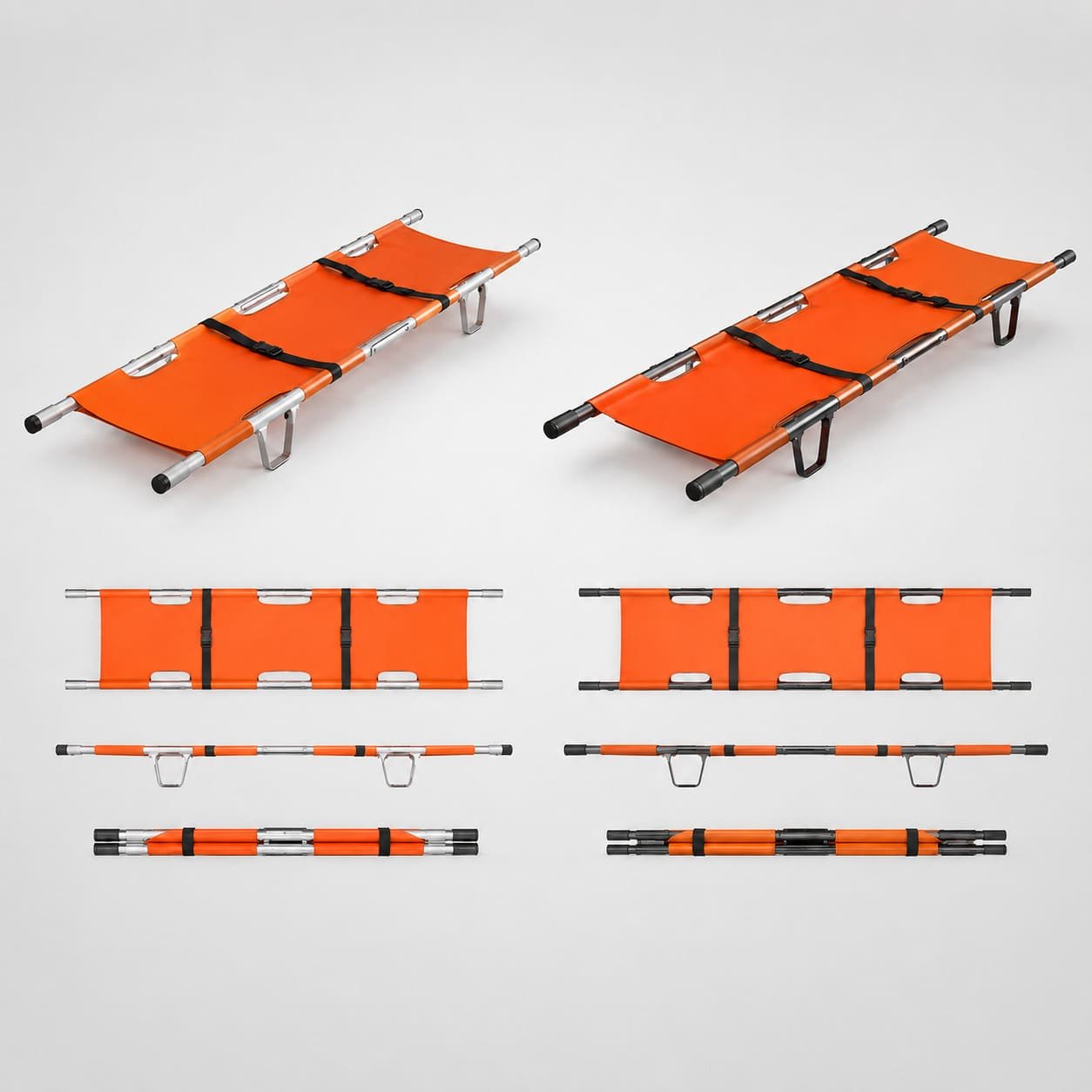
When buyers first contact us, most of them open with the same question: "What is your best price?" I understand why. Budget is real. But in almost every conversation that goes further, we end up talking about load capacity, frame material, and certification documents before price becomes meaningful. The buyers who skip those conversations are the ones who come back with problems. This article walks through the four things that actually determine whether a folding stretcher manufacturer is the right fit for your order.
Aluminum or Steel — Does It Actually Matter for Your Use Case?
I see this decision treated as a preference question more often than I should. It is not. It is a load and weight trade-off, and the field consequences are real.
Aluminum folding stretchers are lighter, typically 7–11 kg, with rated load capacities in the 150–180 kg range.1 Steel folding stretchers are heavier, often 12–18 kg, but can support 200–250 kg or more.2 The right choice depends on deployment context, not personal preference.
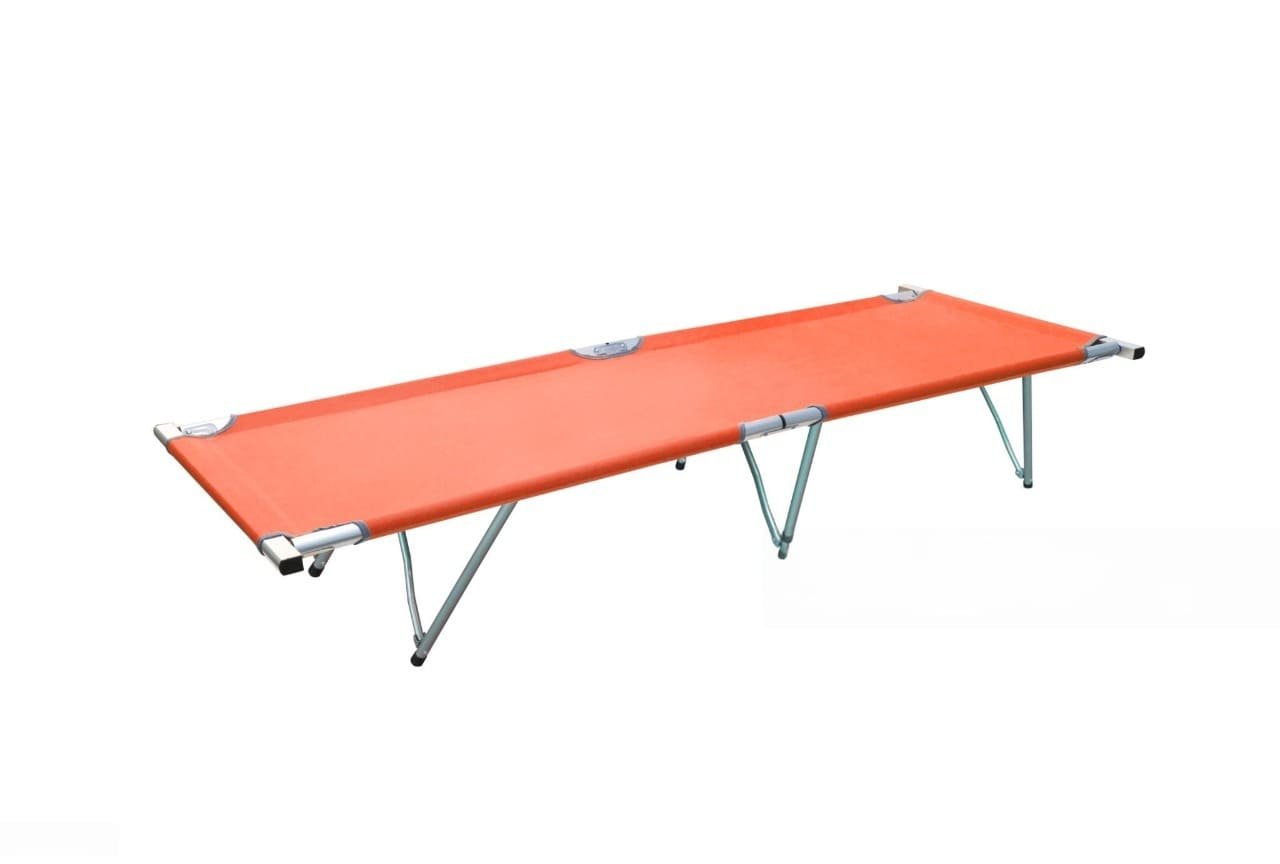
The difference between these two materials only becomes obvious when something goes wrong in the field. An EMS crew loading a 180 kg patient into an ambulance with a stretcher rated for 150 kg is working outside the safe operating range. A mountain rescue team carrying a steel stretcher up a trail for two hours is burning energy they need for the patient. These are not edge cases. They are the actual deployment scenarios our buyers describe.
Breaking Down the Material Choice by Deployment Context
The frame material decision should follow from the use case, not from the catalog price. Here is how I explain it to buyers during inquiry conversations:
| Deployment Context | Recommended Frame | Key Reason |
|---|---|---|
| EMS / Ambulance | Aluminum alloy | Lightweight for repeated daily use, vehicle loading clearance |
| Industrial safety / factory floor | Steel or heavy-duty aluminum | Higher load rating, corrosion resistance in some environments |
| Mountain / wilderness rescue | [Aluminum or carbon fiber | Weight is critical over long carry distances](https://pubmed.ncbi.nlm.nih.gov/20037233/)%%%FOOTNOTE_REF_3%%% |
| [NGO / disaster relief | Aluminum (foldable, lightweight) | Fast deploy, air transport weight limits, storage in bulk](https://pmc.ncbi.nlm.nih.gov/articles/PMC6768372/)%%%FOOTNOTE_REF_4%%% |
| Hospital patient transfer | Aluminum | Ease of handling, indoor maneuverability |
Beyond the frame material itself, the folding joint design and locking mechanism are part of the same decision. A lightweight aluminum frame with a weak hinge does not solve the field problem. A heavy steel frame with a fast, single-action fold may actually be acceptable for industrial buyers who prioritize load over portability. I always ask buyers to describe how the stretcher will be used before I recommend a specific model.
One more thing I want to flag here: rated load capacity numbers on a spec sheet are only meaningful if they come from an actual test. I will cover that in the certification section below.
Is "Folding Stretcher" Even the Right Product Category for Your Order?
This is the question I wish more buyers asked at the start. "Folding stretcher" is a broad term. It covers a range of products with different fold mechanisms, frame profiles, weight limits, and deployment designs. Treating them as interchangeable is one of the most common sourcing mistakes I see.
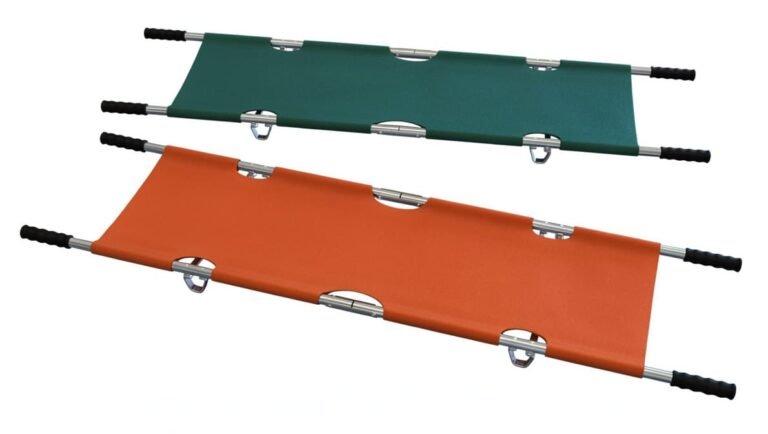
Folding stretchers include multiple sub-types: flat-fold, split-fold, stair-compatible, and ultralight backpacking designs.5 Each sub-type serves a specific deployment need. Ordering the wrong sub-type means the product may not fit the vehicle, the environment, or the patient load requirement.

I have seen buyers choose a general folding stretcher because the photo looked right, only to find that the folded size did not fit their ambulance storage space or vehicle doorway. I have also seen industrial safety buyers choose a lightweight EMS-style model and later realize the load rating was not enough for larger workers or staff wearing heavy protective gear. These mismatches are avoidable.
Matching Stretcher Type to Buyer Category
Understanding which product sub-type fits your procurement is straightforward once you break it down by buyer type and use scenario:
| Buyer Type | Likely Required Sub-Type | Critical Spec to Check |
|---|---|---|
| EMS / ambulance distributor | Vehicle-compatible folding stretcher with fast-lock | Fold width, rated load, locking mechanism type |
| Industrial safety supplier | Heavy-duty folding stretcher, possibly with side rails | Load rating (200 kg+), frame material corrosion spec |
| Government rescue department | Multi-function or stair-compatible folding stretcher | Narrow-space clearance, handle configuration |
| NGO / field deployment | Ultralight foldable stretcher, compact carry bag | Total weight, packed dimensions, carry handle design |
| Emergency training organization | Standard folding stretcher with visual durability | Durability under repeated use, replacement part availability |
When a buyer sends me an inquiry without specifying the deployment use, I ask three questions before I send any pricing: Where will this stretcher be used? What is the expected patient weight range? Does the stretcher need to fit inside a specific vehicle or space?
Those three answers almost always point to a specific sub-type. From there, the material decision from the previous section falls into place naturally. Price becomes the last conversation, not the first.6
What Do CE and ISO Certification Actually Cover for Folding Stretchers?
Certification questions come up in nearly every serious inquiry I handle. The problem is that buyers often assume that any CE-marked or ISO-referenced folding stretcher meets their local market requirements. That assumption creates real compliance risk.
CE marking for stretchers typically falls under EU MDR or general product safety directives and requires documented testing for load capacity, structural integrity, and labeling.7 ISO standards such as ISO 9001 cover manufacturing quality systems, not product-level performance.8 Buyers should request specific test reports, not just certificate copies.

I want to be direct here because I have seen buyers get burned on this. A factory can hold an ISO 9001 certificate and still produce a folding stretcher that has never been tested to a specific load standard.9 ISO 9001 tells you the factory has a documented quality management system. It does not tell you the stretcher was loaded to 150 kg and held for a defined test duration. Those are two different things.
What to Ask a Manufacturer Before You Rely on Their Certification Claims
The questions below are the ones I recommend buyers ask during the sourcing conversation. A credible factory should be able to answer all of them without delay:
| Question to Ask | What a Credible Answer Looks Like |
|---|---|
| Do you have a CE test report for this specific model? | Yes, with a third-party lab name and report date |
| What standard was the load test conducted to? | Specific standard reference, e.g., EN 1865 for ambulance stretchers |
| Can you provide the actual test report, not just the certificate? | Yes, with load values, test method, and pass/fail result |
| Is your ISO certificate current and facility-specific? | Yes, with certificate number and issuing body |
| Can you prepare compliance documents for a tender submission? | Yes, with clear understanding of what format is needed |
Not every market requires CE marking. Some government tenders specify local standards or simply require documented factory test records. What matters is that the manufacturer can show you the actual evidence, not just a logo on the spec sheet.
We are able to provide CE test reports, ISO quality certificates, and product test records for our folding stretcher models. For buyers with specific tender requirements, we can also prepare documentation packages. If you need a specific standard or format, the right time to ask is before the order is placed, not after.
How Do You Tell If a Folding Stretcher Manufacturer Is Actually Reliable?
A low quote does not mean low quality. I want to say that clearly because I work for a China-based factory, and I know how often the assumption runs the other way. But a low quote also does not mean high quality. The question is: what signals actually tell you which one you are dealing with?
A reliable folding stretcher manufacturer shows verifiable signals: production documentation on request, traceable test records, responsive and technically accurate inquiry handling, clear OEM capability, and references or export history.10 These signals exist before you place any order.
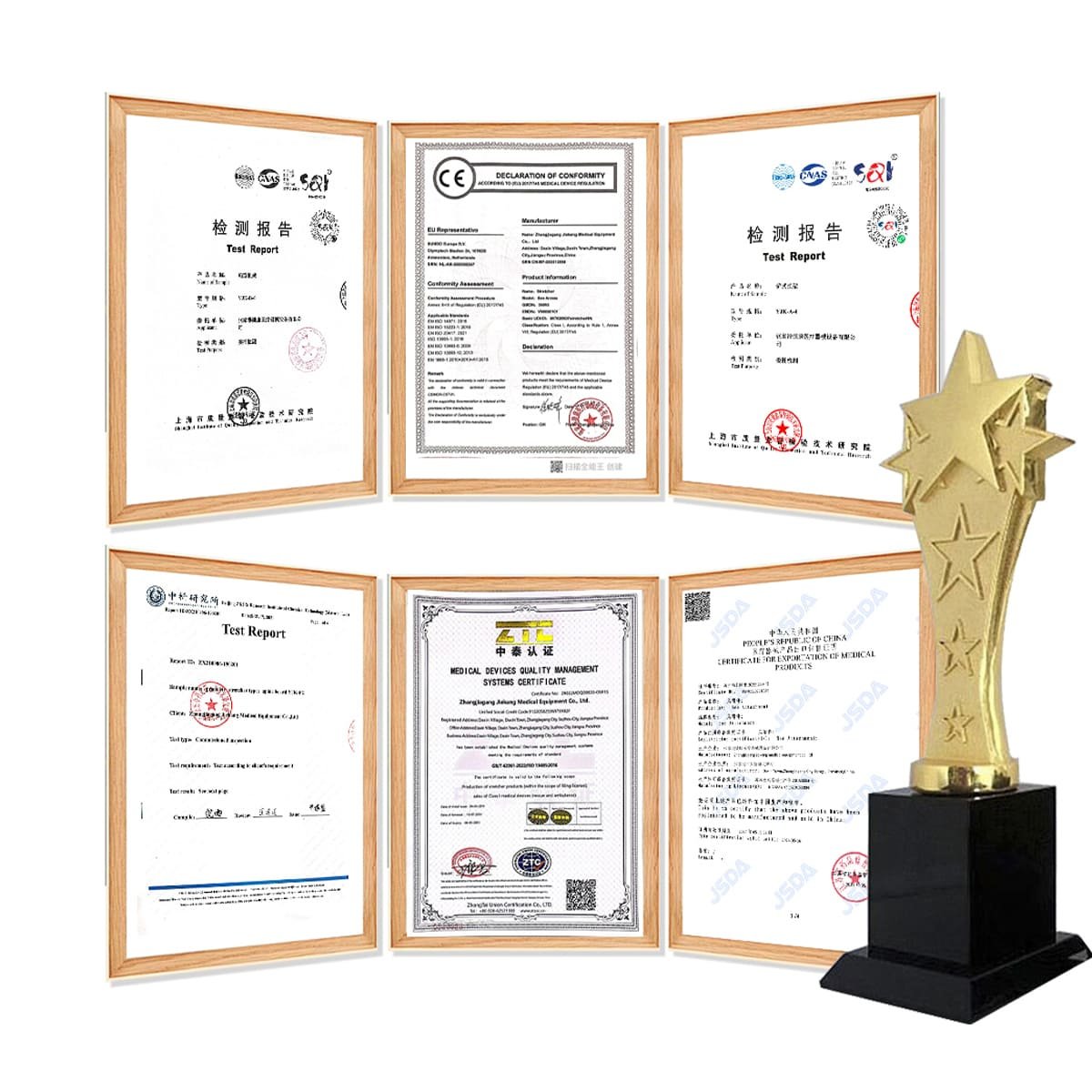
I have spoken with buyers who received three quotes, chose the lowest, and had no problems at all. I have also spoken with buyers who chose the lowest and received stretchers with frames that failed within six months of field use. The price did not predict the outcome. The factory's ability to show documentation did.
A Practical Framework for Evaluating Manufacturer Credibility
Here is the framework I suggest buyers use when they are comparing multiple suppliers. It applies regardless of country of origin:
| Signal Category | What to Look For | Red Flag |
|---|---|---|
| Product documentation | Can provide spec sheets, load test records, and material certificates for the specific model | Only offers a catalog photo and a price |
| Inquiry responsiveness | Answers technical questions accurately and promptly | Avoids specific questions, delays on load capacity or material details |
| OEM and customization | Clearly explains logo, color, and label options with lead time | Claims OEM capability but cannot explain the process |
| Export history | Has shipped to your target market or similar regulatory environments | No reference to export documentation or import compliance |
| Sample policy | Offers samples before bulk order, even with sample cost | Refuses samples or only offers them after a large deposit |
| Factory verification | Can provide factory photos, audit reports, or video walk-through | No production photos, no facility information available |
I use this same framework when our team evaluates our own readiness to serve a new buyer. If we cannot answer a question in this list, we should not be asking for the order. The same standard applies in reverse when you are evaluating us or any other supplier.
One pattern I have noticed in serious B2B inquiries: buyers who ask technical questions early — load rating, frame wall thickness, fold mechanism lock type — almost always end up with better outcomes than buyers who lead with price. The technical questions filter out factories that do not have the answers. That filter is free to use and takes less than five minutes.
Conclusion
Material, product type, certification evidence, and manufacturer signals are the four real selection variables.11 Price is only meaningful after those four are confirmed.
This source explains the distinctions between offshore and near-shore environments and their implications for life jacket safety requirements. ↩
This source explains the risks of choosing mismatched buoyancy ratings for specific water environments. ↩
This source discusses how user gear and unconsciousness can affect life jacket buoyancy requirements. ↩
This source discusses the importance of planning for worst-case scenarios in safety equipment procurement. ↩
This source explains how waterlogged clothing and heavy tools can affect life jacket buoyancy performance. ↩
This source explains how higher Newton ratings in life jackets can provide a greater safety margin. ↩
This source outlines the importance of compliance with regional safety standards such as SOLAS and CE. ↩
This source explains SOLAS requirements for life jackets used in international commercial shipping. ↩
This source outlines CE and EN ISO standards required for vessels operating in European waters. ↩
This source emphasizes the importance of supplier transparency in providing compliance documentation for safety equipment. ↩
This source discusses the financial and operational risks of importing non-compliant safety equipment. ↩