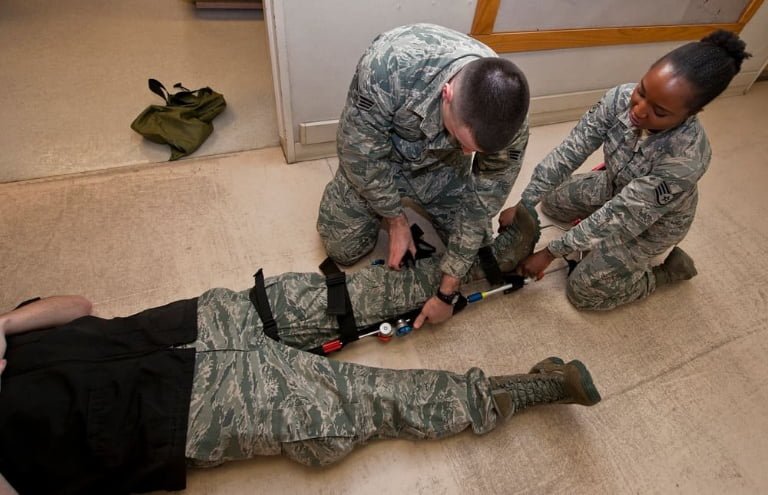
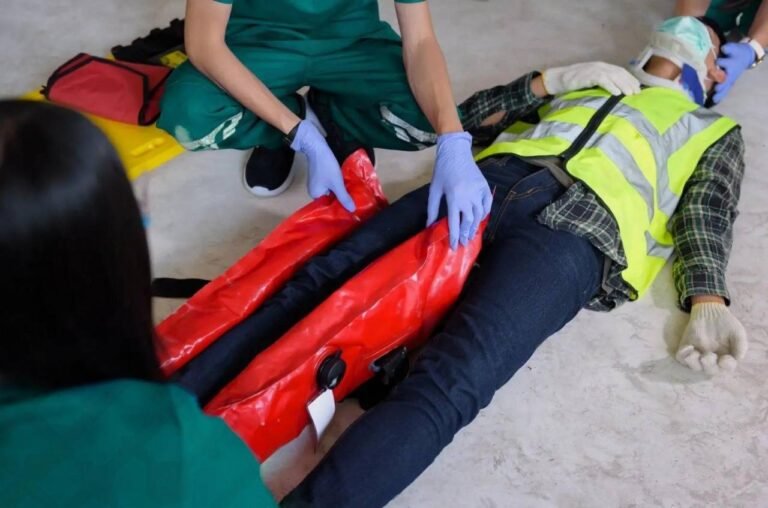
Picture a responder opening a splint kit beside someone with a lower-leg injury. One device is soft until a pump removes the air. The other is already firm, but its shape and padding need to fit the limb. Both can provide support. The question is which one the team can use well, check during transport, and keep ready for the next call.
The short answer: A vacuum splint is useful when a close, adaptable fit matters. A rigid splint is useful when a pump-free setup and straightforward inspection matter more. Neither is automatically better at immobilization. The injured body part, the exact model, the responder's training, and local clinical protocol decide what is appropriate.

This article compares limb splints for trained EMS, rescue, and healthcare teams. It is a product-selection guide, not instructions for treating a fracture. For an overview of other designs, including traction and moldable splints, see our guide to types of medical splints1.
What Changes When a Vacuum Splint Becomes Firm?
The American Red Cross Emergency Medical Response manual2 describes the basic difference. A vacuum splint contains small beads inside an airtight cover. Before use, the beads move freely, so the splint can be shaped around the injured area. Remove air through the valve and the beads compact, making the splint firm. A rigid splint starts with a supporting structure, such as plastic, aluminum, wood, or a composite. Some models have a fixed shape; others can be shaped within the manufacturer's instructions.
That mechanical difference creates a practical trade-off. The vacuum splint can follow the contours of the limb, but it depends on an intact cover, working valve, compatible pump, and correct evacuation. The rigid splint has fewer operating steps, but fit may depend more on choosing the right size and adding suitable padding. The label “rigid” covers many designs, so the features of a specific model matter more than the category name.
| What to compare | Vacuum splint | Rigid splint |
|---|---|---|
| Shape before application | Flexible and adaptable | Fixed or shapeable, depending on the model |
| How it becomes supportive | Air is removed and the bead-filled cover firms up | A firm structure provides support |
| Extra equipment | Usually needs a compatible pump | Usually pump-free |
| What can interrupt use | A puncture, leak, damaged valve, or missing pump | Wrong size, damaged frame, hard edges, or inadequate padding |
| Routine inspection | Cover, seams, valve, pump, straps, and air retention | Frame, edges, padding, joints, and straps |
| Best starting question | Can the team maintain an airtight system? | Does the available shape fit the intended body part? |
The table describes common design differences. It cannot predict the performance of a particular splint without its specifications, condition, and proper application.
When Is a Vacuum Splint Worth the Extra Equipment?
A vacuum splint earns its place when its ability to contour around the supported area solves a real problem. Think of an irregular limb position or a service that needs several sizes and shapes across its response kits. The team can form the device around the area before making it firm, rather than trying to make the patient fit a preformed shape.

This is one reason clinical guidance sometimes names a vacuum splint for a particular injury. In its prehospital recommendations for suspected long-bone fractures of the leg, the UK NICE guideline on complex fractures3 says to consider a traction splint or the adjacent leg for a suspected fracture above the knee, and a vacuum splint for other suspected long-bone fractures of the leg. That is a specific recommendation within a specific care system, not a rule for every injury or country.
The equipment also has to be ready when needed. Before buying, ask whether a gloved user can operate the valve, whether the pump supplied with the kit actually fits it, and whether the splint stays firm for the time stated in the manufacturer's instructions. Check how the cover tolerates storage beside other rescue equipment and how it must be cleaned and dried. An adaptable splint loses its advantage if the team discovers a leak at the scene.
When Does a Rigid Splint Make More Sense?
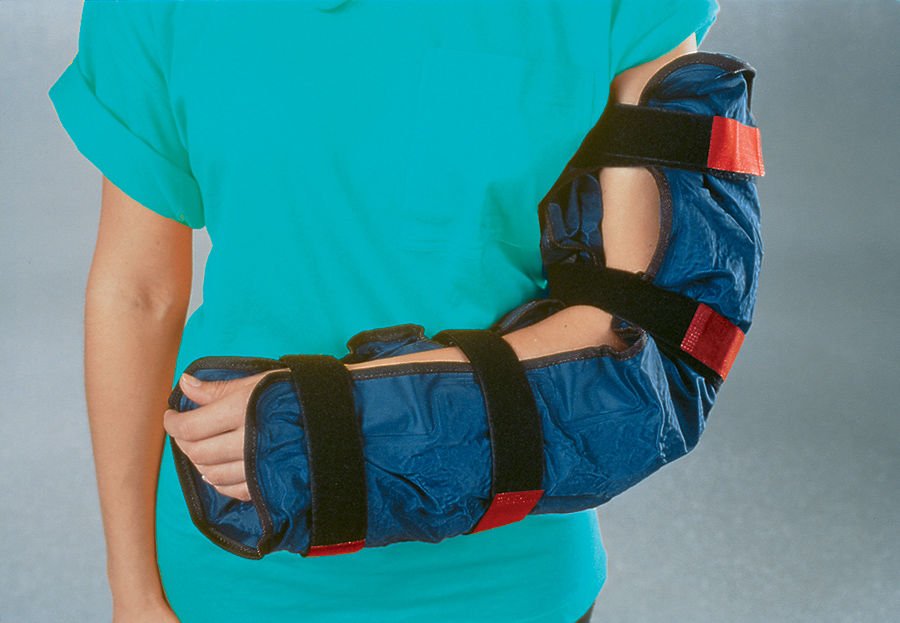
A rigid splint can be the simpler choice when the service needs a device that is easy to locate, inspect, and prepare without a pump. It may suit a well-defined body area when the available sizes and shapes match the patients the team expects to treat.
But “simple” does not mean “one size fits all.” A splint that is too short, poorly padded, or awkward to secure can create pressure and fail to support the intended area. A moldable rigid design may be more adaptable than a fixed shell, yet the shaping limits still depend on the product. The useful question is not whether rigid splints are good in general. It is whether this model, in this size, works for the team’s actual use case.
For a buyer, a short sample review is revealing: Are the edges protected? Does the padding stay in place? Can the straps be handled with gloves? Does the splint remain serviceable after the storage and cleaning conditions the organization expects? Those answers tell you more than a catalog phrase such as “heavy-duty.”
Does Either Type Immobilize Better?
There is no sound basis for saying that every vacuum limb splint immobilizes better than every rigid limb splint. An evidence review by the International Commission for Mountain Emergency Medicine4 reports that randomized comparisons of splinting devices are lacking. It recommends considering the body part, equipment weight, cost, compatibility with other rescue gear, and the devices a team knows how to use.
It is also easy to compare the wrong devices. A limb vacuum splint and a full-body vacuum mattress5 share a similar air-removal principle, but they serve different body areas and transport needs. Research about a vacuum mattress versus a spine board does not answer the limb-splint question.
For both designs, the decisive factors are less dramatic than a “winner” headline: the right size, a sound device, trained application, and the ability to reassess the patient. Product selection should follow the treating team's protocol and the manufacturer's instructions.
What Should a Team Check Before Ordering?
A good comparison starts with a realistic trial, not two product photos. Give trained users the proposed models and ask them to work through the conditions in which the splints will actually be stored and applied. Record the results so that procurement, training, and clinical teams are evaluating the same thing.
First, define the job. Which body parts and patient sizes must the kit cover? Is it for an ambulance, emergency department, industrial site, or outdoor rescue team? How much storage space is available? Which local protocol applies?
Then test the complete system. For a vacuum model, check the cover, seams, pump connection, valve operation, straps, and air retention. For a rigid model, check its size range, frame, edges, padding, straps, and any permitted shaping. Have users wear the gloves they normally use and follow the exact product instructions.
Finally, compare what happens after the call. Ask how each model is cleaned, dried, inspected, stored, repaired, or replaced. Confirm which accessories and spare parts are included. If imaging compatibility, reuse, or a service life is claimed, request documentation for the exact model rather than assuming it applies to the whole product category.
Clinical safety remains separate from purchasing convenience. The American Red Cross Emergency Medical Response manual2 advises checking circulation and sensation beyond the injury after splinting. Its First Aid/CPR/AED manual6 also describes checking the area before and after application and including the appropriate joints or bones in the splint. The device and straps must permit the reassessment required by the local protocol.
Which One Belongs in the Kit?
Use this as a starting point for a conversation with the team, not a clinical prescription:
- Choose a vacuum model to evaluate first when close contouring is a key requirement and the service can support pump operation, leak checks, and careful storage.
- Choose a rigid model to evaluate first when the intended body area is well defined and a pump-free setup with fewer components is valuable.
- Evaluate both when one service covers different settings or patient groups. A mixed kit may be more useful than asking one design to do every job.
The final decision belongs to the trained clinical team. A buyer can make that decision easier by bringing the right sample sizes, specifications, instructions, and maintenance details to the table.
Frequently Asked Questions
Does a vacuum splint become completely rigid?
It becomes firm as air is removed, but its final stiffness depends on the design, condition, and correct use of the specific product. Check the manufacturer's performance information rather than treating “vacuum” as a guarantee.
Is a rigid splint always faster to apply?
No. It avoids the pump step, but fitting, padding, and securing still take time. The team's training, the injured area, and the model design affect the result.
Can either splint stay on during X-rays?
Some models may be suitable for a stated imaging process, but materials, valves, fasteners, and accessories vary. Verify the exact model and configuration before making an imaging claim.
Are vacuum splints reusable?
Some are, subject to the manufacturer's instructions for cleaning, inspection, and air retention. Reuse should never be assumed from the product category alone.
Final Takeaway
A vacuum splint's strength is its adaptable shape; a rigid splint's strength is a supportive structure without a pump. Neither advantage matters unless the device fits the patient, works with the team's training and protocol, and is ready when needed. Compare real samples as complete systems, then choose for the work your team actually does.
"Types of Medical Splints: Uses, Materials, and Emergency Applications", Jiekang Medical, https://jiekangmedical.com/types-of-medical-splints/. Link role: related reading on other splint designs. ↩
"Emergency Medical Response Instructor's Manual", American Red Cross, https://www.redcross.org/content/dam/redcross/delta/EMR_InstructorsManual_2017_LoRes_111017.pdf. Evidence role: device definitions and training guidance. Supports: vacuum and rigid splint mechanisms and reassessment after splinting. Scope note: not a head-to-head clinical trial. ↩
"Fractures (complex): assessment and management—Recommendations", NICE, https://www.nice.org.uk/guidance/ng37/chapter/recommendations. Evidence role: clinical guideline example. Supports: device selection varies by suspected fracture location. Scope note: recommendation 1.1.11 concerns specified prehospital leg-fracture scenarios in the UK. ↩
"Multiple trauma management in mountain environments", Sumann et al., https://pmc.ncbi.nlm.nih.gov/articles/PMC7737289/. Evidence role: evidence review and expert guidance. Supports: lack of randomized comparisons of splinting devices and practical selection factors. Scope note: mountain and rescue medicine context. ↩
"Full-Body Vacuum Mattress Stretcher", Jiekang Medical, https://jiekangmedical.com/products/full-body-vacuum-mattress-stretcher/. Link role: product example illustrating a different type of vacuum device. ↩
"First Aid/CPR/AED Participant's Manual", American Red Cross, https://www.redcross.org/content/dam/redcross/training-services/no-index/First%20Aid-CPR-AED-Participant%27s-Manual.pdf. Evidence role: first-aid training guidance. Supports: distal checks before and after splinting and inclusion of adjacent joints or bones as appropriate. Scope note: follow local professional protocols for clinical application. ↩