
Choosing a medical splint can be confusing. Some splints are rigid, some can be shaped by hand, and others use vacuum or traction systems. They may look similar, but they are not designed for the same injuries or working environments.
A medical splint supports an injured body part and limits movement while the patient is assessed, transported, or treated1. The right choice depends on the injured area, the responder’s training, local treatment protocols, and the product’s instructions for use.

This guide explains the main types of emergency medical splints, the materials used to make them, and the practical points buyers should check before ordering.
What is a medical splint used for?
A splint limits movement around an injured bone, joint, or soft tissue. It may reduce pain, protect the injured area, and lower the risk of additional damage during short-term care or transport.
Splints may be used for:
- Suspected fractures
- Sprains and strains that need support
- Selected joint injuries or dislocations
- Severe soft-tissue injuries
- Temporary stabilization before further medical treatment
A splint is not the same as a cast. A splint is usually not fully wrapped around the limb, so it can better accommodate early swelling, while a cast normally surrounds the limb and provides more rigid immobilization1.
What are the main types of medical splints?
There is no single splint that is suitable for every injury. Emergency teams normally choose a device based on the injured body part, the level of support required, transport conditions, and staff training.
Rigid splints
Rigid splints use a firm structure made from materials such as plastic, aluminum, wood, cardboard, or composite panels. They help prevent movement and are commonly used for suspected arm or leg fractures.
Their simple design can make them fast to prepare, but they must be correctly sized and padded. Poor padding or straps that are too tight can cause pressure injuries or reduce circulation.
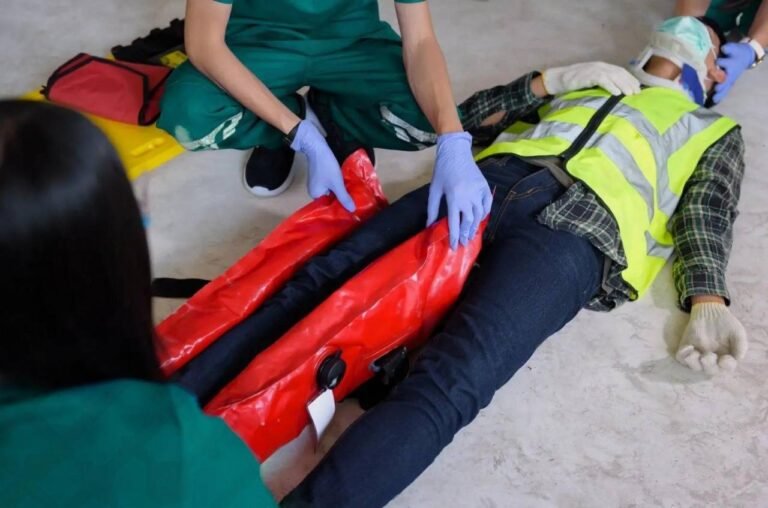
Vacuum splints
Vacuum splints contain small beads inside an airtight cover. The splint is placed around the injured area, and a pump removes the air. As the air is removed, the splint becomes firm and conforms to the shape of the limb.
This close fit can provide stable support for selected fractures and joint injuries. Vacuum splints normally require a compatible pump, working valve, secure straps, and enough storage space in the response vehicle or kit.

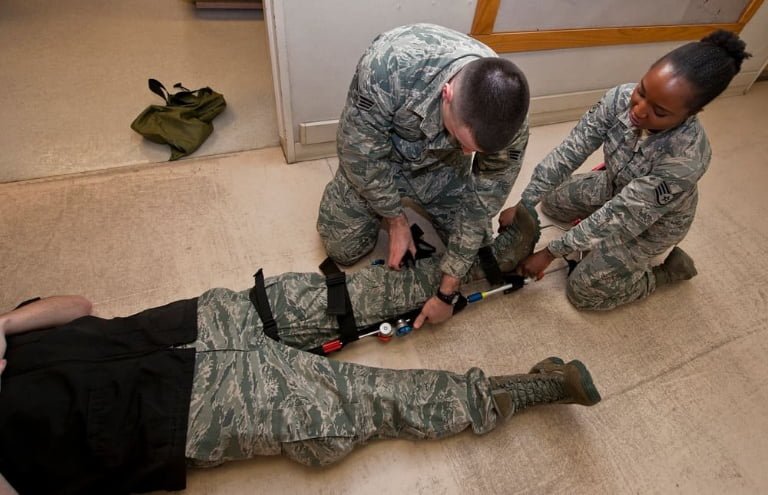
Traction splints
Traction splints are specialized devices. They are mainly intended for a suspected isolated fracture of the middle section of the femur, also called the femoral shaft, and apply controlled longitudinal traction to help stabilize the thigh before definitive treatment2.
They are not general-purpose splints for every long-bone or leg fracture. A conventional femoral traction splint may be unsuitable when the patient has a suspected pelvic injury or an injury to the knee, lower leg, ankle, or foot on the same side2. Application should be performed by trained personnel following local protocols and the instructions for the specific device3.
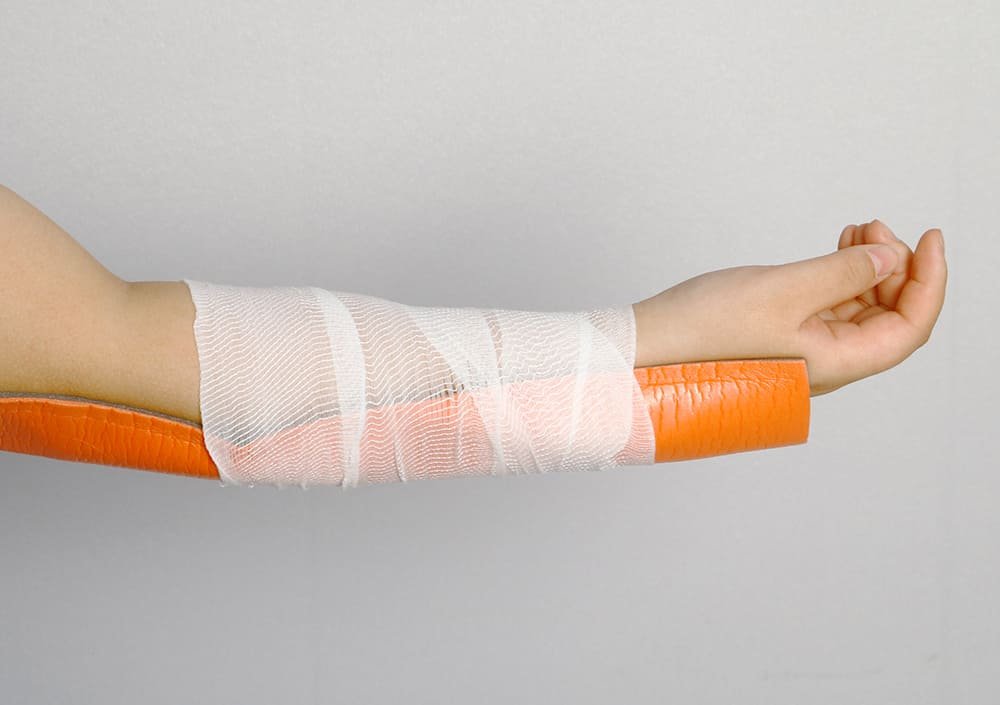
Moldable aluminum-foam splints
Moldable splints are commonly made with a thin aluminum core covered by foam. They can be rolled or folded for storage and shaped around different parts of the body.
These splints do not chemically harden. Instead, bending the aluminum core into curves makes the structure more rigid and supportive4. They are useful when responders need a lightweight, compact, multipurpose option, but correct shaping, padding, and securing are still important.
Plaster and fiberglass splints
Plaster and fiberglass are widely used in hospitals and clinics. They are shaped to fit the injured area and then allowed to set.
Plaster provides good molding but takes longer to dry and requires application experience, while fiberglass is generally lighter and easier to apply1. The fiberglass outer material may resist moisture better than plaster, but the padding and skin normally still need to stay dry unless the product is specifically designed to be waterproof.
How do the main splint types compare?
| Splint type | Common emergency use | Main advantage | Important limitation |
|---|---|---|---|
| Rigid splint | Temporary support for suspected arm or leg fractures | Simple and stable | Needs correct sizing and padding |
| Vacuum splint | Conforming support for selected fractures and joint injuries | Fits the shape of the limb | Requires a pump and an airtight system |
| Traction splint | Suspected isolated mid-shaft femur fracture | Provides controlled traction and stabilization | Specialized use with important contraindications |
| Moldable aluminum-foam splint | Various arm, wrist, ankle, or lower-leg injuries | Lightweight, compact, and shapeable | Requires correct shaping and securing |
| Plaster splint | Clinical management of many musculoskeletal injuries | Excellent molding | Slower setting and sensitive to water |
| Fiberglass splint | Clinical immobilization | Lightweight and quick setting | More expensive and may provide a less precise mold than plaster |
This table is a general comparison, not an application guide. The final choice should follow clinical assessment, local protocols, and the manufacturer’s instructions.
How do materials affect splint performance?
The material affects more than weight. It can change how easily the splint is shaped, cleaned, stored, inspected, and reused.
| Material or construction | Practical strengths | Points to check before buying |
|---|---|---|
| Aluminum with foam covering | Lightweight, moldable, compact | Foam durability, edge protection, cleaning method, reuse instructions |
| Rigid plastic or polymer | Water resistant and easy to wipe on many models | Size range, flexibility, padding, temperature resistance |
| Coated fabric with beads | Conforms closely when vacuum is applied | Pump and valve compatibility, leak resistance, repair options, disinfection method |
| Plaster | Easy to mold closely around the body | Drying time, storage conditions, trained application |
| Fiberglass | Lightweight, strong, and quick setting | Cost, skin protection, application supplies, staff training |
| Cardboard or wood | Low cost and simple | Moisture resistance, padding, durability, intended single-use status |
Do not assume that an entire material category is disposable or reusable. For example, many moldable aluminum-foam splints can be cleaned and reused4, while some low-cost rigid splints are intended for one patient. Some vacuum splints are reusable, while others may be semi-disposable5. The product’s instructions for use should make this clear.
Which splint should be used for different injuries?
The injury should be assessed before the device is selected. A product that works well for one body part may be unsafe or ineffective for another.
Suspected arm or lower-leg fracture
A rigid, moldable, or vacuum splint may be considered, depending on the location of the injury, available equipment, and responder training. The device should support the injured area without creating unnecessary pressure.
Joint injury or suspected dislocation
A vacuum or moldable splint may help support the joint in the position found. An untrained responder should not force the joint back into place or straighten a deformed limb. The American Red Cross advises keeping the injured area still and avoiding unnecessary movement while arranging appropriate care6.
Suspected mid-shaft femur fracture
A traction splint may be considered when the injury appears to be an isolated femoral shaft fracture and the responder is trained to apply it2. If the patient is unstable or another injury makes traction unsafe, a different immobilization method and rapid transport may be more appropriate3.
Sprains and soft-tissue injuries
Some injuries may benefit from temporary support, but not every sprain needs a rigid device. The level of support should follow the assessment and local care guidance.
What safety checks are important when applying a splint?
Splinting is not risk-free. A poorly fitted device can increase pain, damage the skin, or affect nerves and blood flow.
Trained responders should:
- Check circulation, sensation, and movement below the injury before applying the splint.
- Cover and manage open wounds or serious bleeding as appropriate before securing the device.
- Support the injured area and avoid unnecessary movement or forceful straightening.
- Add padding around bony areas and avoid straps that are too tight.
- Recheck circulation, sensation, and movement after application and during transport.
- Stop and reassess if the patient develops increasing pain, numbness, tingling, pale or cold skin, or reduced circulation.
Medical guidance emphasizes checking and documenting neurovascular status before and after splint placement and warns that excessive pressure can cause skin damage or restrict blood flow1.

Why does portability matter in emergency care?
Emergency teams often work in ambulances, industrial sites, outdoor areas, or confined spaces. Equipment must fit the available storage and be easy to carry to the patient.
However, the smallest splint is not automatically the best choice. Buyers should balance packed size with:
- Injury coverage and available sizes
- Application time
- Required accessories
- Stability after application
- Cleaning and drying time
- Staff training
- Replacement and repair costs
Moldable splints are usually easy to store in compact kits. Vacuum splints provide close-fitting support but also need a pump and more storage space. Traction splints vary greatly in folded size, weight, and application method.
What should B2B buyers check before ordering medical splints?
The right product is not only the one with the lowest unit price. It must fit the buyer’s actual operating environment and local requirements.
Intended use and user group
Confirm whether the splint is intended for EMS, hospitals, workplace first aid, sports, military use, outdoor rescue, or training. Also check whether trained clinicians, professional responders, or general first-aid staff will use it.
Size range
Check whether adult and pediatric sizes are required. A device must fit the patient correctly; an adult traction splint, for example, may not be suitable for a child.
Cleaning and reuse
Ask for written cleaning, disinfection, drying, inspection, and reuse instructions. Confirm which disinfectants are compatible with the material and when the product must be removed from service.
Imaging compatibility
If the splint may remain in place during imaging, request documented information about X-ray, CT, or MRI compatibility. Do not assume that every plastic, aluminum, or vacuum product is compatible with every imaging environment.
Accessories and spare parts
For vacuum or traction systems, confirm whether pumps, straps, carrying bags, valves, repair kits, and replacement components are included or sold separately.
Instructions and training materials
Clear labeling and product instructions are important, but they do not replace practical training. Buyers should request user manuals, demonstration videos, inspection checklists, and training support where available.
Regulatory and purchasing documents
Required documents vary by product classification and destination market. Buyers should confirm the applicable registration, labeling, quality-management, language, and tender requirements before placing a bulk order.
Frequently Asked Questions
What is the best splint for a fracture?
There is no single best option for every fracture. The choice depends on the injured bone, fracture location, patient condition, available equipment, and responder training. Rigid, moldable, or vacuum splints may be used for different injuries, while traction splints have a much narrower indication.
Are vacuum splints reusable?
Many vacuum splints are designed for reuse, but this is product-specific5. Follow the manufacturer’s instructions for cleaning, disinfection, leak testing, inspection, and retirement from service.
Can a traction splint be used for any leg fracture?
No. A femoral traction splint is mainly used for a suspected isolated mid-shaft femur fracture3. It may be unsuitable when pelvic, knee, lower-leg, ankle, or foot injury is suspected on the same side2.
Does a moldable aluminum-foam splint harden after shaping?
No. It becomes more rigid because curves strengthen the aluminum structure, while remaining adjustable rather than chemically hardening like plaster4.
What splints should an EMS organization stock?
Many EMS teams use a combination of general-purpose rigid or moldable splints, vacuum splints, and a protocol-approved option for suspected femoral shaft injuries. The final mix should reflect local call patterns, vehicle space, staff training, cleaning capacity, and medical direction.
Conclusion
Medical splints differ in design, material, application, and training requirements. Rigid and moldable splints offer simple support for many extremity injuries. Vacuum splints conform closely to the body, while traction splints are specialized devices for selected femoral shaft injuries. Plaster and fiberglass remain important in clinical settings.
For B2B buyers, the safest purchasing decision comes from matching the product to the intended users, injury scenarios, cleaning process, storage space, and local regulatory requirements. Product instructions and training materials should always be reviewed before the equipment is placed into service.
Contact Jiekang Medical to discuss splint sizes, materials, packaging, product documents, and bulk purchasing requirements.
[NCBI Bookshelf, “Splinting.”](https://www.ncbi.nlm.nih.gov/books/NBK557673/) Explains splint indications, plaster and fiberglass materials, neurovascular checks, and possible complications. ↩
[Merck Manual Professional Edition, “How To Apply a Femoral Traction Splint.”](https://www.merckmanuals.com/professional/injuries-poisoning/how-to-splint-or-immobilize-a-lower-limb/how-to-apply-a-femoral-traction-splint) Covers femoral shaft indications, contraindications, and safety checks. ↩
[NCBI Bookshelf, “EMS Traction Splint.”](https://www.ncbi.nlm.nih.gov/books/NBK507842/) Explains field indications, contraindications, application principles, and reassessment. ↩
[SAM Medical, “SAM Splint.”](https://www.sammedical.com/products/sam-splint) Describes how a moldable aluminum-foam splint gains strength when curved and provides product-specific reuse information. ↩
[Hartwell Medical, “FASPLINT Extremity Vacuum Splint.”](https://www.hartwellmedical.com/fasplint-extremity-vacuum-splint-ordering-information/) Provides a product-specific example of vacuum splint construction, cleaning, and reuse. ↩
[American Red Cross, “Fractures: Types, Symptoms, and Treatment.”](https://www.redcross.org/take-a-class/resources/learn-first-aid/fractures) Advises keeping an injured area still, avoiding unnecessary straightening, and seeking appropriate care. ↩