When buyers ask which first aid kit to choose, they often start with the items inside. I usually start with the style of the kit.
A wall box suits a factory line. A compact case fits a van. A backpack is easier to carry around a building site. The location changes the answer.
The short answer:
- Factory: choose wall-mounted cabinets or hard cases. Add a portable or rolling bag for the response team.
- Work vehicle: choose a compact EVA case for normal cars and vans, or a latched rigid case for rough service trucks.
- Construction site: choose a weather-resistant rigid case for the main station, plus a backpack or handled bag for mobile crews.

That is the quick answer. The details below explain when each style makes sense.
Which First Aid Kit Style Should You Choose?
| Use | Best starting choice | Add when needed | Avoid |
|---|---|---|---|
| Small factory | Wall-mounted cabinet | Portable first aid bag | A loose bag that keeps moving |
| Large factory | Several fixed cabinets | Portable or rolling response bag | One cabinet for the whole plant |
| Car or delivery van | Compact EVA case | Carry bag for mobile staff | Kit buried behind cargo |
| Service truck | Rigid case with secure latches | Removable supply pouch | Thin bag beside heavy tools |
| Outdoor worksite | Weather-resistant hard case | Backpack or carry bag | Keeping everything in the office |
The contents still need to match the risks and local rules. This table simply tells you which container to start with.
What Is the Best First Aid Kit for a Factory?
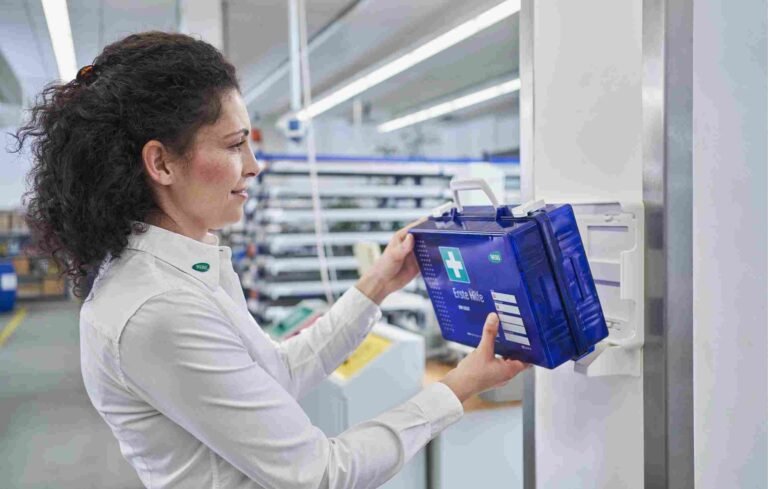
For most factory work areas, start with a wall-mounted cabinet. It has a fixed home, workers can see it, and safety staff can inspect it easily. If wall mounting is not practical, keep a clearly marked rigid case in one fixed, accessible position.
A small workshop may need one. A larger factory usually needs several smaller kits near production, maintenance, warehouse, and loading areas. That gives faster access than one huge cabinet at reception.
When is a portable bag useful?
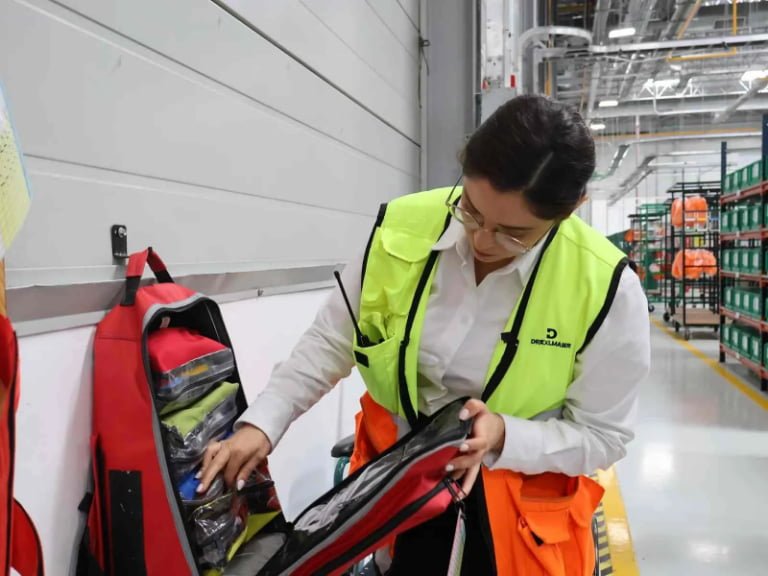
Add a portable first aid bag or backpack when a responder needs to move between departments.
A rolling emergency bag works well on smooth factory floors because it can carry more without being lifted. It is less useful around narrow stairs or uneven yards.
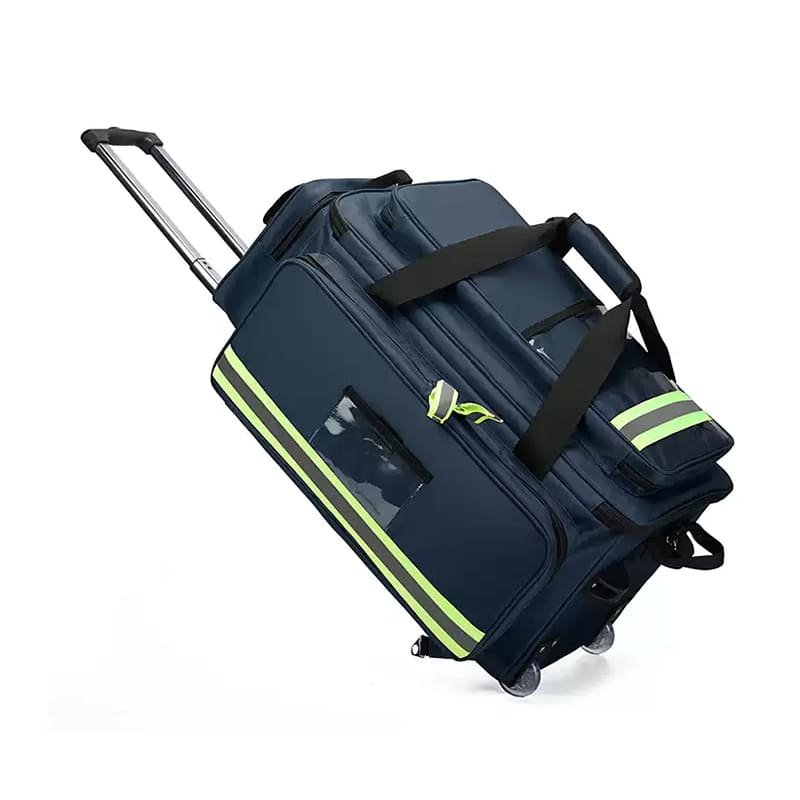
For a factory, I would use fixed kits for everyday access and add one mobile bag only when the size or layout makes it useful.
You can compare these formats in our first aid kits and bags range.
What Is the Best First Aid Kit for a Work Vehicle?
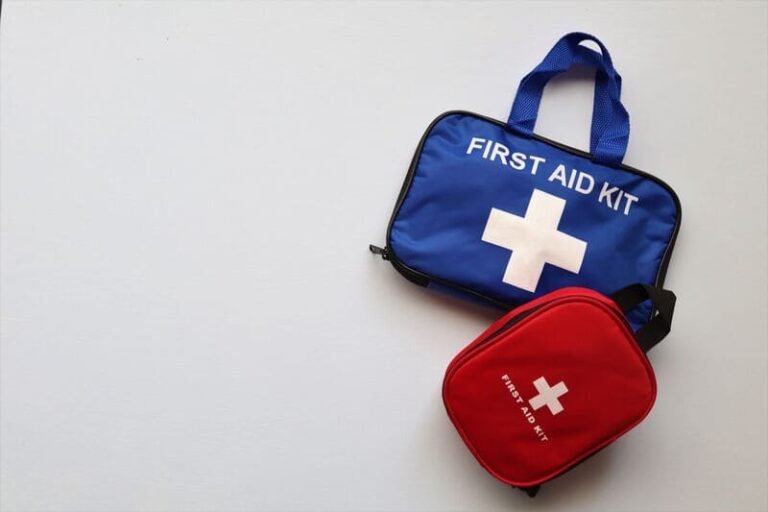
For a car or delivery van, a compact EVA case that holds its shape is usually the easiest option. It is light and can leave the vehicle with the worker.
Secure it under a seat, against an interior panel, or inside a marked compartment. It should never slide around or disappear behind cargo.
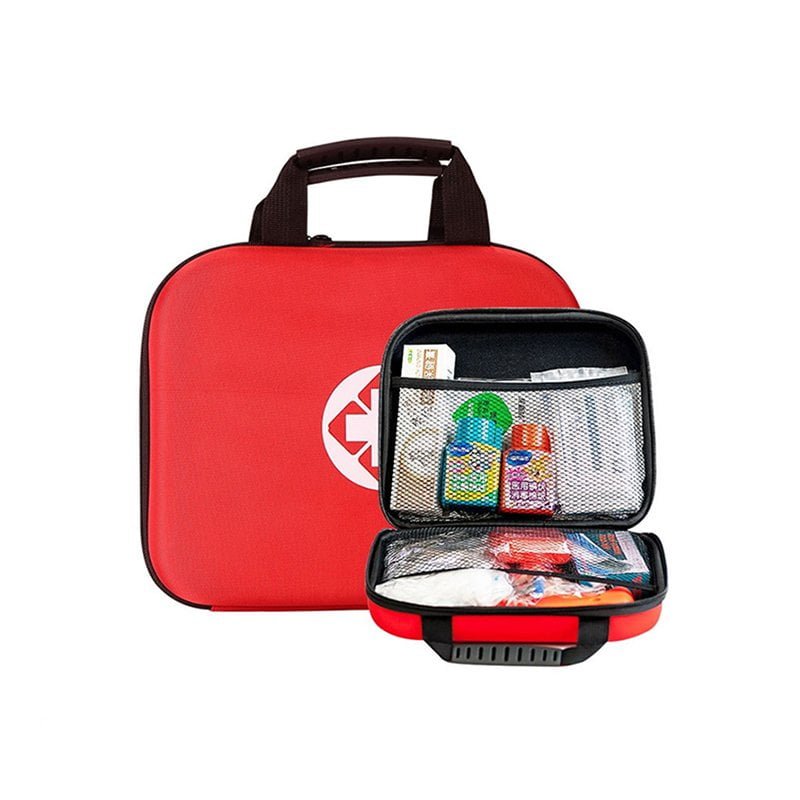
A portable EVA first aid kit is a practical format for company cars, vans, and mobile technicians.
Choose a rigid case with secure latches for a service truck carrying dirty or heavy equipment. It protects better from crushing, dust, and rough handling, although it needs more space.
For ordinary cars and vans, I would use EVA. For rough service vehicles, I would use a rigid case. Keep either one in a fixed, clearly marked position.
What Is the Best First Aid Kit for a Construction Site?
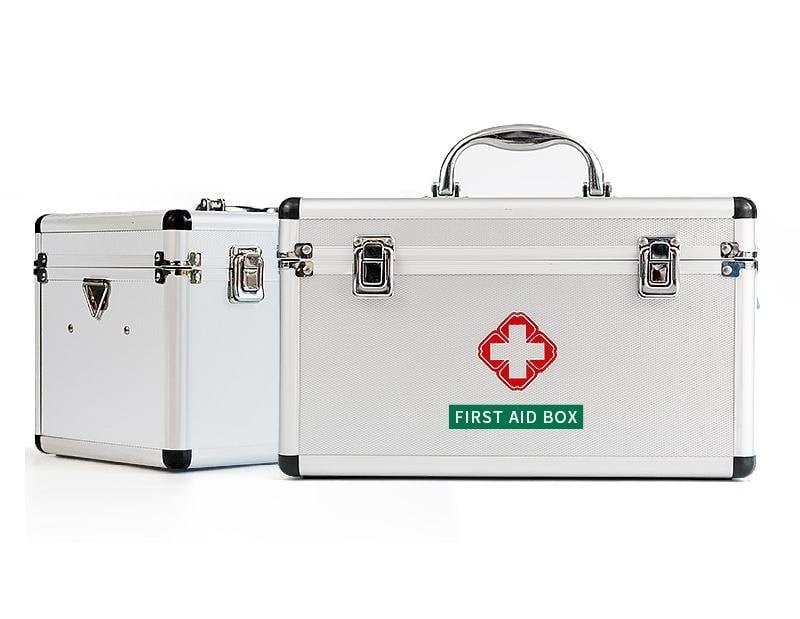
For the main first aid point, choose a weather-resistant rigid case. It protects the kit from dust, rain, drops, and nearby tools.
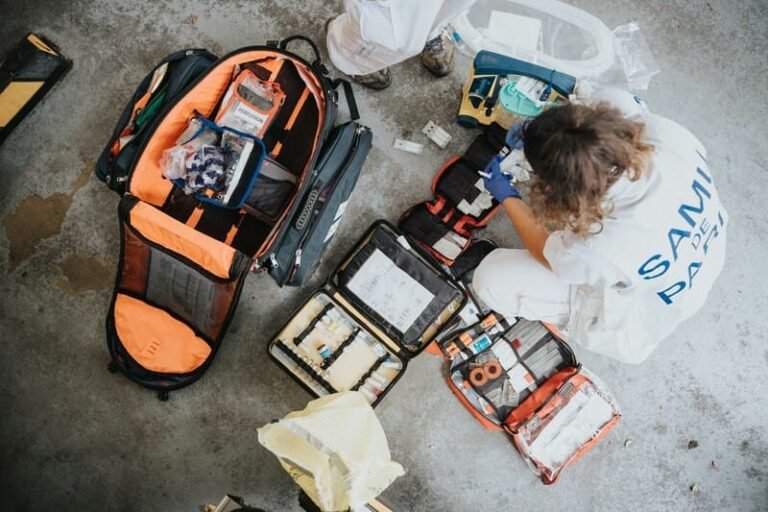
One case in the site office is often not enough. If crews work on another floor or far from the office, add a medical backpack, shoulder bag, or carry bag that moves with them.
Should you use a rolling bag?
Only on flat, clean surfaces. Wheels are useful in warehouses and finished buildings. They are frustrating on gravel, mud, stairs, and scaffolding.
The OSHA construction first aid guidance1 says supplies must be easily accessible and that larger or multiple operations may need additional kits or quantities.
For a worksite, I would use a weather-resistant base case and give moving crews backpacks or carry bags. I would not rely on a kit that never leaves the site office.
Hard Case, EVA Case, Soft Bag, or Rolling Bag?
| Style | Main advantage | Main limitation | Best fit |
|---|---|---|---|
| Wall cabinet | Visible and easy to inspect | Cannot move with the responder | Factory departments and site offices |
| Rigid case | Strong physical protection; weather protection when designed and rated for it | Heavier and bulkier | Service trucks and outdoor sites |
| EVA case | Compact, light, and holds its shape | Less protection than a rigid case | Cars, vans, and mobile technicians |
| Soft bag | Easy to carry and organize | Needs protection from water and crushing | Mobile crews and responders |
| Backpack | Leaves both hands free | Can become heavy | Large or multi-level worksites |
| Rolling bag | Carries more with less lifting | Poor on stairs and rough ground | Large factories with smooth floors |
There is no universal winner. Choose according to whether the kit stays in one place, rides in a vehicle, or moves with a person.
What Should You Confirm Before Ordering?
Do not choose by piece count alone. A compact kit may suit a small workshop, car, or van. A large factory usually needs several medium kits near separate work zones. An outdoor site may need a larger protected base case and smaller bags that crews can carry.
If you are buying for several locations, three formats are usually enough:
- Fixed cabinet or rigid case for indoor stations
- Compact EVA or rigid case for vehicles
- Weather-resistant base case plus portable bags for worksites
Then check the practical details:
- Can everyone reach the kit quickly?
- Does the case fit its storage or mounting position?
- Are the handles, zippers, latches, and dividers easy to use?
- Is there evidence for any water, dust, impact, or temperature claim?
- Can used or expired supplies be replaced easily?
- Do the labels and documents suit the destination market?
US Class A and Class B classifications under ANSI/ISEA Z308.1-20262 describe minimum supplies, not the outer case style. OSHA’s general-industry first aid kit guidance3 also expects adequate supplies to be readily available.
Choose the container for the real location first. Then check the contents and paperwork required for your market.
Frequently Asked Questions
What type of first aid kit is best for a factory?
A wall cabinet or hard case. Large factories may also need a portable or rolling response bag.
What type is best for a company vehicle?
Use a compact EVA case for normal cars and vans, or a rigid case with secure latches for rough service trucks. Keep it in a fixed, clearly marked position.
What type is best for a construction site?
A weather-resistant rigid case, plus backpacks or carry bags for mobile crews.
Is a soft first aid bag better than a hard case?
A soft bag is easier to carry. A hard case protects better from water, dust, and crushing.
Are rolling medical bags suitable for worksites?
They suit smooth indoor floors. Use backpacks or handled bags on stairs, gravel, and mud.
Should every work vehicle have its own kit?
When the workplace assessment calls for vehicle provision, keep a dedicated kit in each vehicle.
Final Takeaway
If I were choosing today, I would use fixed wall kits in a factory, a compact EVA or rigid case in a vehicle, and a weather-resistant base case with portable crew bags on a worksite.
Choose the style first. Then make sure the size, supplies, and replacement plan fit the way the kit will actually be used.
[OSHA, “Medical Services and First Aid—Construction”](https://www.osha.gov/laws-regs/regulations/standardnumber/1926/1926.50AppA) — Access and additional provision for larger or multiple worksites. ↩
[ISEA, “ANSI/ISEA Z308.1-2026 First Aid”](https://safetyequipment.org/first-aid-standard/) — Current voluntary US workplace first aid kit standard and classification guidance. ↩
[OSHA, “First Aid Kits—Appendix A to 1910.151”](https://www.osha.gov/laws-regs/regulations/standardnumber/1910/1910.151AppA) — Non-mandatory guidance on availability and workplace-specific needs. ↩