Ask most buyers about the difference between an adult and a child life jacket, and the first answer is usually, “The child model is simply smaller.”
That is partly true, but it misses the most important point.
Adult and child life jackets are designed around different body sizes, weight ranges, fit requirements, and in-water support needs. A jacket can provide enough flotation and still be unsafe if it is too loose, rides up around the face, or allows the wearer to slip out.
So, when comparing adult and child life jackets, do not look at size alone. Check the user-weight range, fit, fastening system, buoyancy performance, intended water conditions, and applicable approval.
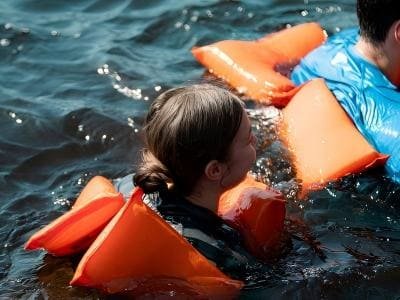
_Image source: Andrew Varnum on Unsplash%%%FOOTNOTE_REF1%%%
Adult vs. Child Life Jackets at a Glance
“Can I just order one adjustable model for everyone?”
Usually, no. A wide adjustment range is useful, but it cannot replace the correct size category.
| Comparison Point | Child Life Jacket | Adult Life Jacket |
|---|---|---|
| Main sizing reference | Usually body weight and product label | Usually chest size, body weight, and product label |
| Fit priority | Preventing ride-up or slipping out | Secure fit without restricting movement |
| Common safety features | May include a head-support collar, crotch strap, grab handle, and bright colors | Often includes adjustable chest straps, reflective material, pockets, or work-specific attachments |
| Buoyancy | Matched to the approved user-weight range and performance level | Matched to the approved user range, clothing, equipment, and water conditions |
| Typical applications | Family boating, passenger vessels, schools, rescue stock, and youth water activities | Recreational boating, commercial vessels, industrial work, offshore operations, and rescue teams |
| Main purchasing risk | Buying by age or clothing size instead of the label | Selecting for comfort while overlooking use restrictions or water conditions |
These are general differences, not universal design rules. The product label and approval documents should always take priority.
Do Child Life Jackets Need More Buoyancy Than Adult Life Jackets?
Not necessarily—and this is where buyers often get confused.
A child life jacket does not automatically provide more Newtons of buoyancy than an adult jacket. In absolute terms, adult models commonly provide more flotation because they are designed for larger bodies. What matters is whether the buoyancy, fit, and in-water performance are suitable for the intended user.
The U.S. Coast Guard life jacket guidance2 separates infant, child, youth, and adult products by the intended user's size and weight. It also tells users to check both weight and chest information on the label.
The same basic idea applies to the ISO performance system. For example, ISO 12402-53 covers Level 50 buoyancy aids for adults and children over 25 kg in sheltered water where help is close. ISO 12402-44 covers Level 100 life jackets for adults, children, and infants.
For a simple comparison of the main performance levels, see our life jacket buoyancy ratings guide.
In other words, the number on the jacket describes a performance level. It does not mean that one size fits every person within that level.
For procurement, ask the supplier for:
- The approved user-weight range for every size
- The rated buoyancy or applicable performance level
- In-water performance and turning information
- Restrictions related to age, activity, clothing, or equipment
- A size chart that matches the actual product label
Why Is the Correct Fit So Important?
Here is a simple test: fasten the jacket, tighten the straps, and gently pull upward at the shoulders.
If the jacket rises past the chin or ears, it may be too loose or too large. Tightening the straps may solve the problem. If it still rides up, choose a smaller or differently shaped model.
The Utah Division of Outdoor Recreation fitting guide5 explains that children's sizing is mainly based on body weight, while adult sizing places more emphasis on chest measurement. It also recommends checking whether the jacket moves upward during the shoulder-pull test.
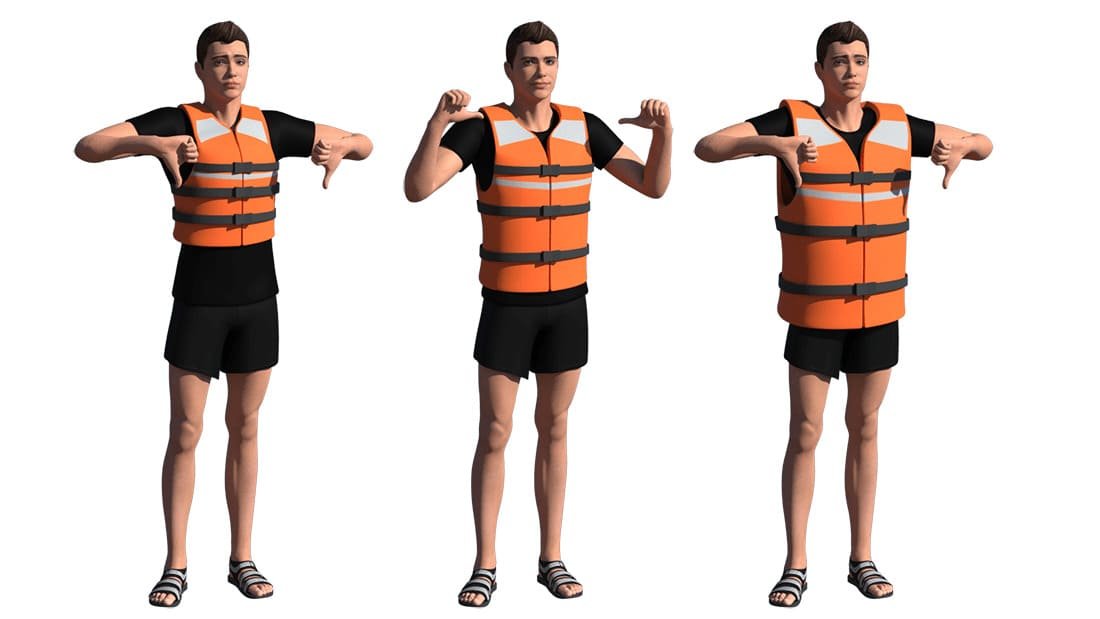
_Fitting reference: Utah Division of Outdoor Recreation%%%FOOTNOTE_REF6%%%
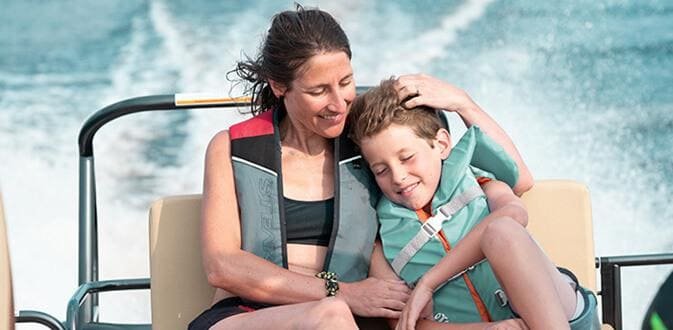
For a child, a loose adult jacket may slide upward or allow the child to slip out. The jacket might have plenty of foam, but the flotation is no longer positioned where it needs to be.
For an adult, a jacket that is too small can be difficult to fasten, uncomfortable to wear, and unsuitable for the user's weight or work clothing. If people keep removing the jacket because it restricts movement, it is not solving the safety problem.
Which Safety Features Matter Most on a Child Life Jacket?
“Does every child life jacket need a head collar and crotch strap?”
Not every model uses the same construction. The required design depends on the user's weight, the jacket's approval, and the intended activity. Still, several features are especially useful for young users.
Secure fastening
Zippers, buckles, and adjustable straps should hold the jacket close to the body. The child should not be able to pull free from it during normal movement.
Crotch or leg strap
A crotch strap can reduce upward movement and help prevent the child from slipping out. Check that it is correctly positioned and does not cause excessive discomfort.
Head support
Some infant and child life jackets include a flotation collar to support the head. Do not assume the collar guarantees that every wearer will turn face-up; verify the product's tested performance and label.
Grab handle
A lifting or recovery handle can help an adult bring a child closer to a boat or platform. It should be firmly attached and used according to the manufacturer's instructions.
Visibility features
Bright colors, approved retroreflective material, a whistle, or a light may be specified for certain rescue, vessel, or tender applications. These features improve detection, but they do not replace correct fit and buoyancy.
What Is Different About Adult Life Jackets?
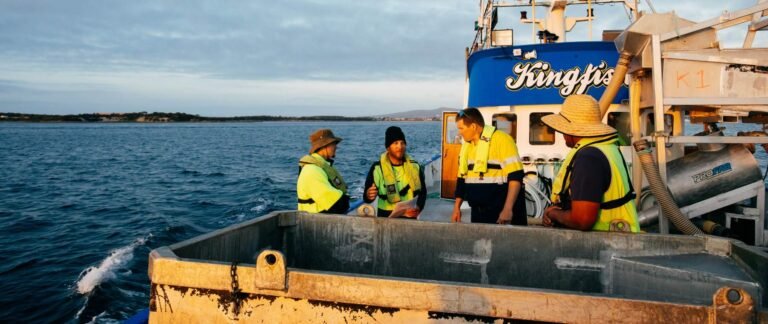
Adult designs usually cover a wider range of body shapes and job requirements. A recreational boater may want a light, flexible jacket, while an offshore worker may need additional buoyancy, reflective material, a light, or compatibility with protective clothing.
This is why “adult size” is not a complete specification. A purchasing team should also ask:
- Is the jacket intended for sheltered, coastal, or offshore water?
- Is help expected to arrive quickly?
- Will the wearer be conscious and able to swim?
- Will heavy clothing, tools, or protective equipment be worn?
- Does the jacket have turning capability for an unconscious wearer?
- Is the product approved for the destination market and intended activity?
Under the ISO system, ISO 12402-3 Level 1507 is intended for general offshore or rough-water use, including users wearing clothing. ISO 12402-2 Level 2758 is intended for severe offshore conditions or situations involving protective clothing and additional loads.
Higher buoyancy can be valuable, but it may also make the jacket bulkier. The correct choice depends on the risk, not simply the largest number available.
What Can Go Wrong If the Wrong Jacket Is Used?
The most obvious risk is poor flotation, but that is not the only problem.
An adult jacket on a child may:
- Ride up around the face
- Leave the head poorly supported
- Allow the child to slip through the opening
- Make movement and rescue handling more difficult
A child jacket used by an adult may:
- Fail to close correctly
- Provide inadequate flotation for the user and equipment
- Restrict breathing or movement
- Fall outside the approved user-weight range
The safe rule is straightforward: use a jacket approved and labeled for the actual wearer. “It looks close enough” is not a reliable procurement standard.
Which Standards and Approvals Should Buyers Check?
This depends on where and how the life jacket will be used.
United States
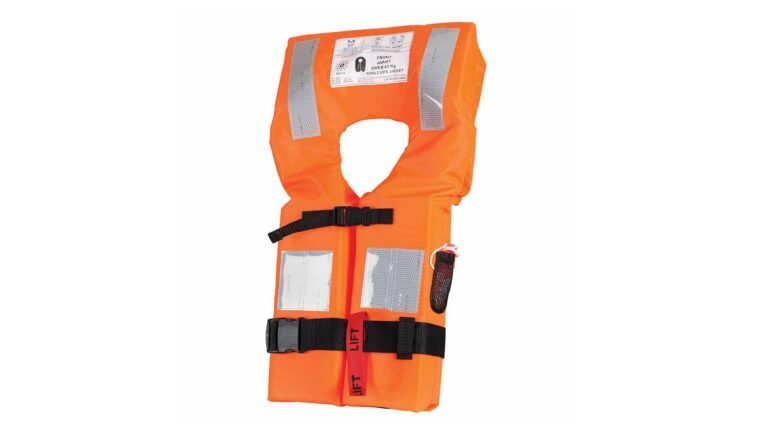
Check for U.S. Coast Guard approval, the intended user category, use restrictions, and the size information printed on the label. Do not assume that a general flotation vest is an approved life jacket.
European market
Check the applicable conformity route under the EU Personal Protective Equipment Regulation9, together with the relevant product standard, declaration, labeling, and notified-body information where required. CE marking and ISO 12402 should not be treated as two interchangeable “certificates.”
Commercial ships and SOLAS applications
SOLAS is mainly relevant to specified shipboard life-saving equipment. The International Maritime Organization's life-saving appliance guidance10 explains that SOLAS sets carriage requirements and that the LSA Code provides technical requirements for manufacturing, testing, maintenance, and records.
If the tender says “SOLAS,” confirm the exact vessel type, approval authority, marking, accessories, and required documentation. A recreational ISO-rated jacket should not automatically be presented as a SOLAS life jacket.
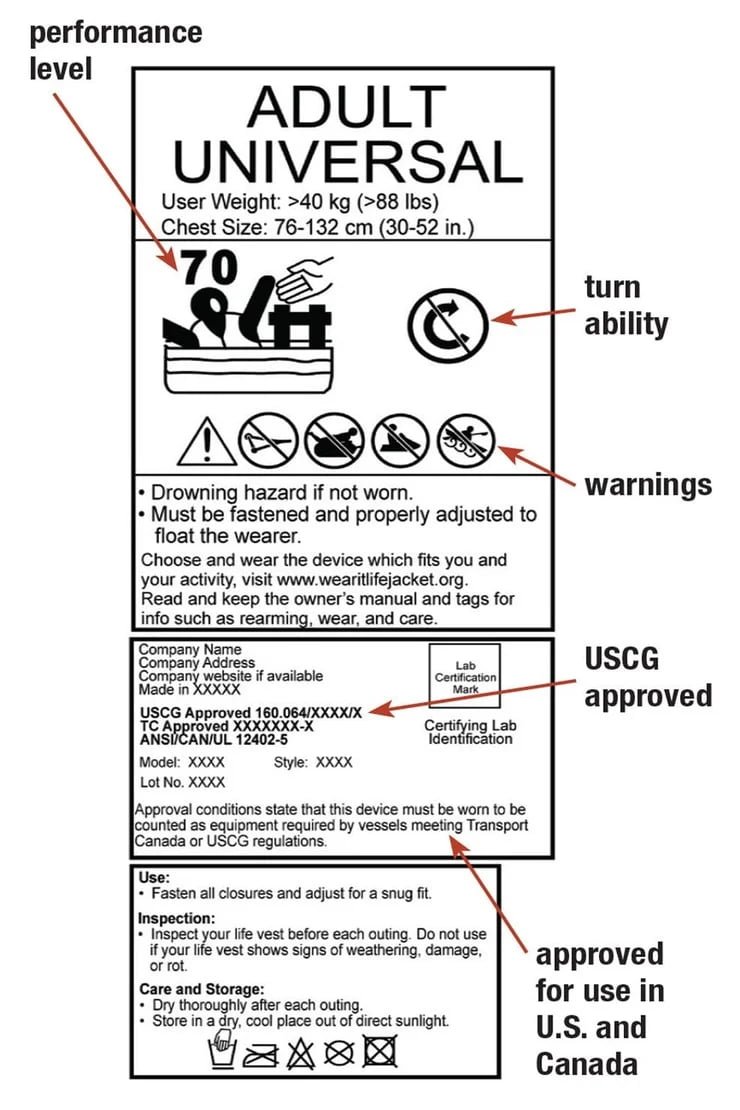
_Label reference: Utah Division of Outdoor Recreation%%%FOOTNOTE_REF11%%%
A Practical Procurement Checklist
Before approving a sample or placing a bulk order, check the following:
- Who will wear it: infant, child, youth, or adult?
- What body-weight and chest ranges are shown on the actual label?
- What water conditions and activities is it approved for?
- What is the stated buoyancy or performance level?
- Does it provide the required turning or head-support performance?
- Are all straps, buckles, zippers, stitching, and grab handles secure?
- Are the certification documents, test reports, label, and product construction consistent?
- Are spare parts or servicing procedures needed for inflatable models?
- Are child and adult units clearly separated by size in packaging and storage?
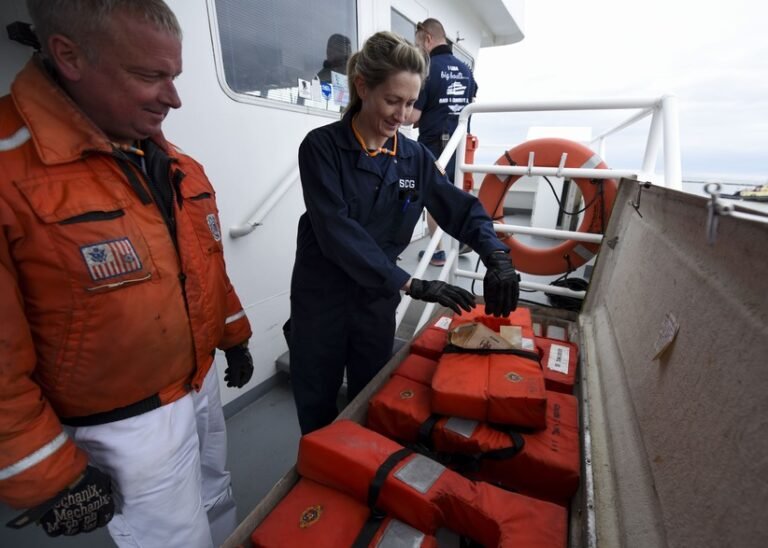
Separating child and adult inventory is more than a warehouse preference. U.S. commercial-vessel rules provide an example: child-size life jackets must be appropriately marked and stored separately so they are not mistaken for adult units. The U.S. eCFR stowage requirement12 gives the specific rule for the covered vessel context.
Frequently Asked Questions
Can a child wear an adult life jacket in an emergency?
No. An adult life jacket may provide flotation, but its oversized openings and loose fit can allow a child to slip out or leave the head poorly supported. Use a product labeled for the child's weight and size.
Do child life jackets always have more buoyancy than adult models?
No. Adult models often have greater absolute buoyancy. A child model should provide the correct flotation, fit, and in-water support for its approved user-weight range.
What is the most important feature of a child life jacket?
Correct fit comes first. Head support, a crotch strap, a grab handle, and visibility features can be valuable, but their usefulness depends on the product design and application.
Can children use inflatable life jackets?
Only when the model is specifically approved and labeled for that user. Many inflatable life jackets are intended only for older teenagers or adults, so never assume an inflatable model is suitable for a child.
Is a 50N buoyancy aid suitable for every child?
No. ISO Level 50 products are intended for sheltered water, active users, and situations where help is close. ISO 12402-5:2020 applies to users over 25 kg, so it does not cover smaller children.
Do life jackets have a fixed expiration date?
There is no single expiration period that applies to every life jacket. Follow the manufacturer's instructions and inspect the foam, fabric, stitching, straps, buckles, label, and inflatable components. Replace any jacket that is damaged, waterlogged, badly faded, or no longer serviceable.
Conclusion
The difference between adult and child life jackets is not simply “large versus small.” The real difference is how the jacket fits the body, supports the wearer in the water, stays securely in place, and matches the intended environment and approval requirements.
For buyers, the safest approach is also the simplest: start with the wearer, then check the label, fit, performance level, application, and supporting documents. If even one of those points does not match, choose a different model.
When sourcing life jackets for distributors, vessels, rescue teams, schools, or government projects, ask the supplier for a complete size chart, product label, applicable certificates, and test documentation before confirming the order. You can also explore our life jacket product range to compare child, adult, recreational, and marine-use options.
References
[Unsplash — A Man and a Little Girl Are in the Water](https://unsplash.com/photos/a-man-and-a-little-girl-are-in-the-water-Y7D2IF7_ZVA). Photo by Andrew Varnum; review the current Unsplash license before publication. ↩
[U.S. Coast Guard — Life Jacket Wear, Sizing, Buoyancy, and Child Requirements](https://uscgboating.org/recreational-boaters/life-jacket-wear-wearing-your-life-jacket.php). Explains user categories, minimum buoyancy information, fit, and label checks. ↩
[ISO — ISO 12402-5:2020, Level 50 Buoyancy Aids](https://www.iso.org/standard/56685.html). Defines the intended users and sheltered-water application of Level 50 buoyancy aids. ↩
[ISO — ISO 12402-4:2020, Level 100 Life Jackets](https://www.iso.org/standard/56684.html). Describes Level 100 life jackets for adults, children, and infants. ↩
[Utah Division of Outdoor Recreation — Life Jacket Sizing and Fit](https://recreation.utah.gov/life-jackets/). Provides practical label, sizing, shoulder-pull, inspection, and care guidance. ↩
[Utah Division of Outdoor Recreation — Life Jacket Shoulder-Pull Fit Test](https://recreation.utah.gov/life-jackets/). Visual example showing how to check whether a jacket rides too high. ↩
[ISO — ISO 12402-3:2020, Level 150 Life Jackets](https://www.iso.org/standard/56683.html). Describes Level 150 life jackets for offshore or rough-water use. ↩
[ISO — ISO 12402-2:2020, Level 275 Life Jackets](https://www.iso.org/standard/60334.html). Describes Level 275 life jackets for severe offshore conditions and additional loads. ↩
[EUR-Lex — Regulation (EU) 2016/425 on Personal Protective Equipment](https://eur-lex.europa.eu/legal-content/EN/TXT/PDF/?uri=CELEX%3A32016R0425). Establishes EU requirements for the design and marketing of personal protective equipment. ↩
[International Maritime Organization — Life-Saving Appliances](https://www.imo.org/en/OurWork/Safety/Pages/LifeSavingAppliances-default.aspx). Explains the relationship between SOLAS carriage requirements and the technical requirements of the LSA Code. ↩
[Utah Division of Outdoor Recreation — Life Jacket Label Guide](https://recreation.utah.gov/life-jackets/). Visual example explaining approval, size, buoyancy, and use information shown on a product label. ↩
[U.S. eCFR — 46 CFR 117.78, Stowage of Life Jackets](https://www.ecfr.gov/current/title-46/chapter-I/subchapter-K/part-117/subpart-C/section-117.78). Requires child-size life jackets to be marked and separated from adult units in the covered vessel context. ↩