If you have ever compared life jackets, you have probably seen numbers such as 50N, 100N, 150N and 275N. At first glance, the answer seems obvious: the bigger the number, the safer the jacket. In practice, it is not quite that simple.
The number tells you the life jacket’s buoyancy performance level. A higher rating normally provides more flotation and keeps the wearer higher in the water, but it can also make the jacket bulkier. The right choice depends on where it will be used, how quickly rescue can arrive, what the wearer is wearing and whether the user may be unconscious.
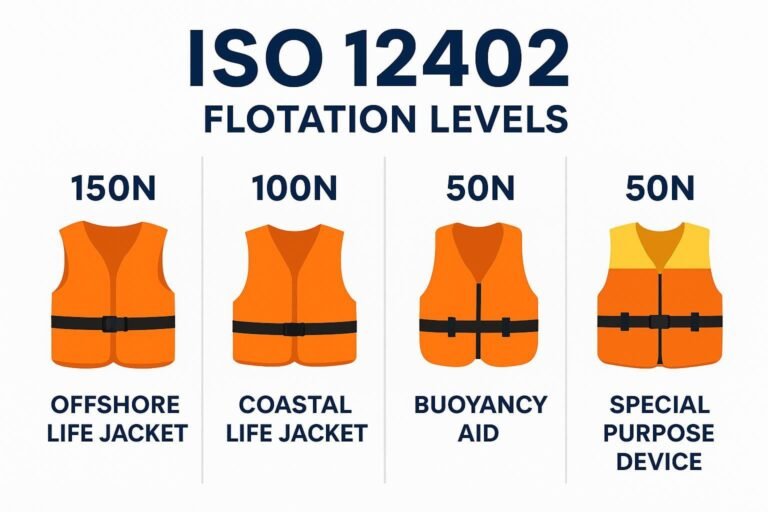
Here is the quick answer: 50N is mainly for active users in sheltered water, 100N is for calm or relatively sheltered conditions, 150N is for offshore or rough water, and 275N is for severe offshore conditions or people wearing heavy protective gear. The ISO 12402 series1 separates personal flotation devices into these performance levels.
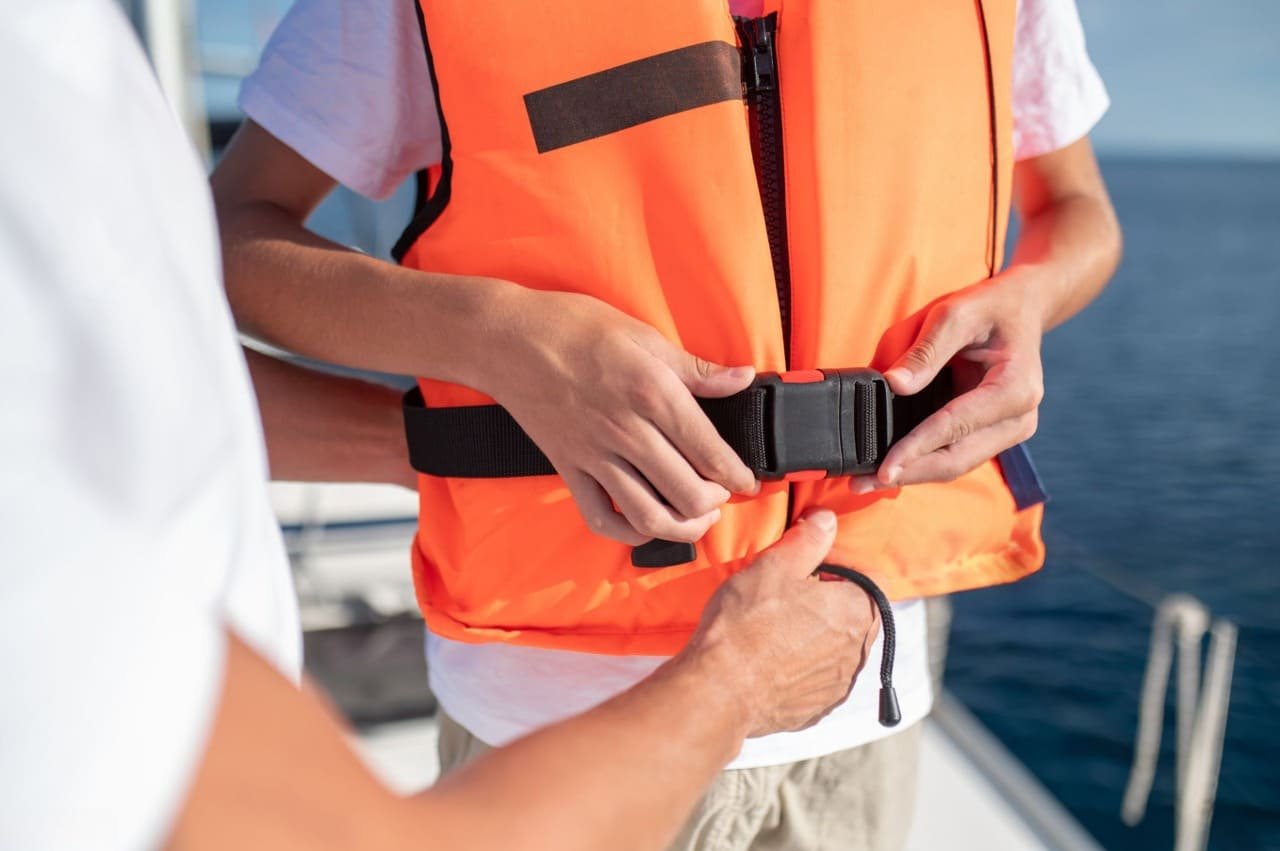
50N vs 100N vs 150N vs 275N: Quick Comparison
| Rating | What it is | Best suited to | What buyers should remember |
|---|---|---|---|
| 50N | Buoyancy aid | Kayaking, paddleboarding and water sports in sheltered water | The wearer must be able to swim and help with their own rescue |
| 100N | Life jacket | Calm lakes, rivers, harbors and sheltered boating | Offers more support than 50N but is not the first choice for rough offshore water |
| 150N | Life jacket | Offshore boating, fishing and rough-water use | Designed to provide stronger flotation and face-up support for most users |
| 275N | High-performance life jacket | Severe offshore conditions, heavy clothing and additional equipment | Provides more lift but can be too bulky for activities that need a lot of movement |
Think of this table as a starting point, not a final purchase specification. The product label, approval documents, user size and actual working environment still need to match.
What Does “N” Mean on a Life Jacket?
“N” stands for Newton, which is a unit of force. On a life jacket, it describes the upward force the product provides in water.
It does not work like a simple body-weight limit. A 150N life jacket does not mean it is only for a 150 kg person, and a 50N buoyancy aid is not automatically for a lighter person. The human body already has some natural buoyancy, while wet clothing, boots, tools and protective equipment can change how the person floats.
This is why professionals do not choose a life jacket from the number alone. We also look at:
- Whether it can help turn a wearer face-up
- How high it keeps the mouth and nose above the water
- Whether it fits securely without riding up
- What clothing and equipment will be worn with it
- How much movement the user needs
- How far away rescue may be
One more detail is worth knowing: 50N, 100N, 150N and 275N are performance categories. The actual declared buoyancy may vary by product and size, so always check the label rather than assuming every jacket delivers exactly the number printed in the category name.
What Does 50N Mean on a Life Jacket?
A 50N product is usually a buoyancy aid. It is made for sheltered water where help is close and the wearer can actively keep themselves in a safe position.
Under ISO 12402-5:20202, Level 50 products are buoyancy aids for adults and children over 25 kg. The standard also makes an important point: the user needs to participate actively.
In everyday terms, that means 50N is suitable when the wearer can swim, move normally and assist in their own rescue.
Where Is 50N Commonly Used?
- Kayaking and canoeing
- Paddleboarding
- Dinghy sailing
- Supervised water sports
- Calm lakes, rivers and sheltered coastal areas
The main advantage is freedom of movement. A 50N buoyancy aid is normally lighter and less bulky, which is useful when paddling, swimming or repeatedly entering the water.
The trade-off is simple: it is not designed to turn an unconscious person face-up. It should not be sold as a general offshore life jacket, even if the product looks strong or has the word “professional” in its name.
What Does 100N Mean on a Life Jacket?
A 100N life jacket sits between a lightweight buoyancy aid and a more serious offshore life jacket. It gives the wearer more support than 50N and is mainly designed for calm or sheltered water.
ISO 12402-4:20203 covers Level 100 life jackets for adults, children and infants in sheltered or calm water, including users who are fully clothed.
When Does 100N Make Sense?
It can be a practical choice for:
- Leisure boating on calm water
- Inland passenger operations
- Rivers, lakes and protected harbors
- Near-shore activities where rescue should arrive relatively quickly
- Users who need more passive support than a 50N buoyancy aid provides
A 100N life jacket is designed to provide face-up support, but buyers should avoid making a blanket promise that every model will turn every unconscious person. Fit, body shape, clothing and water conditions all influence actual performance.
For rough offshore water, heavy workwear or delayed rescue, 100N may not provide enough performance. That is normally where buyers start looking at 150N or 275N products.
What Does 150N Mean on a Life Jacket?
For many offshore and professional marine applications, 150N is the level buyers compare first. It offers more buoyancy and stronger turning support than 100N without automatically moving into the extra bulk of a 275N jacket.
ISO 12402-3:20204 describes Level 150 life jackets as suitable for general, offshore or rough-water use and for users who are fully clothed.
Typical Uses for 150N Life Jackets
- Offshore and coastal boating
- Commercial fishing
- Marine construction
- Workboats and service vessels
- Water rescue standby
- Users wearing normal foul-weather clothing
A compliant Level 150 design is intended to help place most unconscious wearers in a safer face-up position. Still, the wording “most” matters. A badly fitted jacket, unusual body position or bulky equipment can affect turning performance.
For B2B purchasing, ask for the approved user range, buoyancy declaration, test documents and product-label artwork. If the order is for a tender or vessel project, make sure the exact model on the certificate is the same model being supplied.
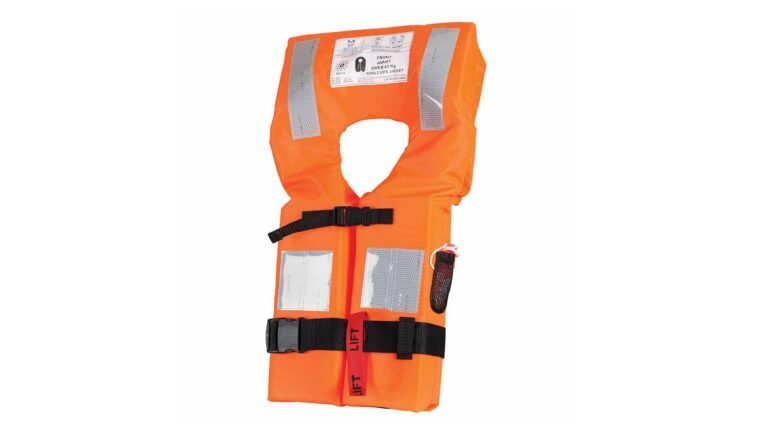
Our SOLAS life jacket with at least 150N buoyancy is designed for vessel emergencies and is supplied with a life jacket light, whistle, buddy line and lifting loop.
What Does 275N Mean on a Life Jacket?
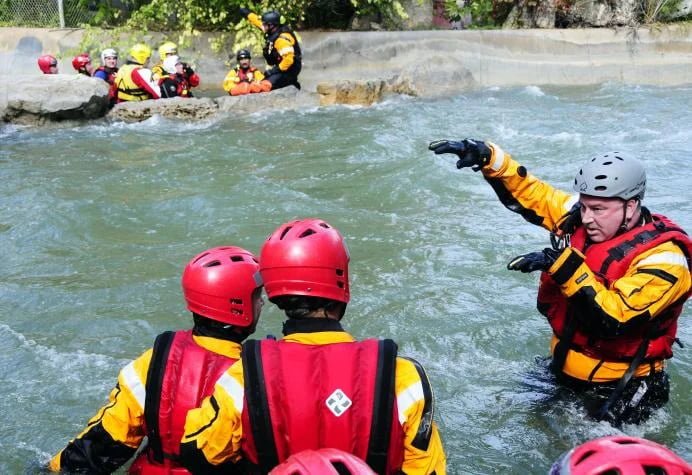
A 275N life jacket is made for the difficult end of the market: severe offshore conditions, heavy protective clothing and users carrying extra equipment.
ISO 12402-2:20205 covers Level 275 life jackets for severe offshore use and situations involving protective clothing or additional loads.
Who Usually Needs 275N?
- Offshore platform workers
- Offshore wind technicians
- Commercial marine crews working in severe weather
- Rescue personnel carrying operational equipment
- Users wearing immersion suits or heavy protective clothing
- Teams operating where rescue may take longer
The extra buoyancy helps provide more water clearance and deal with bulky clothing or equipment. But 275N is not automatically better for everyone. For kayaking, swimming-intensive rescue work or tasks that involve climbing and bending, the extra bulk may get in the way.
Buyers also sometimes assume that every 275N jacket inflates automatically. That is not true. Depending on the model, it may use automatic inflation, manual inflation or a combined system. The cylinder, inflator, rearming kit and maintenance requirements should be checked separately.
Is Higher Buoyancy Always Better?
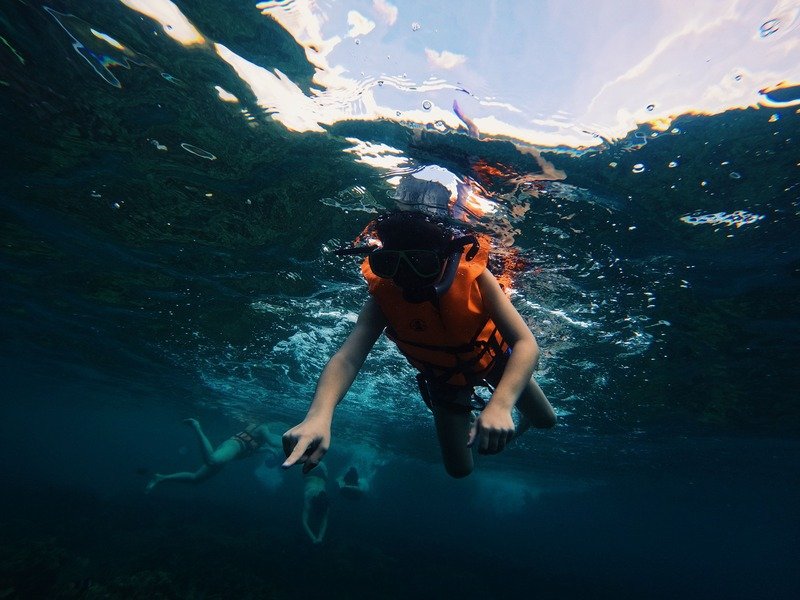
Not necessarily. Higher buoyancy is useful when the environment, clothing and rescue risk call for it. Otherwise, it can simply add bulk and reduce movement.
Here is an easy way to think about it:
- A kayaker needs mobility and expects to help with their own rescue.
- A leisure passenger may need more passive support in calm water.
- An offshore worker may be unconscious, fully clothed and far from rescue.
- A technician in a survival suit may also be carrying tools and other equipment.
Those four users should not automatically receive the same life jacket.
Before choosing a rating, ask five questions:
- Is the water sheltered, coastal, offshore or severe offshore?
- How quickly can rescue arrive?
- Could the wearer be unconscious?
- What clothing and equipment will the user wear?
- Which standard or approval does the destination market require?
Product construction matters too. If you are comparing designs, our guide to foam vs inflatable life jackets explains the practical differences in comfort, maintenance and storage.
Are ISO, CE and SOLAS the Same Thing?
No, and this is a common point of confusion in procurement conversations.
ISO 12402 is a family of product performance and safety standards. CE marking shows that a product conforms to applicable European Union rules. Personal flotation devices placed on the EU market may come under the PPE Regulation (EU) 2016/4256.
SOLAS is different again. It is an international maritime convention covering safety requirements for certain ships. The International Maritime Organization’s guidance on life-saving appliances7 explains that SOLAS and the LSA Code cover equipment such as life jackets, lifebuoys, lifeboats and liferafts.
For the U.S. market, buyers may need a USCG-approved product. The U.S. Coast Guard’s life jacket guidance8 explains its performance-level labels and the use of Newtons to show buoyancy.
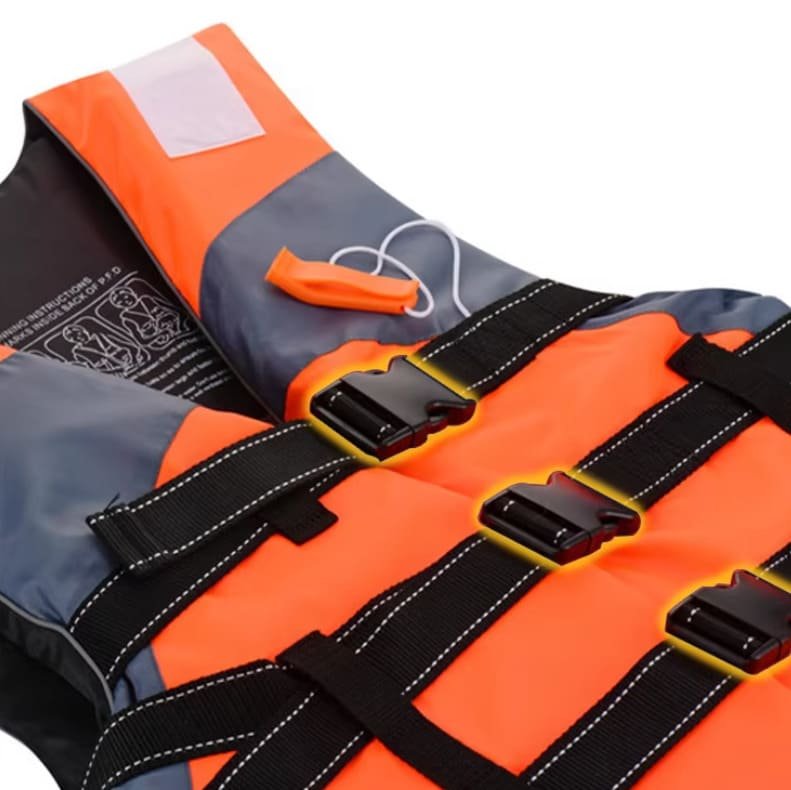
The practical lesson is straightforward: “ISO,” “CE,” “SOLAS” and “USCG approved” are not interchangeable sales terms. The required document depends on the product, vessel, intended use and destination market.
What Should B2B Buyers Check Before Ordering?
Before approving a sample or placing a bulk order, check:
- The complete certificate, not just a certificate cover page
- The exact model number covered by the certificate
- The performance level and standard edition
- The approved user size or weight range
- The declared buoyancy and turning information
- The product label, warnings and instructions
- The supplied accessories and their specifications
- Inspection, storage and maintenance requirements
- Inflator and cylinder details for inflatable models
- Batch traceability and production consistency
If the supplier sends a certificate for a similar-looking model, that is not enough. The product, model number, construction and label should match the approval documents.
Frequently Asked Questions
Does 150N Mean the Jacket Supports a 150 kg Person?
No. Newtons measure force, not maximum user weight. Follow the approved user range and instructions printed on the product label.
Can I Use a 50N Buoyancy Aid Offshore?
It should not be selected as a general offshore life jacket. Level 50 is intended for active users in sheltered water where help is close.
Will Every Life Jacket Turn an Unconscious Person Face-Up?
No product should be judged by the number alone. Turning performance depends on the design, approval, fit, clothing, body position and water conditions.
Is 275N Better Than 150N?
It provides more buoyancy, but that does not make it better for every job. Level 275 is mainly for severe offshore conditions, protective clothing and additional loads. For high-mobility activities, an approved 150N or lower-level product may be more suitable.
Should I Choose by Buoyancy Rating Alone?
No. Also check turning performance, fit, freeboard, fastening system, product construction, rescue time and the approval required by your market.
Conclusion
The easiest way to understand these ratings is to match them to the environment.
50N is mainly for active users in sheltered water. 100N offers more support for calm or protected conditions. 150N is designed for offshore and rough-water use. 275N is intended for severe offshore conditions, heavy clothing and extra equipment.
So, bigger is not always better. The best life jacket is the one that matches the real working conditions, fits the user correctly and carries the right approval for the destination market.
If you are buying for a distributor, vessel, rescue organization or tender project, you can review our life jacket product range or send your specifications to our factory team for model selection, documentation and bulk-order support.
References
[ISO, “Keeping Your Head Above Water”](https://www.iso.org/news/ref2554.html). This source explains the ISO 12402 series and its coverage of life jackets and buoyancy aids. ↩
[ISO 12402-5:2020 — Buoyancy Aids, Level 50](https://www.iso.org/standard/56685.html). This source explains the intended users and sheltered-water application of Level 50 buoyancy aids. ↩
[ISO 12402-4:2020 — Life Jackets, Level 100](https://www.iso.org/standard/56684.html). This source explains the intended use of Level 100 life jackets in sheltered or calm water. ↩
[ISO 12402-3:2020 — Life Jackets, Level 150](https://www.iso.org/standard/56683.html). This source explains the general, offshore and rough-water application of Level 150 life jackets. ↩
[ISO 12402-2:2020 — Life Jackets, Level 275](https://www.iso.org/standard/60334.html). This source explains the severe offshore, protective-clothing and additional-load applications of Level 275 life jackets. ↩
[European Union, Regulation (EU) 2016/425 on Personal Protective Equipment](https://eur-lex.europa.eu/eli/reg/2016/425/oj/eng). This source outlines the European Union requirements for the design and placing on the market of personal protective equipment. ↩
[International Maritime Organization, “Life-Saving Appliances”](https://www.imo.org/en/OurWork/Safety/Pages/LifeSavingAppliances-default.aspx). This source explains how SOLAS and the LSA Code apply to life-saving appliances carried on ships. ↩
[U.S. Coast Guard, “Life Jacket Wear and Performance Levels”](https://uscgboating.org/recreational-boaters/life-jacket-wear-wearing-your-life-jacket.php). This source explains life jacket performance-level labels and buoyancy measured in Newtons. ↩