

Two suppliers have quoted an ambulance stretcher and the correct vehicle fastener. Both quotes cover the same equipment. If the lower-priced supplier can offer the same after-sales support, there may be no reason to pay more. The question I’d ask before deciding is simple: if a wheel needs replacing after the warranty ends, can it be repaired locally, where does the part come from, and who pays for labor and shipping?
To calculate the total cost of ownership (TCO) for an ambulance stretcher, compare what it costs to get the equipment into service and what you’ll actually pay to keep it there. Add any retirement costs and subtract any resale value you can substantiate. Use the same number of working stretcher systems, delivery destination, currency and comparison period for both quotes. Five years is a budgeting example, not a statement about service life. If your fleet budgets over a different period, use that period for both quotes. The UK’s whole-life cost guidance for medical technology1 also looks beyond the purchase price when evaluating equipment.
Put both quotes on one five-year cost worksheet
| Cost to compare | Quote A | Quote B | Where to get the figure |
|---|---|---|---|
| Delivered equipment | Written quotations on the same delivery basis | ||
| Vehicle fastener and installation | Supplier’s itemized quote and the vehicle installer’s estimate | ||
| Routine operating costs and scheduled servicing | The model’s maintenance schedule, fleet records and written service rates | ||
| Uncovered repairs and replacement parts | Warranty terms, parts prices and relevant fleet repair records | ||
| Extra backup costs during repairs | Actual courier, transfer or loaner charges, if needed | ||
| Retirement cost less supported resale value | Disposal estimate and evidence of likely resale, if applicable | ||
| Five-year total | Add the rows once; resale is already deducted in the retirement row |
I’d mark each item included, zero additional cost, or to confirm where appropriate. If the fastener is included in the equipment quote, don’t count it again. If no one has priced repair labor, don’t enter zero. When a missing figure could change the decision, call the total a subtotal of known costs until you’ve checked it.
If you are still getting initial quotes, start with the ambulance stretcher price guide. Use your own written offers for this worksheet.
Ask what the warranty pays for
Two suppliers can offer the same warranty period and cover different work. Instead of asking either to predict how often an ambulance stretcher will need a repair over five years, start with a part your fleet has actually replaced.
If that part was a wheel, ask both suppliers about the exact model they quoted. Is the wheel available separately or sold as part of an assembly? What is the price, where does it ship from, and what lead time can they give you? If the repair is covered, who supplies the part and who pays the technician to install it? Ask whether you can still order the part after the warranty ends.
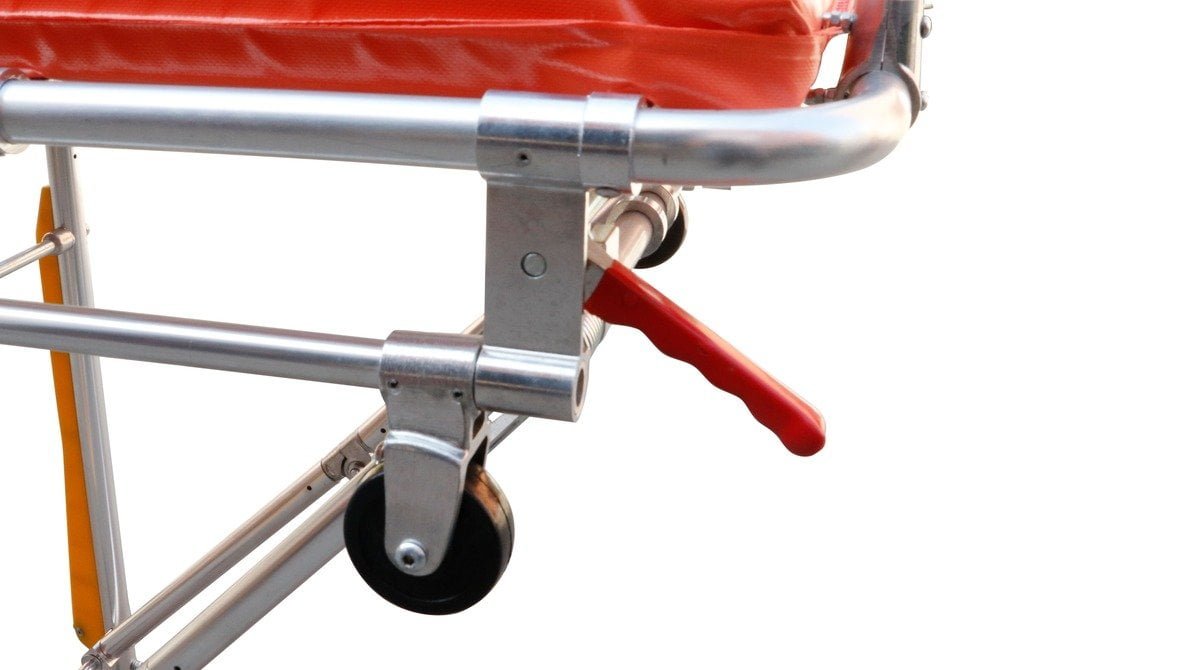
Use your repair records to estimate replacement frequency only if they are relevant to the equipment and workload. Otherwise, compare the written prices and lead times you can verify. A confirmed unit price tells you how much a replacement costs. It doesn’t tell you how many you’ll buy.
Count the backup you would actually use
A stretcher in the workshop doesn’t necessarily take an ambulance out of service. If you have a compatible spare at the same depot and can swap it in without additional cost, leave out the loaner and transfer charges. If the spare is at another site, count the extra transport cost. If you need to buy a shared spare for the fleet, count it once in the fleet total rather than once per vehicle.
Before approving the higher quote, I’d ask what the extra money buys. Written coverage for local repair labor or reliable access to a part you already replace can justify paying more, provided it solves a problem your fleet actually has. If the higher-priced bid only comes out ahead when you assume the cheaper stretcher will need frequent repairs, check that assumption before relying on the result. If the costs you can verify and the support on offer are comparable, I’d take the lower quote.
“Value based procurement national standard guidance for medical technology,” whole-life cost section, UK Department of Health and Social Care. Guidance on comparing medical technology costs beyond the purchase price. ↩