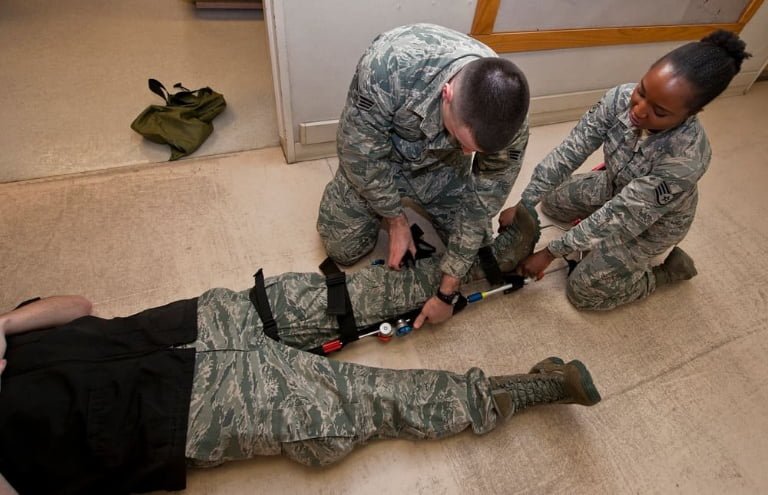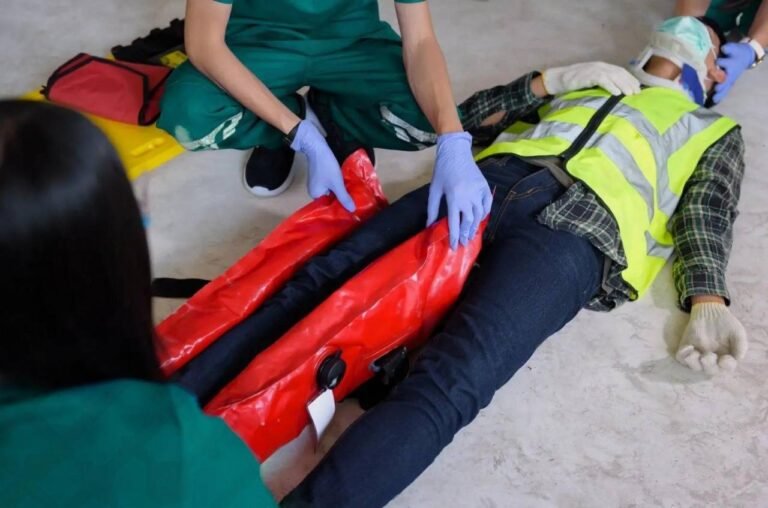

In emergency care, a cervical collar is commonly used when trained responders identify a meaningful risk of cervical spine injury. However, a collar is not automatically required after every fall, traffic accident, or blow to the head. The decision should be based on the patient’s condition, a structured assessment, local protocols, and the responder’s level of training.
A cervical collar is designed to limit unnecessary movement of the neck while a patient with a possible cervical spine injury is assessed, transferred, or transported.1 It is one part of spinal motion restriction—not a device that can completely immobilize the spine or guarantee that further injury will be prevented.
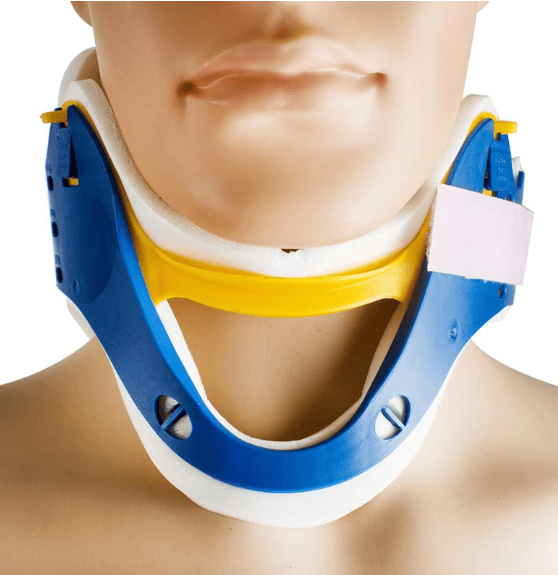
For EMS providers, hospitals, distributors, and government buyers, choosing a cervical collar involves more than comparing price. Fit range, intended use, cleaning instructions, labeling, supporting documents, and compatibility with local emergency procedures all matter.
What is a cervical collar and when should it be applied?
A cervical collar, sometimes called a neck brace or C-collar, supports the head and neck and helps reduce cervical spine movement. In emergency care, it is generally used as part of a broader spinal motion restriction plan rather than as a standalone treatment.
For trained EMS personnel, findings that may support spinal motion restriction include altered consciousness, midline neck or back pain, neurological symptoms, spinal deformity, or an injury that makes the examination unreliable.2 The mechanism of injury is important, but a car crash, fall, or blunt impact alone does not mean that every patient requires a collar.
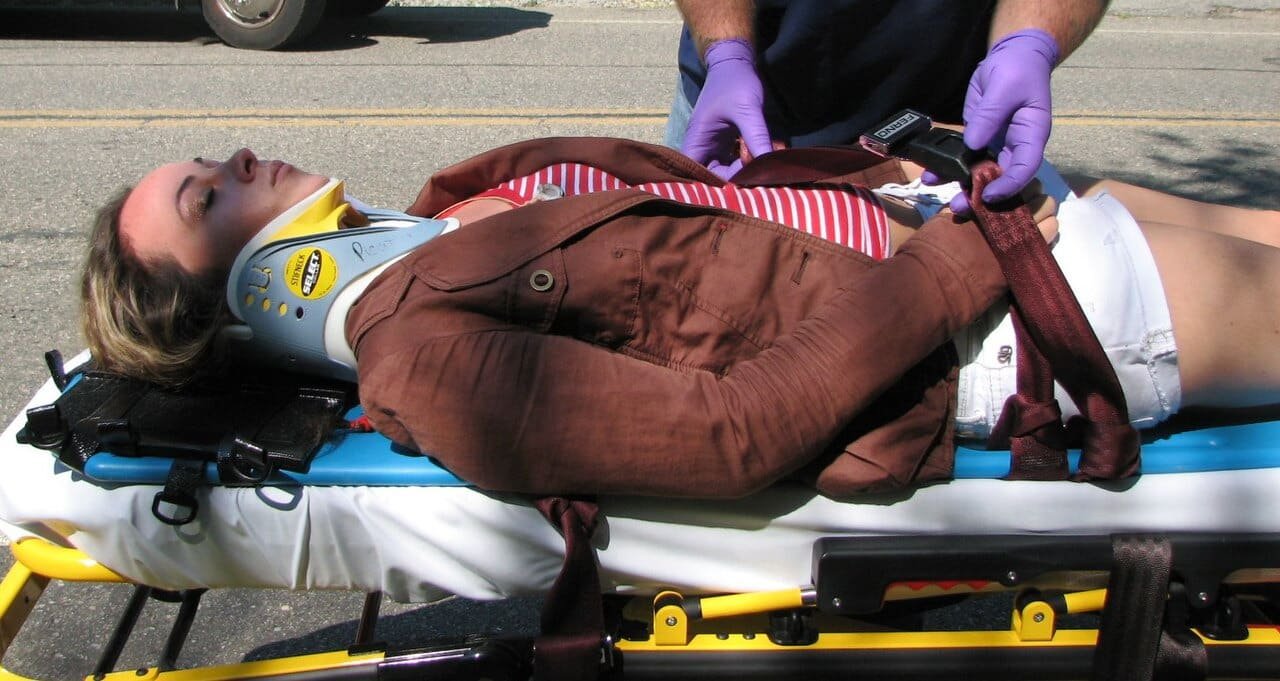
Image source: Wikimedia Commons, CC BY-SA 3.0.
Different countries and EMS systems do not use exactly the same protocol. Some first-aid guidelines advise against routine use of semi-rigid collars by untrained first-aid providers. Instead, they prioritize calling emergency services, supporting the head in a comfortable neutral position when practical, avoiding unnecessary movement, and waiting for trained personnel.
Airway, breathing, and circulation always take priority over spinal motion restriction.3 If a collar interferes with airway care, causes worsening symptoms, or cannot be fitted without forcing the neck, trained responders should follow their clinical protocol rather than continuing to adjust it.
Types of cervical collars
Cervical collars used in different care settings can be grouped into several practical categories:
- Semi-rigid or rigid emergency collars: Designed to restrict neck movement during assessment, extrication, transfer, or transport when indicated by a trained responder.
- Adjustable collars: Allow the height, and sometimes the circumference, to be adjusted for different patients. They can simplify inventory but still require correct measurement and application.
- Fixed-size collars: Supplied in specific sizes such as pediatric, small, medium, or large. Buyers need enough sizes to cover the intended patient population.
- Soft collars: Provide limited support and are mainly used for selected non-emergency or recovery purposes. They should not be treated as equivalent to a semi-rigid trauma collar.
The product’s intended use and instructions for use should clearly identify which category it belongs to. A collar intended for postoperative support is not automatically suitable for prehospital trauma care.
Why does size and fit matter in choosing a cervical collar?
Cervical collars are not truly one-size-fits-all. Even an adjustable model has a defined fitting range, and one adult model may not safely fit small adults or children.
A correctly selected collar should support the head and help limit unwanted movement without forcing the neck away from its natural alignment.4 It should not obstruct airway management, create excessive pressure, or make the patient’s condition worse.
A collar that is too tall may push the head into extension or place excessive pressure under the chin. A collar that is too short may provide inadequate support. A loose closure can allow unnecessary movement, while excessive tightening can increase discomfort, skin pressure, swallowing difficulty, or problems with airway access.
Pediatric patients need particular attention. Their body proportions differ from adults, and an adult adjustable collar should not be assumed to replace a properly designed pediatric option.
Common sizing mistakes and their impact
Procurement teams should watch for several common mistakes:
- Buying one nominal size for every patient group
- Assuming “adjustable” means unlimited adjustment
- Comparing only neck circumference and ignoring collar height
- Failing to purchase pediatric or small-adult options
- Providing collars without the manufacturer’s fitting guide
- Treating product availability as a substitute for responder training
For tenders and distributor orders, ask the supplier for the fitting range, size chart, application instructions, and training materials before confirming the product mix.
How do material and design affect usability?
Material and design affect how a cervical collar performs during storage, application, patient care, and cleaning. Buyers should evaluate specific design features rather than relying on broad claims such as “premium” or “hypoallergenic.”
Useful points to check include:
- A shell with enough rigidity for the product’s stated purpose
- Smooth edges and padding that help distribute contact pressure
- Ventilation openings where appropriate
- Access around the front of the neck for observation and clinical procedures
- Closures that remain secure during intended use
- Clear sizing and adjustment markings
- Materials that tolerate the cleaning method stated in the instructions
- Imaging compatibility that is specifically confirmed by the manufacturer
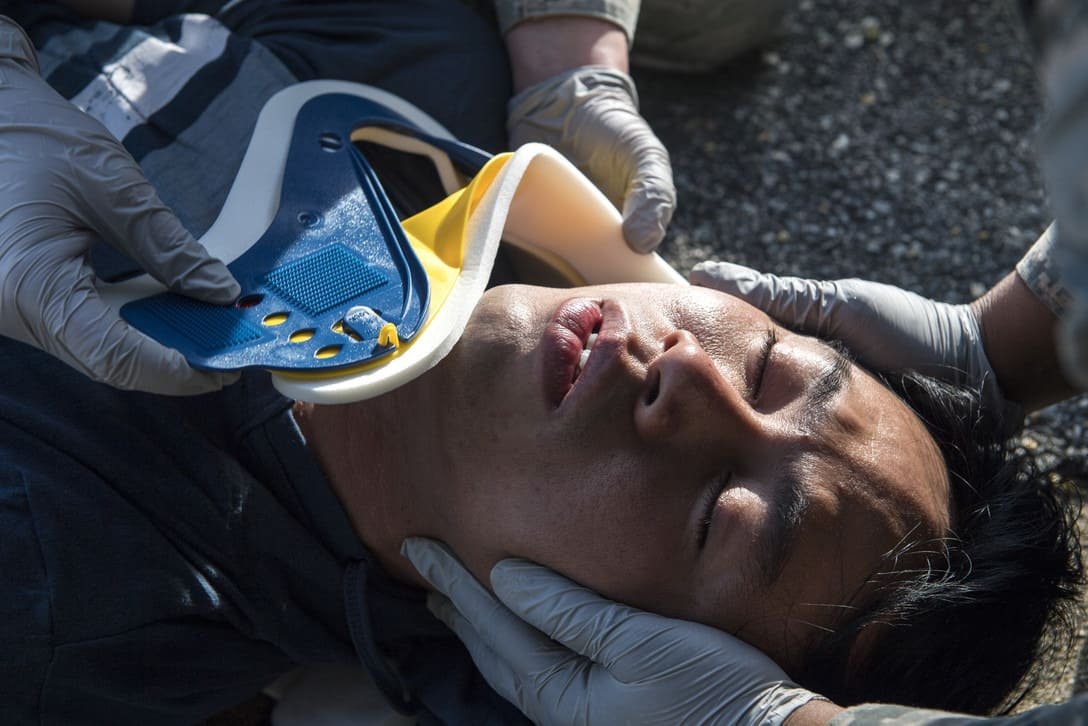
Image source: Wikimedia Commons, CC0 public-domain dedication.
Pressure injury, pain, restricted mouth opening, swallowing difficulty, and possible airway problems are recognized risks of prolonged or inappropriate collar use.5 These risks are influenced by fit, contact pressure, duration of use, skin condition, moisture, and patient monitoring—not simply by whether the collar is inexpensive.
Terms such as “X-ray compatible,” “CT compatible,” or “MRI compatible” should be supported by the manufacturer’s documentation. Buyers should not assume that every plastic collar is suitable for every imaging environment.
Why is compatibility with other spinal motion restriction systems important?
A cervical collar limits movement mainly at the neck. It does not control the movement of the chest, pelvis, or the rest of the spine. When spinal motion restriction is indicated, the patient’s head, neck, and torso should be managed as one aligned unit.
Depending on the protocol and situation, spinal motion restriction may involve an ambulance cot, scoop stretcher, vacuum mattress, or another suitable transfer device.6 Long spine boards are generally more appropriate for extrication or short transfers than for prolonged patient transport.
Compatibility does not mean that every collar must physically attach to a spine board or head immobilizer. Buyers should instead confirm that:
- The collar can be fitted without interfering with the selected transfer method
- The patient can be positioned according to the local protocol
- Airway access and monitoring remain possible
- The product does not create conflicting pressure points
- Instructions and training materials explain how the devices are intended to be used
Buying several products from the same supplier may simplify purchasing and document collection, but it does not automatically guarantee clinical compatibility or regulatory compliance. Each device should be evaluated separately.
What should B2B buyers check before purchasing cervical collars?
For distributors, hospitals, EMS services, and government projects, a useful supplier review should cover both product performance and documentation.
Ask for:
- Intended use and complete instructions for use
- Available adult, small-adult, and pediatric size ranges
- Product drawings, material specifications, and labeling
- Performance and design-verification information relevant to the product
- Cleaning and disinfection instructions for reusable models
- Shelf-life and storage requirements for single-use models
- Batch or lot traceability information
- Packaging details and carton quantities
- Samples for fitting and user evaluation
- Documents required by the destination market
For the European market, buyers should review the applicable CE marking, EU Declaration of Conformity, labeling, and other documents required under the relevant medical-device rules.7 For the United States, confirm the product’s applicable regulatory pathway and supplier records rather than accepting a third-party “FDA certificate.”
FDA establishment registration and device listing do not, by themselves, mean that a device is FDA approved, cleared, or certified.8 ISO 13485, meanwhile, is a quality-management-system standard for medical-device organizations; it is not a product-performance certificate.9
Frequently Asked Questions
Can cervical collars be reused?
It depends on the manufacturer’s labeling and instructions. A collar should be reused only when it is specifically identified as reusable and includes validated cleaning and disinfection instructions. Single-use collars should not be reprocessed. Replaceable padding does not automatically make a product reusable.
Are all cervical collars adjustable?
No. Some collars are supplied in fixed pediatric or adult sizes, while others provide height or circumference adjustment. Buyers should compare the actual fitting range rather than relying only on the word “adjustable.”
What certifications and documents should buyers look for?
Requirements depend on the destination market and the product’s intended use. Common checks include applicable market authorization or registration, an EU Declaration of Conformity where required, labeling, instructions for use, manufacturer details, quality-system documentation, material information, and supporting test reports. Avoid treating “FDA registered,” CE marking, and ISO 13485 as interchangeable terms.
How do I know if a collar fits correctly?
A trained user should select and apply the collar according to the manufacturer’s instructions and local clinical protocol. The collar should support the head without forcing the neck, obstructing airway care, or creating excessive pressure. If neutral positioning cannot be achieved safely, the user should not force the patient’s neck into position.
Are soft collars suitable for emergency trauma care?
Soft collars provide much less motion restriction than semi-rigid emergency collars. Some first-aid systems may use them as a visual reminder that a spinal injury is suspected, but they should not be presented as equivalent to a trauma collar or manual in-line support.10
Can an untrained person apply a cervical collar?
Routine application by untrained bystanders is not recommended. The safer priority is to call emergency services, avoid unnecessary movement, monitor airway and breathing, and follow the dispatcher’s instructions. Collar selection and fitting can create additional movement or pressure when performed incorrectly.
Conclusion
A cervical collar is a useful component of emergency spinal motion restriction when a trained responder determines that it is appropriate. Its purpose is to help limit unnecessary neck movement—not to completely immobilize the spine or guarantee protection from further injury.
For B2B buyers, the strongest purchasing decision combines suitable size coverage, clear instructions, practical design, cleaning information, traceability, and destination-market documentation. The lowest unit price is not always the lowest-risk option, but price alone is also not a measure of clinical quality.
If you are sourcing cervical collars for distribution, EMS supply, hospital use, or a tender project, Jiekang Medical can help you compare adult and pediatric options, confirm specifications, and prepare the supporting product documents required for your market.
NICE, “Spinal injury: assessment and initial management.” Supports risk-based assessment and appropriate spinal motion restriction: https://www.nice.org.uk/guidance/ng41/chapter/recommendations ↩
NAEMSP, “Spinal Motion Restriction in the Trauma Patient—A Joint Position Statement.” Lists clinical findings used when considering spinal motion restriction: https://naemsp.org/2020-7-25-article-bites-21-spinal-motion-restriction-in-trauma-a-joint-position-statement/ ↩
ANZCOR, “First Aid Management of Suspected Spinal Injury.” States that airway, breathing, and circulation take priority over spinal care: https://www.anzcor.org/home/first-aid/guideline-9-1-6-management-of-suspected-spinal-injury ↩
NICE, “Spinal injury: assessment and initial management.” Covers alignment, assessment, and situations in which immobilisation should or should not be maintained: https://www.nice.org.uk/guidance/ng41/chapter/recommendations ↩
ANZCOR, “First Aid Management of Suspected Spinal Injury.” Summarizes potential adverse effects of cervical collars and other restriction devices: https://www.anzcor.org/home/first-aid/guideline-9-1-6-management-of-suspected-spinal-injury ↩
NAEMSP, “Spinal Motion Restriction in the Trauma Patient—A Joint Position Statement.” Describes suitable spinal motion restriction and transfer devices: https://naemsp.org/2020-7-25-article-bites-21-spinal-motion-restriction-in-trauma-a-joint-position-statement/ ↩
European Commission, “How to verify that medical devices and personal protective equipment can be lawfully placed on the EU market.” Explains CE marking, declarations of conformity, and notified-body documents where applicable: https://health.ec.europa.eu/system/files/2020-09/md_mdcg_qa_conformity_documents_en_0.pdf ↩
U.S. FDA, “Are There ‘FDA Registered’ or ‘FDA Certified’ Medical Devices?” Clarifies that registration and listing do not denote approval, clearance, or authorization: https://www.fda.gov/medical-devices/consumers-medical-devices/are-there-fda-registered-or-fda-certified-medical-devices-how-do-i-know-what-fda-approved ↩
ISO, “ISO 13485—Medical devices.” Explains that ISO 13485 covers quality-management systems for medical-device organizations: https://www.iso.org/iso-13485-medical-devices.html ↩
ANZCOR, “First Aid Management of Suspected Spinal Injury.” Explains the limited role of soft collars and recommends manual in-line motion restriction where practical: https://www.anzcor.org/home/first-aid/guideline-9-1-6-management-of-suspected-spinal-injury ↩