“Heavy duty” sounds reassuring on a quotation, but it does not tell you exactly what the bag can handle. One supplier may be referring to thicker material. Another may mean reinforced handles or a higher load rating.
For buyers, the useful questions are much simpler: How much can the finished bag carry? Is it wide enough? Where are the handles? Will the seams and zipper hold during transfer? Can the material cope with cold storage or rougher field conditions?
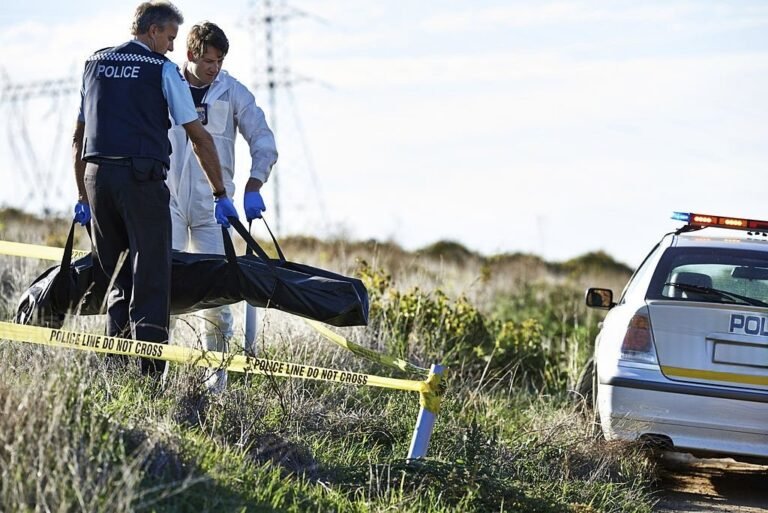
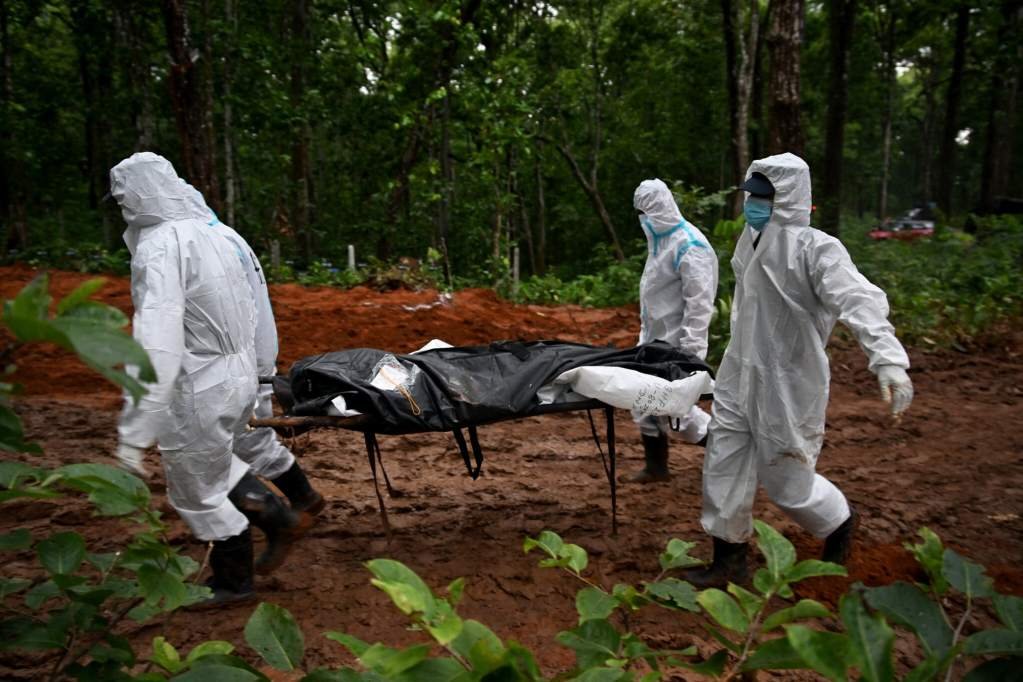
Hospitals and disaster-response teams often need many of the same features, but they do not use body bags in the same way. A hospital usually works along a familiar route between the ward, mortuary, cold room, and vehicle. A response team may be working outdoors, moving remains through debris, and keeping track of many bags at once.
Start With the Load Rating
A bag described as “strong” or “heavy duty” should still have a stated load capacity. That rating applies to the complete bag, including the handles and seams—not just the sheet material.
This matters because a bag can fail in several places. The material may tear around a sharp object, a handle may pull away, or an old bag may become brittle in storage. The CDC’s archived postmortem handling guidance1 tells handlers to consider the weight of the deceased, sharp objects, fluid exposure, and damage that may have occurred during shipment or storage. It also recommends checking the manufacturer’s stated capacity when one is available.
For ordinary hospital use, choose a rating that comfortably covers the cases the facility normally handles. If heavier cases occur, keep a suitable higher-capacity and wider option available. The trolley, cold-room tray, and lifting procedure must also be able to handle that case; a stronger bag does not solve an equipment mismatch.
Check the Size at the Same Time
Load capacity and size answer different questions. Capacity tells you what the bag is designed to carry. Length and width tell you whether it provides enough room.
A full-size adult bag will cover most routine hospital and mortuary cases. Width is usually the specification worth watching most closely. A bag may be long enough but still difficult to close around a larger body, clothing, or required covering.
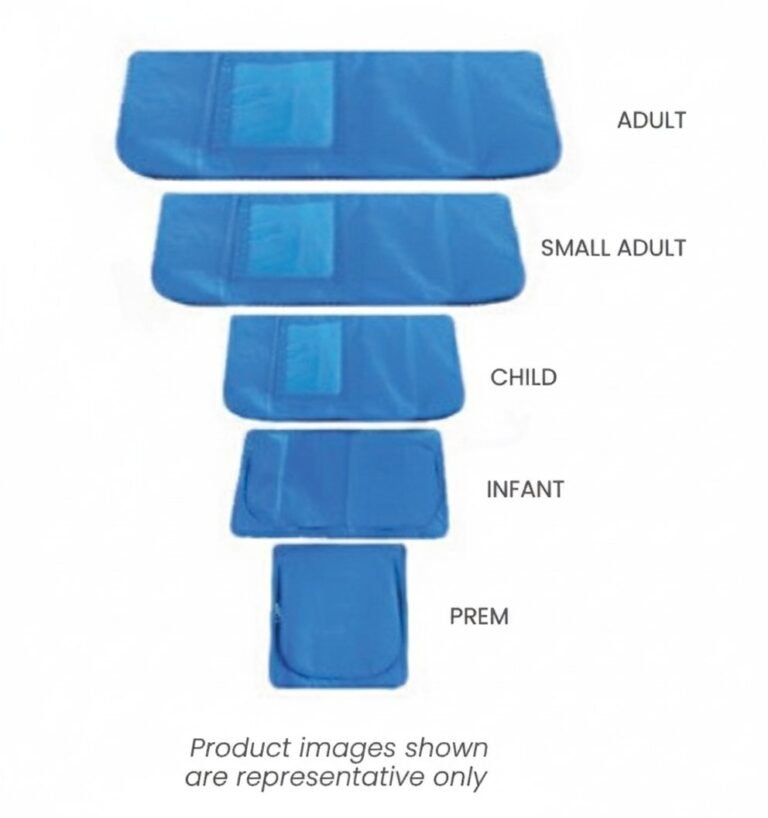
Hospitals that rarely handle pediatric cases can normally use an adult bag when needed. A dedicated pediatric size is easier to identify and manage when those cases occur regularly. XL or bariatric bags should be stocked according to the facility’s case history rather than ordered simply because they sound safer.
Disaster-response stock usually needs a sensible mix instead of one size in a large quantity. The mix should reflect the population being served, the response plan, and the transfer equipment available.
Check the Handles and Seams
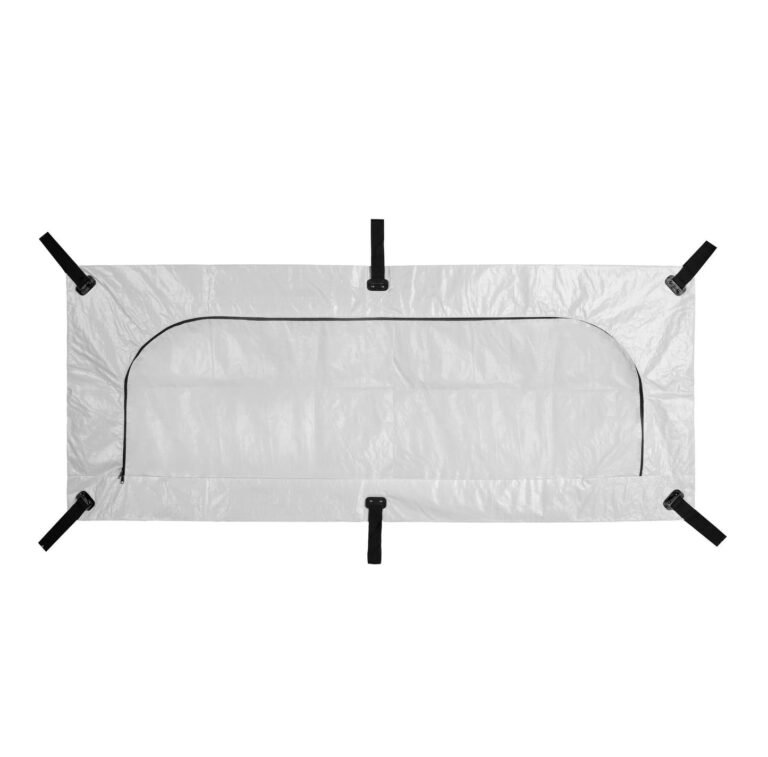
When several people carry a loaded bag, well-positioned handles make the movement more controlled. They help the team keep the load level and reduce the chance that one person takes most of the weight.
More handles are useful only when their attachment points are strong. Look at how the webbing connects to the bag and whether the load is spread across a reinforced area. Also check the seams around the zipper and corners, where repeated pulling can place extra stress on the construction.
For a bulk order, test a sample with an appropriate test load, the trolley or stretcher the team uses, and the usual number of handlers. This quickly shows whether the handles are too close together, difficult to grip with gloves, or awkward when turning through a doorway.
Hospital Use and Disaster Response Have Different Priorities
| Hospital or mortuary | Disaster response |
|---|---|
| Predictable routes and equipment | Uneven ground and changing transport routes |
| Regular use with smaller stock rotation | Sudden demand and bulk distribution |
| Compatibility with existing trolleys and cold rooms | Compact storage and fast deployment |
| Identification within an established record system | Identification across recovery, transport, and temporary storage teams |
| Sizes based on normal case history | A planned mix of adult, pediatric, and larger sizes |
For a hospital, a dependable general-purpose model may be the most practical choice. For disaster reserves, puncture resistance, handle layout, packed volume, carton labeling, and stock rotation become more important because bags may be stored for a long time and then used quickly in less controlled conditions.
PVC or PEVA: Which Is More Suitable?
The main difference is how the two plastics get their flexibility. PVC (polyvinyl chloride) is naturally rigid. To make it into a soft body-bag film, manufacturers add plasticizers. Their type and amount affect flexibility, including how the film behaves in the cold. The European Council of Vinyl Manufacturers2 also notes that non-phthalate plasticizers are available.
PEVA (polyethylene-vinyl acetate) is made from ethylene and vinyl acetate. A study of PEVA copolymers3 shows how changing the vinyl acetate content changes the material's flexibility. Unlike PVC, the PEVA polymer structure contains no chlorine. That matters if your purchasing policy calls for a PVC-free material. If it restricts particular plasticizers, ask for the film formulation instead of assuming all flexible PVC uses the same additives. For lifting and transfer, the bag's thickness, seams, zipper, and handle attachments matter more than the polymer name.
For a practical comparison, look at Jiekang’s two adult models:
| Specification | YJK-GSD-01 PVC | YJK-GSD-02 PEVA |
|---|---|---|
| Size | 92 × 239 cm | 92 × 239 cm |
| Product weight | 1.22 kg | 2.2 kg |
| Stated load capacity | 140 kg | 160 kg |
| Manufacturing process | Heat sealed | Heat sealed |
| Listed practical features | Zipper closure; foldable | Multiple handles; label pocket; puncture and leak resistance |
| Listed temperature resistance | Down to -35°C | Down to -35°C |
For routine hospital transfers, the lighter PVC model can be a practical choice when its 140 kg rating meets the need. For field teams that value more carrying points, a higher stated load, and an identification pocket, the PEVA model offers those features. Both product pages list resistance down to -35°C.

Plan for Storage and Identification
Emergency stock can sit unopened for months. Before ordering, check the supplier’s storage instructions, temperature range, packing method, carton quantity, and any stated shelf life. Bags taken from older stock should still unfold properly, close smoothly, and show no brittle areas or damaged handles.
Identification also needs to work beyond the bag itself. The WHO, PAHO, ICRC, and IFRC disaster field manual4 recommends giving each body or body part a unique reference number on a waterproof label, with the same number attached to the body bag or other container. The manual advises against relying only on numbers written directly on the bag because they may be erased during storage.
A label pocket makes that process easier, but it does not replace a controlled numbering and record system. This becomes especially important when several recovery, transport, and storage teams are involved.
Five Things to Confirm Before a Bulk Order
- Size and capacity: Are the dimensions and stated load suitable for the expected cases?
- Handling: Are the handles positioned and reinforced for the team’s normal lifting method?
- Construction: Do the seams, zipper, and listed puncture resistance suit the working environment?
- Compatibility: Does the loaded bag fit the trolley, cold-room tray, storage rack, and vehicle?
- Stock planning: Are the size mix, carton quantity, storage conditions, and replenishment time practical?
Hospitals can base quantities on regular use plus a reasonable reserve. Disaster-response buyers should work from the scenarios in their emergency plan and decide in advance where the bags will be stored, how they will be distributed, and how each one will be identified.
Frequently Asked Questions
Does heavy duty mean bariatric?
No. A standard-size bag can have stronger handles, seams, and material while remaining too narrow for a bariatric case. Bariatric use requires suitable dimensions as well as load capacity.
Is a heavy-duty bag suitable for infectious remains?
Strength and infection containment are separate questions. Use the bagging procedure required by the relevant local or disease-specific guidance.
Choosing a Model
Use the five-point check above to narrow your options. Then try a sample with the people and equipment that will actually handle the bag before placing a bulk order.
[“Postmortem Handling Guidance”](https://archive.cdc.gov/www_cdc_gov/coronavirus/2019-ncov/hcp/guidance-postmortem-specimens_1720465699.html), CDC archive. Bag failure risks and stated capacities. ↩
[“Plasticisers”](https://pvc.org/about-pvc/pvc-additives/plasticisers/), European Council of Vinyl Manufacturers. Flexible PVC and additives. ↩
[“PEVA Thermal and Mechanical Properties”](https://www.mdpi.com/2073-4360/11/6/1055), Wang and Deng, *Polymers*. Composition and vinyl acetate content. ↩
[“Management of the Dead After Disasters”](https://www.who.int/docs/default-source/documents/publications/management-of-dead-bodies-after-disasters.pdf), WHO, PAHO, ICRC, and IFRC. Storage and waterproof identification. ↩