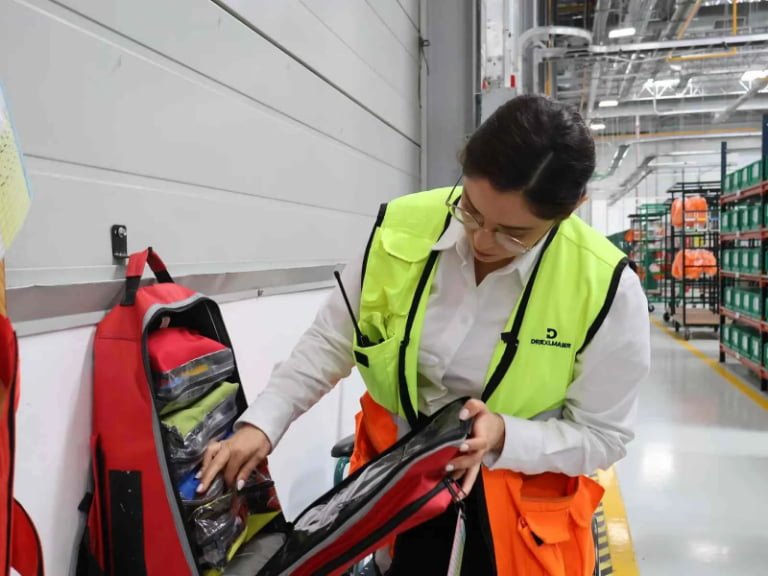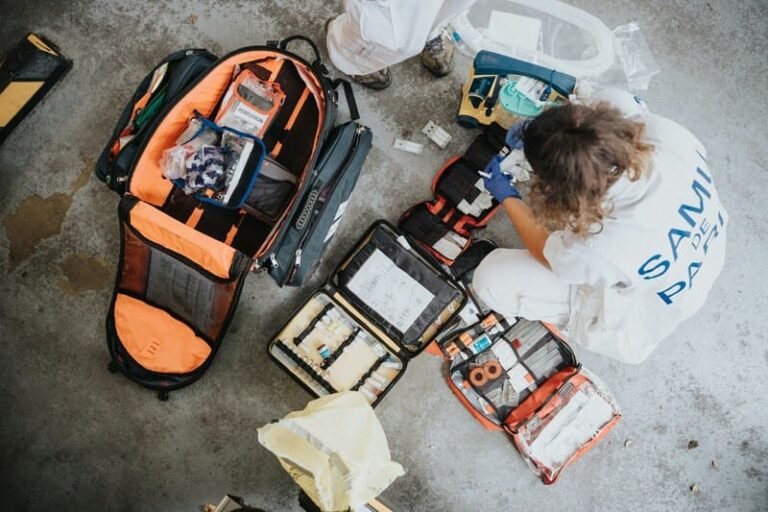
Picture a warehouse with an emergency kit at reception. When someone cuts a hand at the packing bench, the nearest dressings are inside that kit, past two doors. On the night shift, one of those doors is locked. The site has bought the right supplies, but people can’t get to them when they need them.
A first aid kit is for an injury or sudden illness. An emergency kit is for keeping people informed and supplied during a disruption, such as a power outage, an evacuation, or a period of sheltering. Most workplaces should plan for both jobs. That doesn’t always mean buying two bags, but it does mean making first aid supplies easy to reach during a normal shift.
What goes in a first aid kit versus an emergency kit?
| Workplace first aid kit | Workplace emergency kit | |
|---|---|---|
| What it’s for | Providing first aid to someone who is injured or suddenly unwell | Supporting people during a disruption or while they wait for help |
| Typical contents | Dressings, adhesive bandages, and disposable gloves, chosen for the site’s needs | Flashlights, spare batteries, water, and a way to receive updates, selected for the site’s plan |
| What drives the quantity | The work people do, where they work, and how many people are on duty | How many people may need supplies, where they’ll be, and how long they might have to wait |
| Where it belongs | Where people can reach it quickly on every shift | Where people can reach it without detouring from the site’s emergency procedures |
For first aid, start with the work people actually do. The UK Health and Safety Executive’s first aid kit guidance1 gives an example list for low-risk work and bases the contents on a workplace needs assessment. A packing line, a maintenance area, and a desk-based office shouldn’t automatically inherit the same list. For a more detailed buying checklist, see what procurement teams should check in a workplace first aid kit.
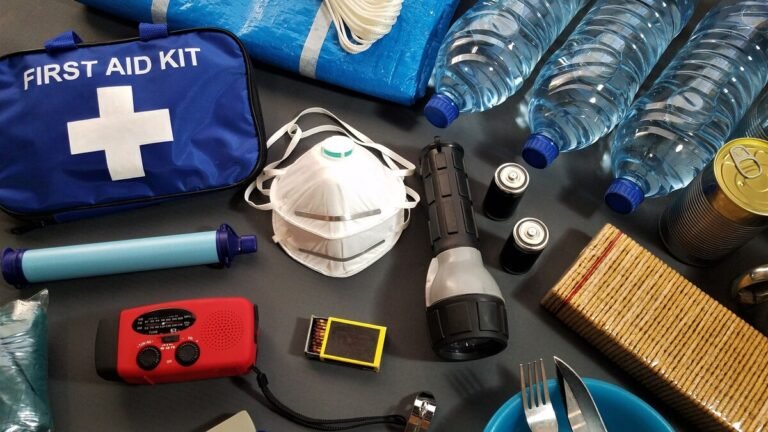
For emergency supplies, start with what people may have to do: leave the building, move to a designated shelter area, or stay put while transport or power is disrupted. The Oregon Health Authority workplace preparedness checklist2 gives examples such as a flashlight, water, and a first aid kit. Use it for ideas, not as a fixed shopping list for every building. A portable bag for a designated response role and a supply cabinet for people sheltering on site serve different purposes.
Can one kit do both jobs?
Yes, if people can get to it during normal work and during the disruption it’s meant for, and the first aid supplies are easy to find inside. A small office might use one clearly marked cabinet with a dedicated first aid section and separate space for lighting and other emergency supplies.
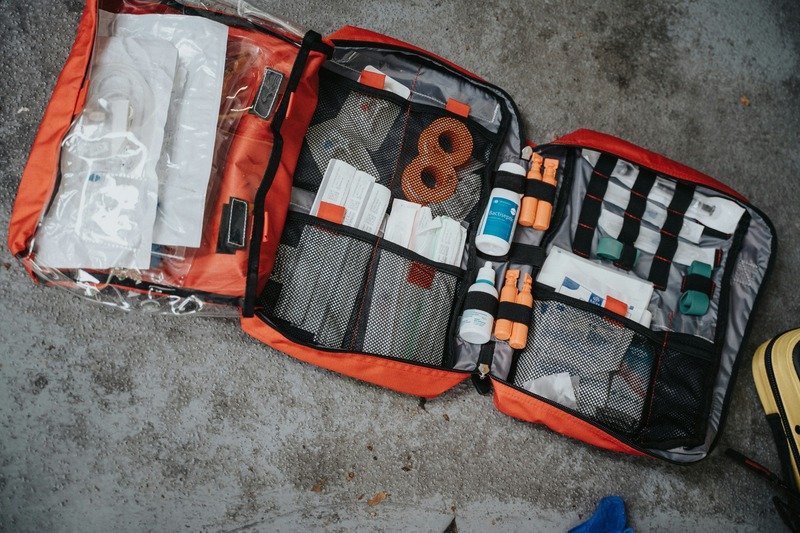
Separate them when they need to be in different places. In the warehouse example, the packing team needs first aid supplies near the work area. The building’s emergency supplies can stay where the site plan calls for them. If the team works across several locations, use the site’s access needs to decide between a fixed cabinet, a portable case, and a crew bag. A bag labeled “medical emergency” may still hold only medical supplies, so check its itemized contents before assuming it covers power outages or sheltering.
What should procurement check before ordering?
- Walk the route on the least-staffed shift. Start where someone could need first aid and walk to the proposed storage point. Check locked doors, reception hours, and whether a staff member can find and reach the supplies without relying on someone who isn’t there.
- Buy against two lists. Put the first aid needs on one list and the disruption supplies on another, even if they’ll go in the same cabinet. Ask for item names, pack sizes, and counts, rather than comparing total piece counts. Ten small bandages and ten larger dressings are ten pieces each, but they fill different gaps.
- Match larger supplies to the emergency plan. If people may need to shelter, plan for the people who could be there at the busiest relevant time, including visitors, and the waiting period your plan anticipates. If the instruction is to evacuate immediately, don’t plan around employees stopping to collect a bag.
- Name someone to check each list. First aid stock may be used during a routine shift; emergency supplies may sit untouched until batteries need replacing or stored items expire. Make it clear who replaces used items and where the checks are recorded. See how often to inspect and restock workplace first aid kits.

Does buying an emergency kit cover workplace requirements?
A kit label doesn’t tell you whether the workplace is covered. For example, in U.S. workplaces covered by the relevant federal OSHA general-industry rule, 29 CFR 1910.1513 addresses ready access to adequate first aid supplies. 29 CFR 1910.384 separately sets out what an emergency action plan must cover when another OSHA standard requires such a plan, including evacuation and accounting for employees. These are different responsibilities. Check the requirements that apply to your location and type of work before signing off on a purchase.
The practical takeaway
Ask two questions at the site: Can someone reach the first aid supplies on this shift? And if the building loses power, evacuates, or shelters in place, are the supplies for that situation where the plan says they should be? If one storage point answers both, one setup may be enough. If the answers point to different places, buy and place the supplies separately.
[“What to Put in Your First Aid Kit”](https://www.hse.gov.uk/simple-health-safety/firstaid/what-to-put-in-your-first-aid-kit.htm), Health and Safety Executive. Explains how workplace needs inform kit contents and gives a low-risk example. ↩
[“Build a Workplace Preparedness Kit”](https://www.oregon.gov/oha/ph/Preparedness/Prepare/Pages/WorkplacePreparednessKit.aspx), Oregon Health Authority. Provides examples of preparedness supplies for use at work. ↩
[“1910.151: Medical Services and First Aid”](https://www.osha.gov/laws-regs/regulations/standardnumber/1910/1910.151), Occupational Safety and Health Administration. Addresses the availability of first aid supplies in covered U.S. general-industry workplaces. ↩
[“1910.38: Emergency Action Plans”](https://www.osha.gov/laws-regs/regulations/standardnumber/1910/1910.38), Occupational Safety and Health Administration. States when the rule applies and lists required plan elements. ↩