Choosing a life jacket should be simple, but the labels can quickly become confusing. You may see Type I, Type II, or Type III on older products, while newer models use performance levels such as 50, 70, or 100. International buyers may also see ISO 12402 levels.
The right life jacket depends on the water conditions, expected rescue time, user size, activity, and applicable safety standard. A comfortable vest for kayaking is not the same as an offshore life jacket designed for delayed rescue. This guide explains the main types in simple terms and shows how to match them to real applications.
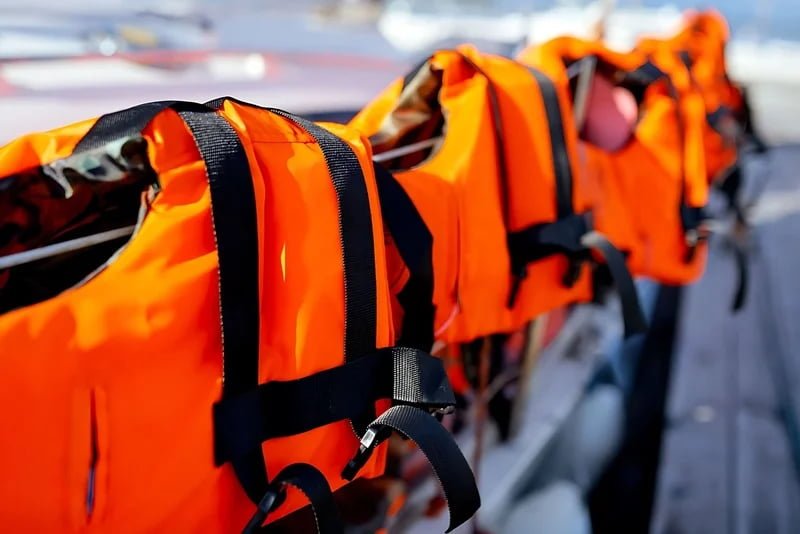
The most important rule is not to choose by appearance alone. Always check the approval label, intended use, buoyancy level, turning ability, and size range before buying or placing a bulk order.
What are the main types of life jackets (PFDs), and why do they matter?
Life jackets are commonly explained using the traditional U.S. Type I–V system. This system is still found on many approved products, but newer U.S. labels are moving toward performance levels and easy-to-read icons.
Type I–V labels describe the general use of older U.S.-approved PFDs, while newer labels focus on buoyancy level, turning ability, and activity warnings. Existing Type-labeled products can still be used when they remain approved and serviceable.1
Understanding the traditional PFD types
| PFD Type | Best for | Typical adult buoyancy | Main point |
|---|---|---|---|
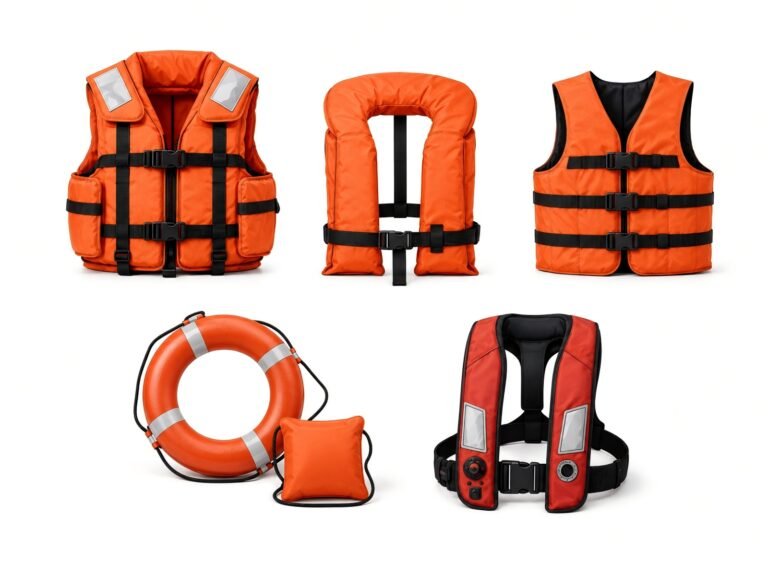
| Type I | Offshore, rough, or remote waters | 22 lb / 100 N or more, depending on design | Provides high flotation and strong face-up turning performance for delayed rescue |
| Type II | Calm, near-shore waters | From 15.5 lb / 70 N for foam models | Suitable where rescue is expected quickly; some models can turn some wearers face-up |
| Type III | Boating, fishing, kayaking, and marked activities | From 15.5 lb / 70 N for foam models | Designed for comfort and movement; usually not intended to turn an unconscious wearer face-up |
| Type IV | Throwable rescue devices | Varies by ring or cushion design | Not wearable; thrown to a conscious person in the water |
| Type V | Special-use applications | Varies by product | Must be used only for the activity and conditions shown on the label |
These values are a simple reference, not a substitute for the product label. Inflatable and hybrid versions may provide different buoyancy from foam models.2
Newer labels are easier to compare because they show a performance number in Newtons. A lower number normally offers more mobility for calmer water, while a higher number provides more flotation and is generally better suited to rougher water or longer rescue times. Turning icons show whether the device is designed to turn most unconscious wearers face-up.3
International buyers may also see ISO 12402 performance levels:
- Level 50: A buoyancy aid for competent swimmers in sheltered water where help is close.
- Level 100: A life jacket for relatively sheltered or calm water, with more support and turning performance.
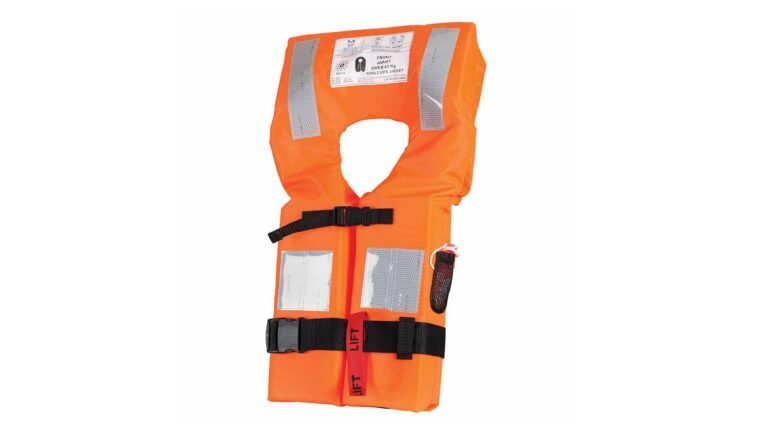
- Level 150: A life jacket for offshore or rough-water conditions.
- Level 275: A high-buoyancy life jacket for extreme offshore conditions or users wearing heavy protective clothing.4
The U.S. Coast Guard currently approves new recreational PFDs under Level 50 and Level 70 categories, and new non-SOLAS life jackets under Level 100. Older Type-approved products may still be manufactured, sold, and used under the conditions of their approvals.1
How does buoyancy impact life jacket selection?
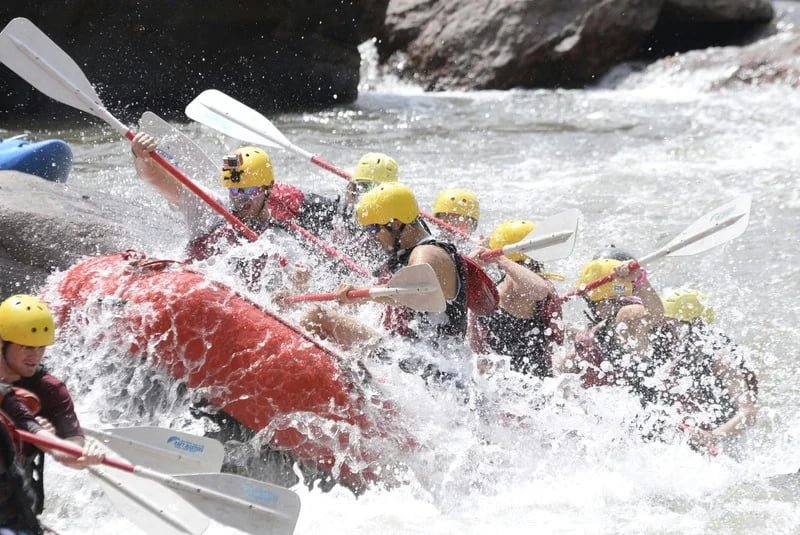
Buoyancy is the upward force that helps keep a person afloat. It is normally shown in Newtons or pounds. More buoyancy gives more lift, but the highest number is not automatically the best choice for every activity.
Choose buoyancy according to water conditions, rescue time, clothing, turning needs, and the product’s approved use—not body weight alone. A very bulky offshore jacket may restrict movement during paddling, while a low-profile buoyancy aid may not provide enough protection for an unconscious person in rough water.
Why buoyancy matters in real-world situations
The following numbers make common performance levels easier to understand:
| Performance level | Approximate flotation force | Typical use |
|---|---|---|
| 50 N | 11 lb | Sheltered water, active swimmers, help close at hand |
| 70 N | 15.7 lb | General near-shore boating and recreational use |
| 100 N | 22.5 lb | Greater flotation and support for longer rescue times |
| 150 N | 33.7 lb | Offshore or rough-water applications |
| 275 N | 61.8 lb | Extreme conditions or heavy protective clothing |
These are performance categories, not a universal selection chart. The approval label and applicable local regulations always take priority.
User weight is only one factor. Body composition, lung volume, clothing, tools, waves, and water temperature can all affect flotation. Heavy waterproof clothing may also trap air at first and then behave differently as it becomes wet. For rescue workers or industrial users, the complete equipment load should be considered during selection and controlled testing.
Turning ability is just as important as buoyancy. Some life jackets are designed to turn most unconscious users face-up, while others mainly help a conscious wearer stay afloat. Buyers should check the turning icon or approved product description instead of assuming that every high-buoyancy device performs in the same way.
What role does functionality play in choosing a PFD?
A life jacket only works properly when it fits, stays securely fastened, and is suitable for the task. Mobility, adjustment, visibility, and ease of use can be just as important as the buoyancy number.
The best PFD provides the required protection without preventing the user from paddling, working, climbing, or carrying out a rescue. This is why one model rarely suits every department or activity.
Matching functionality to the application
For rescue teams: Look for secure adjustment, high visibility, reflective material, a whistle, and attachment points designed for the approved application. A rescue harness or lifting point should only be used when it is built into the certified design and personnel are properly trained.
For paddling and water sports: Choose a model approved for that specific activity. A shorter body, larger arm openings, and a flexible cut can improve movement, but the activity warnings on the label must still be followed.
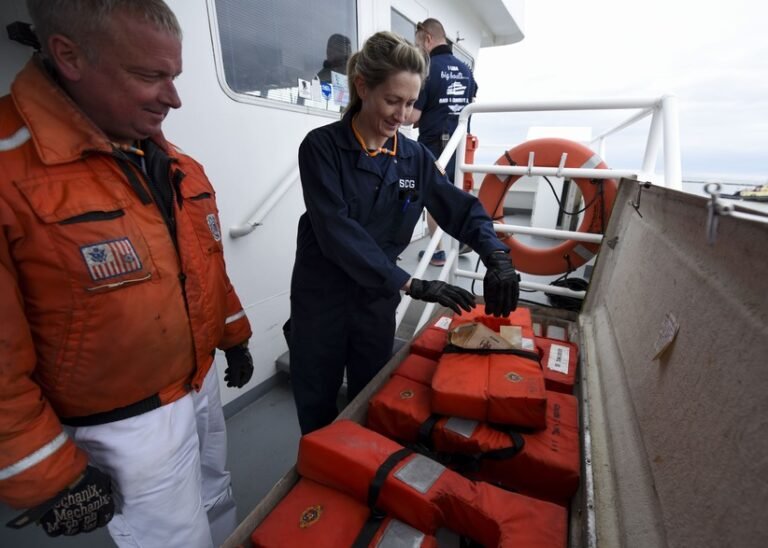
For public safety or emergency kits: Inherently buoyant foam PFDs are often easier to issue because they provide immediate flotation and do not require inflation. Clear sizing, simple buckles, and easy-to-understand instructions are important when users may have limited training.
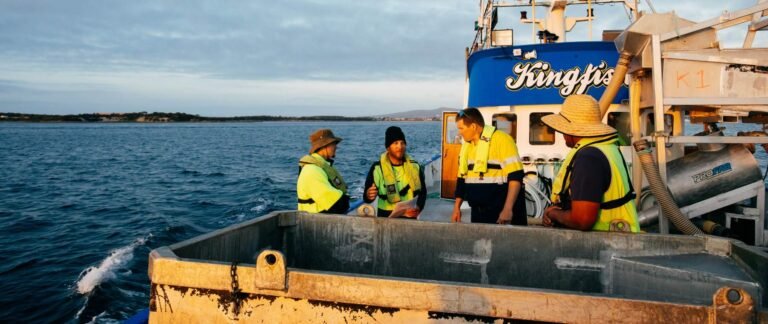
For commercial and industrial users: Consider work clothing, tool belts, radio access, fall hazards, visibility, and the time required for rescue. A general recreational vest may not meet the needs of a workboat, port, offshore platform, or professional rescue team.
Fit must also be checked carefully. A jacket that is too large may ride up around the face, while one that is too small may not fasten correctly. Adult life jackets should never be used as substitutes for child-sized products. For bulk purchasing, request a size chart based on both body weight and chest measurement, then test representative samples before shipment.
When should you consider hybrid or inflatable life jackets?
Life jackets can be made with foam, inflatable chambers, or a combination of both. Each construction has advantages and limitations.
Inflatable and hybrid PFDs can reduce bulk and improve comfort, but they require correct use, regular inspection, and replacement inflation parts. They are better suited to trained users and controlled applications than to every public or emergency situation.
Comparing the three constructions
| Construction | Main advantage | Main limitation | Common use |
|---|---|---|---|
| Foam | Immediate flotation and simple maintenance | Bulkier to wear and store | General boating, public safety, rescue kits |
| Inflatable | Lightweight and comfortable before inflation | Depends on the inflation system and user maintenance | Adult boating, fishing, and selected professional uses |
| Hybrid | Combines built-in foam with extra inflatable buoyancy | More complex and usually more expensive | Specialized professional or offshore applications |
Inflatable PFDs may use manual or automatic inflation. Manual models require the wearer to pull a handle. Automatic models activate after contact with water, although the exact mechanism depends on the product. Most also include an oral inflation tube as a backup.
Before purchasing an inflatable model, buyers should confirm:
- Whether it is manual, automatic, or both
- The approved activity and user group
- CO₂ cylinder and inflator specifications
- Replacement-cylinder and rearming-kit availability
- Inspection and service instructions
- Training requirements for users
- Restrictions shown on the approval label
In the United States, inflatable life jackets are generally not approved for children under 16, personal watercraft, tow sports, or high-impact and high-immersion activities unless the specific product label states otherwise.3 Foam PFDs are usually the safer and simpler choice when conditions are rough, entry into the water is likely, or users may not maintain the inflation system correctly.
How do industry certifications guide procurement?
Certification helps confirm that a life jacket has been evaluated against a defined standard. However, buyers must first identify which standard applies to the destination market, vessel, and intended use.
USCG approval, ISO 12402 compliance, and SOLAS requirements are not interchangeable terms. A product suitable for recreational boating in one country may not be accepted for a commercial vessel or international voyage in another.
Evaluating suppliers beyond the certificate
For U.S. orders, check the exact U.S. Coast Guard approval label and approval series. New PFDs are evaluated by Coast Guard-recognized laboratories, and approved manufacturers must participate in a follow-up factory inspection program.5
For ISO-based markets, confirm the exact part and performance level of ISO 12402. For example, ISO 12402-5 covers Level 50 buoyancy aids for users over 25 kg in sheltered waters where help is close and the wearer can actively participate in rescue.4
For commercial vessels or international voyages, confirm SOLAS, flag-state, and local authority requirements before ordering. Never assume that a recreational approval automatically satisfies commercial carriage rules.
A professional supplier should be able to provide the relevant documents for the quoted model, not just a general company certificate. Before placing a bulk order, ask for:
- Product approval or compliance certificate
- Test report linked to the model and construction
- Approval label and user-instruction artwork
- Size and buoyancy specifications
- Material and component information
- Inspection and maintenance instructions
- Packaging details and batch identification
- A production sample for fit and workmanship checks
Also confirm whether custom colors, logos, buckles, webbing, or accessories are covered by the approved design. Permanent changes to an approved PFD can affect or invalidate its approval, so customization should be reviewed before production.2
Frequently Asked Questions
What is the difference between a Type I and Type II life jacket?
Traditional Type I life jackets are intended for offshore, rough, or remote waters where rescue may take longer. They normally provide more buoyancy and better face-up turning performance. Type II products are intended mainly for calmer, near-shore water where rescue is expected quickly.
Can one life jacket size fit every adult?
No. Fit depends on chest size, body shape, weight range, clothing, and the product design. Universal-size products still have defined limits. For bulk orders, provide multiple sizes and check samples on representative users.
Are inflatable life jackets safe for non-professionals?
They can be safe for responsible adult users when the product is approved for the activity, worn correctly, and regularly maintained. They are not the best choice for every user or environment. Foam PFDs are simpler when training and maintenance cannot be guaranteed.
How often should life jackets be replaced?
There is no single replacement period that applies to every life jacket. Inspect them regularly and follow the manufacturer’s instructions. Replace a PFD if it has tears, damaged seams or straps, crushed or waterlogged foam, corrosion, mildew, a leaking chamber, or an unreliable inflation system. An approved PFD must remain in good and serviceable condition.2
What is the minimum buoyancy required for a life jacket?
There is no universal minimum for every user and application. Level 50, Level 70, Level 100, and higher-performance products serve different conditions. Select according to the applicable standard, water conditions, turning requirement, activity, and product label.
Conclusion
Choosing the right life jacket is not simply a matter of selecting the highest buoyancy or the lowest price. Start with the destination market and intended use, then compare the water conditions, rescue time, performance level, turning ability, fit, construction, and maintenance needs.
Traditional Type I–V labels are still relevant, but buyers should also understand newer performance-level labels and ISO 12402 classifications. For B2B procurement, verify that certificates, test reports, labels, and customization all match the exact model being ordered. This reduces compliance risk and helps ensure that the life jacket performs as expected when it is needed most.
If you need help comparing life jacket constructions, performance levels, or documents for a bulk order, contact our team with your destination market and intended application.
U.S. Coast Guard, “Lifejacket Approval Harmonization; Final Rule.” https://www.news.uscg.mil/maritime-commons/Article/3985349/lifejacket-approval-harmonization-final-rule/ ↩
U.S. Coast Guard, “PFD Selection, Use, Wear & Care.” https://www.dco.uscg.mil/CG-ENG-4/PFDSel/ ↩
Texas Parks & Wildlife Department, “Life Jackets.” https://tpwd.texas.gov/education/boater-education/lifejacket ↩
ISO 12402 performance levels: [Level 50](https://www.iso.org/standard/56685.html), [Level 100](https://www.iso.org/standard/56684.html), [Level 150](https://www.iso.org/standard/56683.html), and [Level 275](https://www.iso.org/standard/60334.html). ↩
U.S. Coast Guard, “Personal Flotation Devices.” https://www.dco.uscg.mil/CG-ENG-4/PFD/ ↩