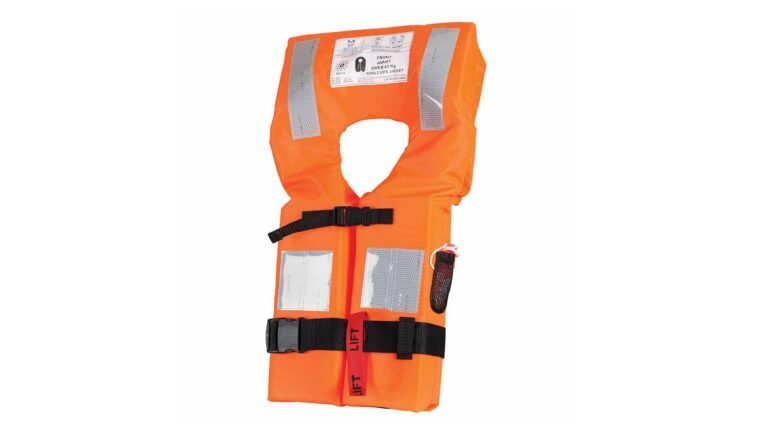
Put two orange life jackets on a table and they may look almost identical.
Both may have reflective tape, a whistle, bright fabric, and plenty of foam. One label says SOLAS. The other says USCG Approved.
Can a buyer treat them as the same product?
Usually, no.
The short answer: SOLAS life jackets are selected for ships and voyages that must follow the international SOLAS and LSA Code requirements. USCG-approved life jackets are selected under the applicable United States rules. Some products can meet both needs, but only when the exact model carries the required approvals and markings. Appearance, color, or a 150 N buoyancy claim is not enough.
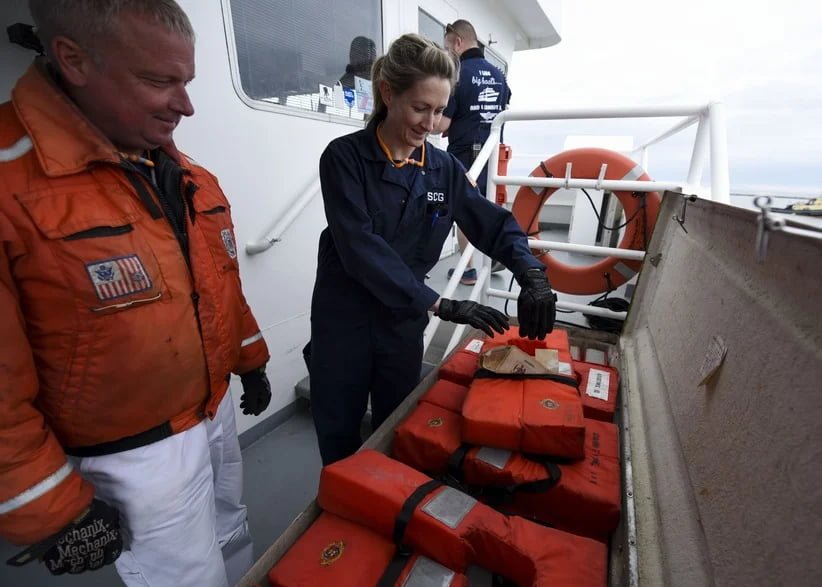
For a buyer, the decision begins with the vessel, flag, voyage, and approval label—not with the jacket's product name.
SOLAS vs USCG Life Jackets at a Glance
| What to compare | SOLAS life jacket | USCG-approved life jacket or PFD |
|---|---|---|
| Main system | International ship-safety requirements under SOLAS and the LSA Code | United States Coast Guard approval system |
| Typical use | Statutory life-saving equipment on ships required to carry SOLAS appliances | U.S. recreational or commercial vessels, depending on the approval category and label |
| Who decides what is needed? | Vessel flag, voyage, ship type, statutory plan, and applicable marine authority | U.S. vessel type, service, route, inspection status, and carriage rules |
| Evidence to check | Approval marking, certificate, exact model, size, and approved configuration | “USCG Approved” label, approval number or series, model, size, use conditions, and current listing |
| Product categories | Shipboard emergency life jackets under the LSA Code | Recreational, commercial, SOLAS, non-SOLAS, wearable, inflatable, and throwable categories |
| Can it replace the other? | Only when the exact approval also satisfies the vessel's U.S. requirements | Only when the exact product is also approved for the required SOLAS application |
This is the part many product descriptions miss: SOLAS and USCG are approval systems, not two jacket shapes.
What Does SOLAS Mean on a Life Jacket?
SOLAS is the International Convention for the Safety of Life at Sea. Its Chapter III covers life-saving appliances and arrangements. The International Life-Saving Appliance Code, usually called the LSA Code, provides the more detailed technical requirements.
The IMO overview of life-saving appliances1 explains that SOLAS makes the carriage of these appliances mandatory and that the LSA Code covers their manufacture, testing, maintenance, and records.
For a buyer, “SOLAS” should therefore mean more than:
- Orange fabric
- High buoyancy
- Reflective tape
- A whistle or light
- A product that looks like a shipboard life jacket
Those features may be part of an approved design, but they do not prove approval by themselves.
Ask which authority approved the exact model, which certificate applies, which sizes are covered, and what markings must appear on the finished jacket. The answer may also depend on the vessel's flag administration and accepted approval route.
What Does USCG Approved Mean?
The U.S. Coast Guard separates personal flotation devices into recreational, commercial, and throwable categories. Within those groups are different approval series and use conditions.
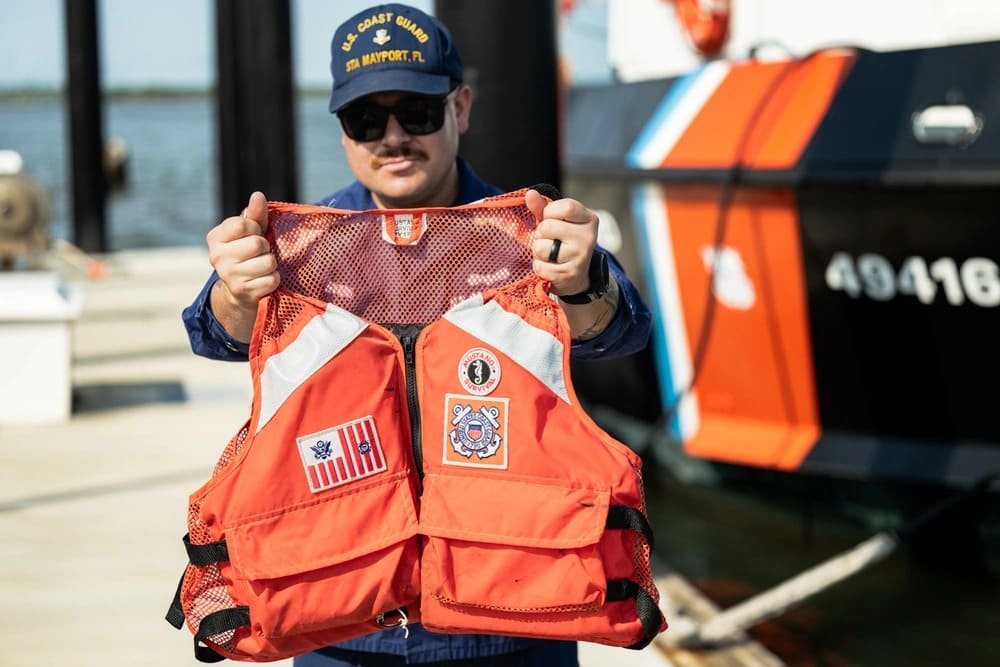
The USCG personal flotation device guidance2 currently identifies:
- 160.155: SOLAS life jackets
- 160.176: inflatable SOLAS life jackets
- 160.255: non-SOLAS Level 100 commercial life jackets
- 160.264 and 160.276: newer recreational approval series for buoyancy aids and inflatable PFDs
Older approval series and traditional Type I, II, III, IV, or V labels are still found on products. Newer U.S. labels increasingly use performance levels and clearer use icons. The USCG lifejacket approval harmonization rule3 explains that these changes did not automatically cancel older approved products. Legacy devices can continue to meet carriage requirements when they remain serviceable and are used according to their labels.
This means a buyer should read the whole label. “USCG Approved” alone does not tell you whether the device is recreational, commercial, SOLAS, inflatable, or restricted to a particular activity.
For a simpler explanation of the terminology, see our life jacket, life vest, and PFD guide.
Can One Life Jacket Be Both SOLAS and USCG Approved?
Yes, but the approval must be clear for the exact product.
For U.S.-flagged vessels, USCG-approved SOLAS life jackets use series 160.155, while inflatable SOLAS life jackets use series 160.176.
That does not mean every USCG-approved PFD is SOLAS compliant. A recreational Level 70 PFD, for example, may be correct for its approved boating use but does not become a SOLAS shipboard life jacket.
The reverse also needs care. A jacket approved for a foreign-flag SOLAS application should not be assumed to satisfy the carriage requirement on a U.S.-flagged vessel without checking the accepted approval and marking for that vessel.
The practical rule is straightforward:
If both systems matter, require evidence for both. Do not infer one approval from the other.
What Should Buyers Check on the Product Label?
The label is one of the fastest ways to find a mismatch between a sample and a sales claim.
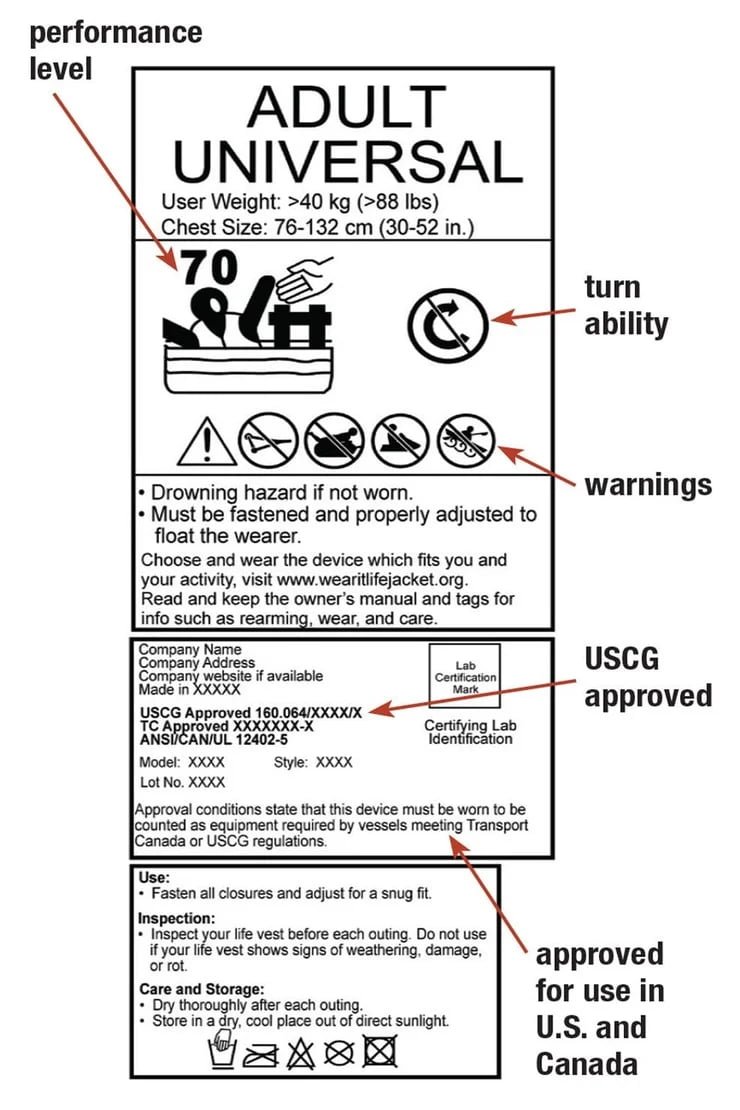
Check for:
- Manufacturer and brand name
- Exact model or style number
- Approval authority and approval number
- Applicable approval series, performance level, or older PFD type
- Adult, child, infant, weight, or chest-size information
- Intended use and vessel category
- Activity or use restrictions
- Donning and fastening instructions
- Buoyancy information where required
- Date, lot, or production identification where applicable
- Required warnings and care instructions
Do not accept a certificate for “the same series” unless the model on the certificate matches the model, size, and label on the supplied product.
Lights, whistles, and reflective tape are useful features, but they do not prove approval. Check that every fitted component belongs to the approved configuration.
What Documents Should a Marine Buyer Request?
I would ask for a small, clear file rather than a folder full of unrelated certificates:
- Approval certificate for the exact model
- Clear photographs of every label
- List of sizes covered by the approval
- Current product specification
- Approved accessories and their certificates where separate approval applies
- Instructions for use, inspection, storage, and replacement
- Evidence that the approval is current for the manufacturing date
- Sample photos showing the production version, not a generic catalog image
For USCG approvals, buyers can check the approval number, model, manufacturer, and status in the official CGMIX Approved Equipment database4.
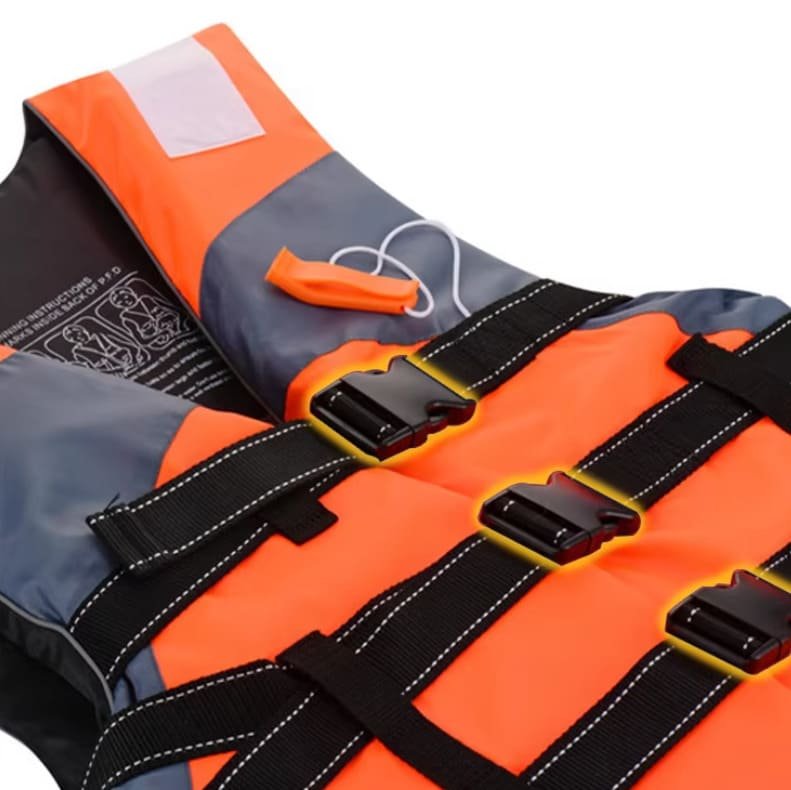
A logo copied onto a brochure is not the same as a traceable approval record. If a supplier changes the light, buckle, foam, fabric, reflective tape, or label, ask whether that change remains covered.
How Should Buyers Plan Adult and Child Sizes?
Do not place one “universal” size on the order and assume it covers everyone.
Record the required number of adult, child, and infant jackets; the approved range of every size; any need for extended sizes; and how each size will be marked and stored. Also consider bulky crew clothing and protective equipment.
Color alone is not a reliable size system. Follow the approved label.
For a broader explanation of older U.S. Types and newer performance levels, see our guide to the main types of life jackets.
Claims That Should Make a Buyer Pause
“SOLAS style”
This describes appearance, not approval.
“USCG material”
Materials do not make a finished life jacket USCG approved. Approval applies to the completed product and production controls.
“150 N means SOLAS”
Buoyancy is only one part of performance. Turning, donning, fit, construction, marking, and testing also matter.
“Type I is the same as SOLAS”
Not automatically. Check for the specific SOLAS approval.
“CE or ISO is accepted everywhere”
Different approvals serve different markets. Confirm what the vessel's flag and route require.
“The certificate covers all our jackets”
Match the certificate to the exact model, size range, label, factory, and approved configuration.
A Practical Sample-Approval Checklist
Before approving a bulk order:
- Confirm the vessel flag, route, ship type, and required approval
- Compare the sample label with the certificate
- Search the USCG approval number when USCG acceptance is claimed
- Check adult, child, and infant models separately
- Confirm lights, whistles, reflective material, and other accessories
- Inspect stitching, straps, buckles, foam, covers, and printed labels
- Check donning instructions and required languages
- Record the approved sample with dated photos
- Require written approval before any component or label changes
You can compare available shapes and size options in our life jacket range, but the final choice should always be based on the approval needed for the vessel.
Frequently Asked Questions
Is every USCG Type I life jacket SOLAS approved?
No. Check for the specific SOLAS approval and applicable USCG approval series, such as 160.155 for a USCG-approved SOLAS life jacket.
Is every SOLAS life jacket accepted on a U.S.-flagged ship?
Do not assume so. Verify the approval accepted for that vessel and check the exact product marking and certificate.
Can a recreational USCG PFD be used as required SOLAS equipment?
Normally not. A recreational PFD and a SOLAS shipboard life jacket serve different approval and carriage requirements.
Where can a buyer verify a USCG approval number?
Use the linked CGMIX database and match the manufacturer, model, approval number, and status.
Final Takeaway
Start with the vessel's flag, route, service, and required approval. Then match the certificate to the exact model, size, label, accessories, and manufacturing version.
A SOLAS jacket is not automatically a substitute for every USCG-approved device, and a recreational USCG PFD is not automatically SOLAS equipment. When both systems matter, require clear evidence for both.
[IMO, “Life-Saving Appliances”](https://www.imo.org/en/ourwork/safety/pages/lifesavingappliances-default.aspx) — Official overview of SOLAS carriage requirements and the role of the LSA Code. ↩
[U.S. Coast Guard, “Personal Flotation Devices”](https://www.dco.uscg.mil/CG-ENG-4/PFD/) — Official USCG categories and approval series for recreational, commercial, SOLAS, and non-SOLAS PFDs. ↩
[U.S. Coast Guard, “Lifejacket Approval Harmonization Final Rule”](https://www.news.uscg.mil/maritime-commons/Article/3985349/lifejacket-approval-harmonization-final-rule/) — Current performance-level approvals and continued use of existing approved devices. ↩
[U.S. Coast Guard, “Approved Equipment Listing Database”](https://cgmix.uscg.mil/equipment/Default.aspx) — Official database for checking USCG-approved equipment and approval status. ↩