Soft vs Hard Cervical Collars look like a simple choice: one is soft, one is rigid, so the rigid one must be “more protective.” That is usually where a poor buying decision begins.
When I evaluate cervical collars, I do not start by squeezing the foam or comparing prices. I start with five questions: Who will apply the collar? In what setting? For which patient group? Under which clinical protocol? And for how long? Once those answers are clear, the difference between a soft and rigid collar becomes much easier to understand.
The short answer is this: a soft cervical collar mainly provides comfort, light support, and a physical reminder to limit movement. A rigid or semi-rigid cervical collar is designed to restrict cervical motion more firmly. Neither one is suitable for every injury, and neither should be selected only by appearance. The diagnosis, fit, intended use, local protocol, and instructions from qualified medical professionals must come first.
I often tell buyers that a cervical collar is not just a piece of foam or molded plastic. It is a fitted medical device used inside a larger care process. If the size is wrong, the strap is awkward, or staff cannot apply it consistently, a technically impressive collar can become an operational problem.
What Is the Main Difference Between Soft and Hard Cervical Collars?
The practical difference is not simply softness. It is the degree of motion restriction, the way the collar contacts the patient, and the environment in which it is intended to be used.
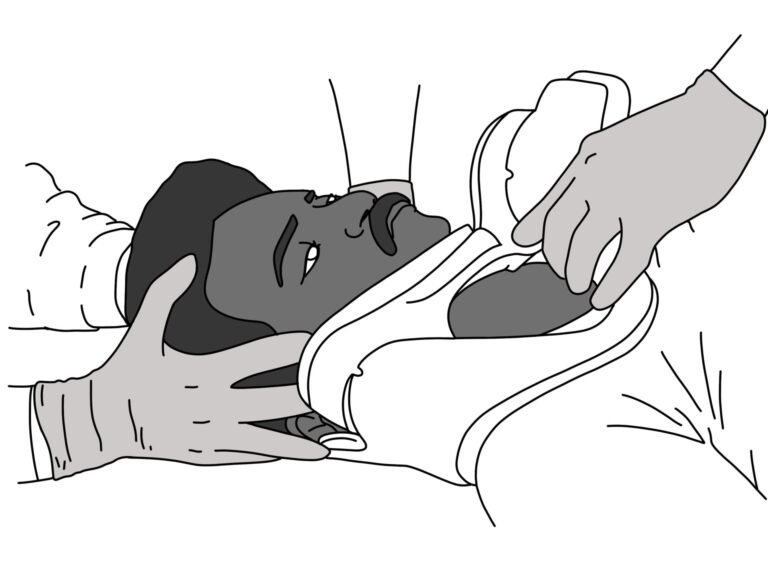
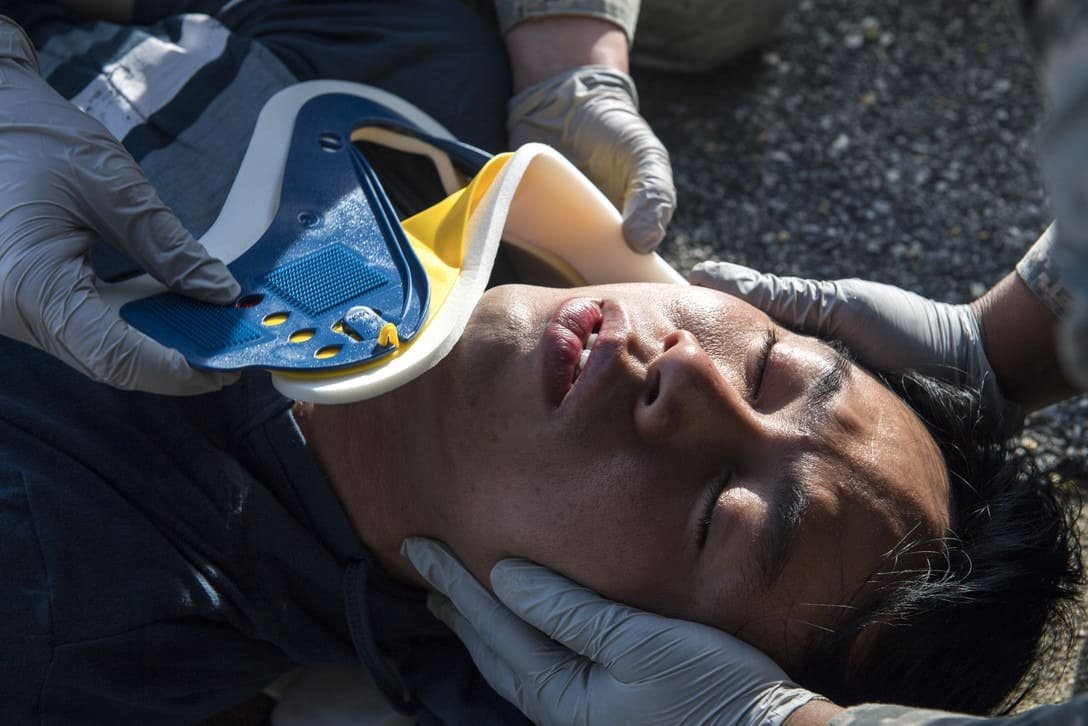
A soft collar bends easily and provides limited structural control. A rigid or semi-rigid collar uses a firmer frame, shaped panels, and padded contact areas to restrict movement more strongly. A rigid collar still does not completely immobilize the cervical spine, so it should never be treated as a complete spinal-management system on its own.
Soft cervical collar construction
A typical soft collar includes:
- Flexible foam
- A fabric or synthetic cover
- A contoured neck shape
- Hook-and-loop fastening
- Lightweight, compressible construction
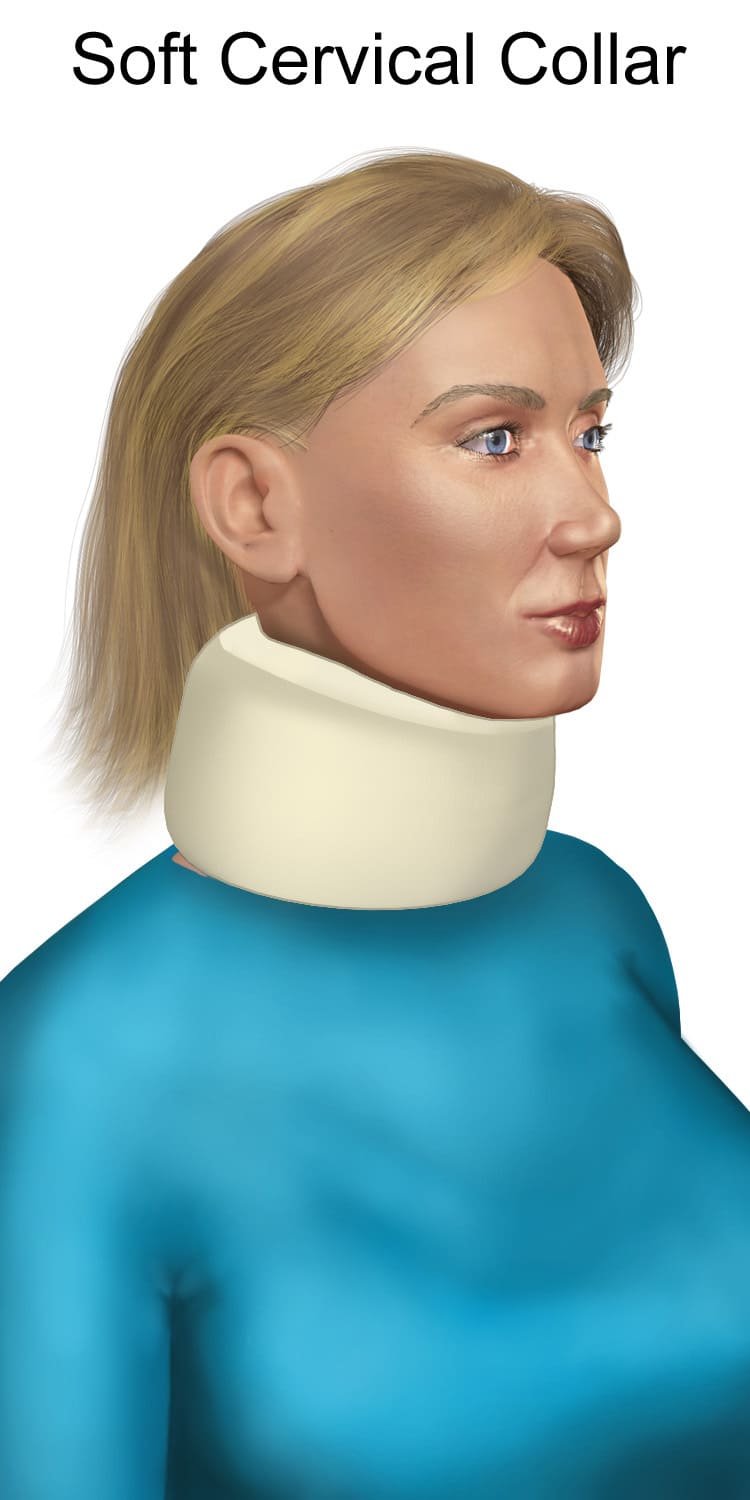
In my experience, buyers sometimes describe a soft collar as an “immobilization collar.” I avoid that wording. A soft collar may make a patient more aware of neck movement and may provide comfort in selected cases, but it does not offer the same motion restriction as a properly fitted rigid model.
Rigid or semi-rigid cervical collar construction
A rigid collar commonly includes:
- Molded plastic or polymer panels
- Chin and jaw support
- Front and rear sections, depending on the design
- Adjustable straps or height settings
- Ventilation and access openings
- Foam padding at pressure-contact areas
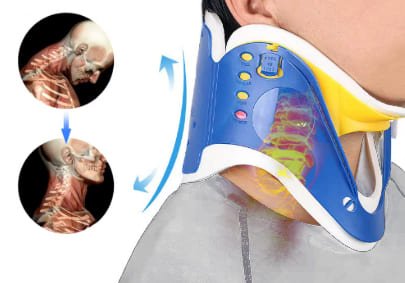
A rigid collar generally restricts more movement than a soft collar, but “more rigid” does not automatically mean “more appropriate.” Fit, patient anatomy, airway access, skin condition, injury pattern, and professional application all matter.
Soft vs hard cervical collars comparison
| Evaluation point | Soft cervical collar | Rigid or semi-rigid cervical collar |
|---|---|---|
| Main purpose | Comfort, light support, movement reminder | Firmer cervical motion restriction |
| Construction | Flexible foam and cover | Rigid frame with padded contact areas |
| Motion restriction | Limited | Greater, but not complete immobilization |
| Fitting | Usually simple | Requires accurate sizing and positioning |
| Comfort | Often better tolerated | Highly dependent on fit and wear duration |
| Acute trauma role | Depends on the clinical system and protocol | Used in many trauma protocols, but not automatically for every patient |
| Skin-pressure risk | Usually lower, but still possible | Requires closer pressure-area monitoring |
| Cleaning | Depends on cover and foam design | Depends on reusable surfaces, padding, and fasteners |
| Buyer focus | Material, sizing, comfort, care instructions | Fit, adjustment, access, pressure points, cleaning, and workflow |
I use this table as a starting point, not a clinical prescription. The manufacturer’s intended-use statement and instructions for use should decide what the product is designed to do.
When Are Soft and Hard Cervical Collars Used?
This is the section where vague claims can become dangerous. A collar should not be chosen because a patient “looks uncomfortable” or because a rigid model appears more secure.
Emergency and prehospital care
In suspected spinal injury, the priority is professional assessment and controlled patient movement. Some clinical systems use rigid collars as part of full in-line spinal immobilization; others have moved toward selective spinal motion restriction or different collar practices.
For example, the NICE spinal injury guideline1 bases immobilization on assessment findings and describes a collar as one component used with other measures such as a scoop stretcher, head blocks, tape, or a vacuum mattress. That is an important distinction: the collar is part of a protocol, not a stand-alone guarantee of safety.
A 2024 observational study examined an ambulance service that changed from semi-rigid to soft collars. It found no statistically significant difference in spinal cord injury, pressure sores, or hospital-acquired pneumonia, but the study was not large enough to prove that the two approaches are equivalent. The authors specifically called for continued monitoring.The study is useful because it shows that prehospital collar practice is evolving2.
For procurement teams, the lesson is simple: buy for the protocol your trained clinicians actually use. Do not copy another hospital’s product list without checking your own medical direction, training, and transport system.
Hospital use
Hospitals may need cervical collars in emergency departments, imaging workflows, wards, operating and recovery areas, or specialist services. Those departments do not necessarily need the same model.
When I map a hospital requirement, I separate it into practical use cases:
- Rapid fitting during emergency assessment
- Temporary support during transfer or imaging
- Clinician-directed use after injury or surgery
- Short-term comfort support in selected patients
- Adult, pediatric, and special-anatomy requirements
- Single-use versus reusable workflows
This prevents the common mistake of purchasing one “universal” collar and expecting it to solve every clinical need.
Post-operative and recovery use
After surgery or injury, the treating team must decide whether a collar is required, which type is appropriate, and how long it should be worn. A rigid collar may be prescribed in some cases; a soft collar may be used briefly in others; and some patients may be encouraged to mobilize without a collar.
I would not describe a soft collar as automatically suitable for recovery. Evidence concerning soft collars for conditions such as acute whiplash is mixed, and early movement may be preferred in many cases. The safe wording for a product article is: use during recovery should follow the diagnosis and the treating professional’s instructions.
What Are the Risks and Limitations?
Every collar has limitations. Good medical content should explain them instead of hiding them under phrases such as “comfortable” or “maximum protection.”
Soft collar limitations
- Limited restriction of cervical movement
- Foam compression over time
- Heat, moisture, or skin irritation during wear
- Slipping or bunching when the size is wrong
- Risk of being used as false reassurance after an injury
Rigid collar limitations
- Pressure at the chin, jaw, occiput, clavicle, or shoulders
- Discomfort and skin injury during prolonged use
- Possible difficulty with swallowing or airway management
- Incorrect alignment when the size or adjustment is wrong
- More demanding cleaning and padding inspection
A systematic review of prolonged hard-collar use3 identified pressure ulcers, dysphagia, and increased intracranial pressure among the reported complications. This does not mean rigid collars should never be used. It means buyers and clinical teams should treat fit, monitoring, and wear duration as safety issues rather than minor details.
How Do I Select a Cervical Collar for Procurement?
My rule is straightforward: define the job before comparing the product.
Step 1: Write the intended-use scenario
Before requesting prices, confirm:
- Who will apply the collar?
- Is it for ambulance, emergency department, ward, clinic, or post-operative use?
- What patient ages and body sizes must be covered?
- Is the collar single-use or reusable?
- Will it be used around imaging, airway, transfer, or rescue equipment?
- Which local protocol and professional training apply?
If the supplier cannot explain the product’s intended use clearly, I do not move on to price negotiation.
Step 2: Compare the specifications that affect real use
| Specification | What I check |
|---|---|
| Size range | Does it cover the intended patient population? |
| Adjustment | Can trained staff fit it consistently and quickly? |
| Materials | Are material and biocompatibility details available? |
| Skin contact | Where are the pressure points, seams, and hard edges? |
| Padding | Is it fixed, removable, replaceable, or washable? |
| Openings | Do they support observation and the intended clinical access? |
| Imaging | Is radiolucency or imaging compatibility documented where required? |
| Cleaning | Are validated cleaning and disinfection instructions available? |
| Identification | Are size, front/rear direction, model, and batch easy to read? |
| Packaging | Does it protect the product and support inventory control? |
| Traceability | Are lot information, labels, UDI, and shelf-life details available where applicable? |
| Instructions | Do the instructions match the supplied model and destination market? |
Brochures are useful for screening. They are not a substitute for controlled technical documents.
Step 3: Test samples with trained users
This is where glossy specifications meet gloves, stretchers, storage cabinets, and real working time.
I ask several trained users to score:
- Sizing clarity
- Application time
- Glove-friendly adjustment
- Strap position and security
- Chin and shoulder contact
- Access for observation or procedures
- Compatibility with existing equipment
- Ease of cleaning and reassembly
- Storage and packaging
One person saying “it feels fine” is not a validation process. A short, repeatable scorecard produces much better purchasing information.
Step 4: Inspect the complete procurement package
The carton is only half the purchase. I also check:
- Product specification
- Instructions for use
- Material and test information
- Quality-control and inspection records
- Labeling and batch traceability
- Packaging artwork
- Regulatory declarations or market documents
- Warranty and complaint process
- Production lead time
- OEM or private-label requirements
At JIEKANG, this is often the point where a general inquiry becomes a workable project. Once the buyer confirms the market, model, quantity, packaging, and document list, sample approval and production planning become far more efficient.
Step 5: Verify regulatory claims carefully
I am cautious whenever a supplier simply says, “We have ISO, CE, and FDA.” Those terms do not mean the same thing.
- ISO 13485 is a medical-device quality-management-system standard4. It is not, by itself, proof that every product made by a company is approved for every market.
- For the United States, FDA establishment registration and device listing do not mean that a device is approved, cleared, or authorized5. Buyers should verify the exact manufacturer, device, classification, listing, and any applicable premarket requirement.
- For the European Union, the applicable MDR route depends on device classification and intended use. Manufacturers are responsible for the required conformity process, documentation, declaration, and CE marking, with notified-body involvement where required.The European Commission provides the regulatory framework for manufacturers6.
For tenders or imports, I verify the exact product name, model, manufacturer, document scope, issuing body, validity, and destination-market requirement. A logo on a brochure is not enough.
How Do I Evaluate a Cervical Collar Supplier?
A good sample from an unreliable supplier is still a risky purchase. I evaluate the manufacturer in four areas.
1. Product consistency
Ask whether production units will match the approved sample in material, stiffness, dimensions, padding, fasteners, labeling, and packaging. Confirm how changes are controlled and communicated.
2. Manufacturing and inspection control
Review incoming-material checks, in-process inspection, final inspection, batch identification, nonconforming-product handling, and complaint procedures. The supplier should be able to explain these processes without hiding behind a certificate.
3. Documentation accuracy
Check that the model names and specifications match across quotations, labels, instructions, declarations, test reports, and shipping documents. Small naming differences can become large registration or customs problems.
4. Delivery and communication
Confirm lead time, production milestones, inspection timing, packaging approval, shipping terms, and who handles technical questions. Reliable communication is part of product quality because it reduces preventable errors before shipment.
Frequently Asked Questions
Is a hard cervical collar always better than a soft collar?
No. A rigid collar generally restricts more movement, but the correct choice depends on the diagnosis, intended use, fit, clinical protocol, and professional assessment.
Can a soft collar immobilize the cervical spine?
A soft collar provides limited motion restriction and should not be described as equivalent to a rigid immobilization device. Its role is usually light support, comfort, or a reminder to limit movement in selected cases.
Can patients choose a collar by themselves?
Patients with suspected injury, neurological symptoms, severe pain, or post-operative requirements should follow qualified medical advice. A product comparison cannot replace clinical assessment.
Should a hospital buy one adjustable collar or several sizes?
That depends on the validated adjustment range and patient population. I prefer testing the actual models on approved training scenarios rather than relying only on the word “universal.” Pediatric requirements should be assessed separately.
What documents should an importer request?
At minimum, request the product specification, intended use, instructions, labeling, manufacturer details, quality-system information, applicable regulatory documents, and batch-traceability information. The final list should match the destination market.
Final Takeaway
After comparing soft vs hard cervical collars, I come back to one principle: choose the collar for the clinical job, not for the way it looks.
A soft collar is lighter and less restrictive, but that does not make it suitable for every recovery situation. A rigid collar offers firmer motion control, but that does not make it a universal trauma solution. The best procurement decision combines professional clinical input, correct sizing, realistic sample testing, clear documentation, and a supplier that can reproduce the approved product consistently.
If those pieces are in place, price becomes useful. Before that, it is just a number attached to an assumption.
"Spinal injury: assessment and initial management — Recommendations", https://www.nice.org.uk/guidance/ng41/chapter/Recommendations. NICE guidance on assessment and spinal immobilization. ↩
"Change from semi-rigid to soft collars for prehospital management of trauma patients", https://pmc.ncbi.nlm.nih.gov/articles/PMC11255016/. Observational study of a prehospital practice change. ↩
"Adverse Events Relating to Prolonged Hard Collar Immobilisation", https://pmc.ncbi.nlm.nih.gov/articles/PMC9609519/. Systematic review of complications associated with prolonged hard-collar use. ↩
"ISO 13485:2016 — Medical devices — Quality management systems", https://www.iso.org/standard/59752.html. Official ISO standard overview. ↩
"Are There FDA Registered or FDA Certified Medical Devices?", https://www.fda.gov/medical-devices/consumers-medical-devices/are-there-fda-registered-or-fda-certified-medical-devices-how-do-i-know-what-fda-approved. FDA explanation of registration, listing, clearance, and approval. ↩
"Manufacturers MD", https://health.ec.europa.eu/medical-devices-topics-interest/reprocessing-devices/manufacturers-md_en. European Commission overview of manufacturer responsibilities under the MDR. ↩